




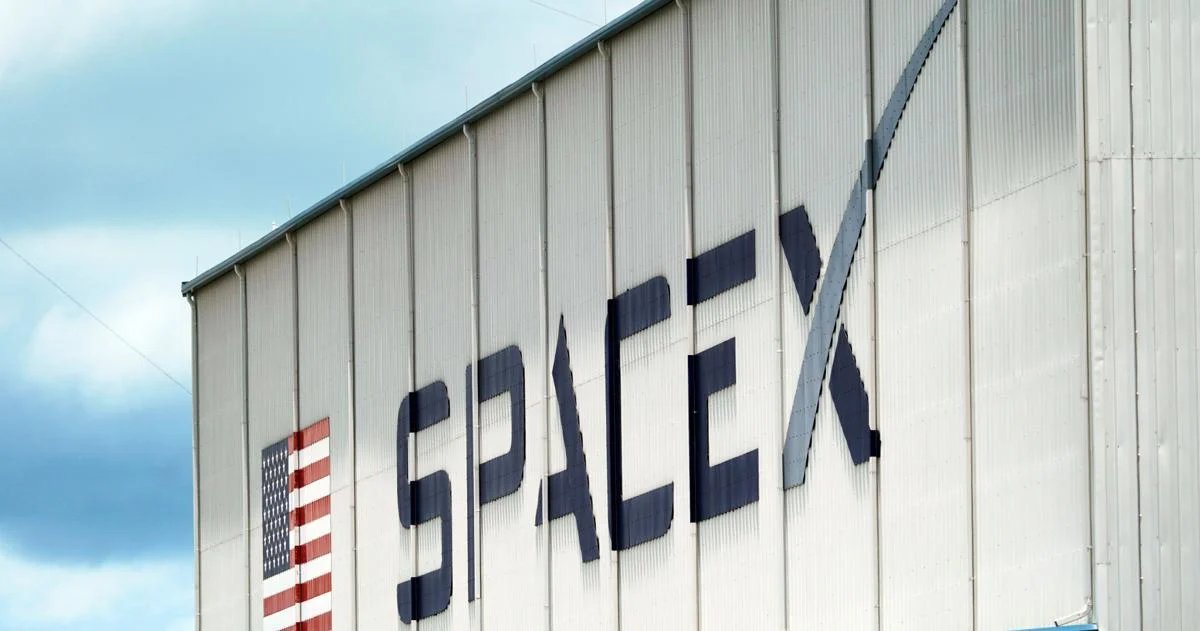
Louisiana is in the final stages of a deal to bring Elon Musk’s SpaceX to coastal Vermilion Parish, where the aerospace giant is planning to build a new spaceport that will launch rockets into orbit from an 18-mile stretch of marshland about 45 miles southwest of Lafayette.
The prospective deal, which has been rumored for months, would forever transform the remote area by bringing potentially thousands of jobs and a massive influx of aerospace and other commercial activity to the remote coastal community.
The site for the planned facility, known as Pecan Island, is at the center of a complex settlement agreement resolving dozens of coastal lawsuits that blame ExxonMobil for pollution and land loss.

The unincorporated Vermilion Parish community of Pecan Island, with a population of about 100 people along Louisiana Highway 82, is believed to be a potential location for the construction of a massive SpaceX spaceport.
According to a source with firsthand knowledge of the agreement who was not at liberty to speak publicly, the settlement will involve SpaceX receiving control of the land, some 130,000 acres in all, whether through a sale, long-term lease or other type of arrangement.
The deal, which is expected to be announced this month by Gov. Jeff Landry, will be the latest economic development coup for an administration that has attracted deals of unprecedented size and scale to the state, including one of the world’s largest AI data centers, some of its largest LNG export terminals and a major new steel mill.
Those deals, touted by the Landry administration as badly needed job creators, are raising concerns from environmental advocates, who are questioning their impact on the state’s environment and natural resources. Other critics contend that the tax breaks companies are receiving are too large.
Landry has declined to comment on the SpaceX deal, though he previously confirmed a settlement in the coastal suits. Louisiana Economic Development Secretary Susan Bourgeois declined to comment.
SpaceX declined to comment for this story but referred to a previous statement the company posted on X, stating that it plans to expand its launch capacity.
“We are constantly exploring to find viable sites to expand Starship operations in the future, both domestically and internationally,” the company said in its social media post.
Emerging picture
Speculation about the SpaceX deal has been building for months.
Earlier this spring, the Louisiana Legislature passed a package of incentives designed to attract aerospace companies to the state. The far-reaching bills, since signed into law by Landry, would shield aerospace companies from liability and would block local governments and individuals from suing for damages related to physical or economic harm caused by launch operations.
Landry and his economic development officials have said the incentives are necessary to make Louisiana competitive for aerospace companies that create good-paying jobs.

This image taken from NASA video shows the SpaceX capsule carrying NASA astronauts Suni Williams, Butch Wilmore and Nick Hague, and Russian astronaut Alexander Gorbunov, undocking from the International Space Station on Tuesday, March 18, 2025. (NASA via AP)
Then, in June, Landry announced a settlement of the coastal suits. Under the agreement, a notice of which has been filed in the U.S. District Court for the Western District of Louisiana, ExxonMobil is expected to turn over to the state land it has owned in Vermilion Parish since the 1950s and leased out for recreational hunting and fishing. The terms have not been made public, as with the other coastal settlements.
SpaceX will then take control of the site, according to the source familiar with the deal, which is expected to include provisions for coastal restoration and protection.
Earlier this year, SpaceX notified regulators that it intends to launch up to 1 million low-Earth-orbit satellites into space — an exponential increase in its capacity that will require more launch pads.
Experts say Pecan Island, with a permanent population of about 100, would be attractive to SpaceX because it is sparsely populated, is close to the Gulf and the Intracoastal Waterway with deep-water access that could accommodate heavy rockets on barges, and is midway between SpaceX facilities in Texas and Florida.
It also has an abundance of natural gas, a needed fuel source.

A view from Freshwater City Road, south of Pecan Island in Vermilion Parish, where at least one commercial space company is in talks with large landowners to purchase property.
It is unclear how large the Louisiana facility would be. Aerospace experts have said the company would likely use a fraction of the 130,000 acres for a launch site, reserving the rest for an acoustic barrier.
SpaceX’s Boca Chica, Texas, launch site is about 140 acres, and is licensed by the Federal Aviation Administration for 25 launches and landings a year. It has some 3,400 employees.
A source familiar with the company’s plans for Louisiana said the total number of jobs created by the project will be in the thousands.
Proposal to waive regulations
Last week, the FAA proposed sweeping rule changes that would allow aerospace companies seeking to launch rockets to bypass more than a dozen environmental protection laws. The changes, experts say, would help pave the way for the SpaceX deal in Louisiana.
The proposal filed Thursday by the FAA would waive 13 laws governing commercial rocket launch and reentry licenses, effectively doing away with protections under the National Environmental Policy Act, Endangered Species Act, Clean Water Act, Clean Air Act and the National Historic Preservation Act, as well as coastal and marine mammal protections.
Sean Duffy, the secretary of the Department of Transportation, said the move would eliminate unnecessary bureaucracy and enhance the nation’s competitiveness.
“America won the first Space Race, and we can do it again — but only if we get government red tape out of the way,” Duffy said last week.
If implemented, the changes, which do not require congressional approval, would enable SpaceX to build launch pads and blast its reusable Starship rockets into orbit without having to undergo the kind of environmental reviews and scrutiny it has faced at its Boca Chica launch site in south Texas.

Republican presidential nominee Donald Trump, left, shakes hands with Tesla and SpaceX CEO Elon Musk after Musk speaks on stage at a Trump campaign event on Oct. 5, 2024.
“SpaceX is obviously the largest beneficiary by an order of magnitude because SpaceX holds the most licenses and files the most applications — but the rule is written for the whole industry,” said Kimberly Siversen Burke, director of governmental affairs with the Florida consulting firm Quilty Space, which advises aerospace companies.
“I have no idea what is going to happen at Pecan Island,” she said. “But I do know there will never be a more favorable moment to build this for SpaceX.”
Environmental concerns
In recent weeks, as speculation in Vermilion Parish has built about the proposed aerospace facility, locals have responded with muted reactions. Some have expressed concern over the project’s environmental impacts, while elected officials have touted the potential economic benefits to an area that has continued to lose jobs and young people in recent decades.
At a speech to an area Rotary Club last month that attracted more than 200 locals hungry for details about the rumored spaceport, state Sen. Bob Hensgens, R-Abbeville, said local leaders should prepare for the project because of its potential economic impact, though he said he was not privy to details of the negotiations and did not name the company.
So far, officials have remained largely silent on the issue of what such a facility would mean for an environment that has lost miles of coast to erosion over the years, and to the abundant wildlife — fish, waterfowl and migratory birds that have made Pecan Island a popular destination for sport fishing and seasonal hunting.

Camps in Pecan Island, a ridge of high ground about 10 miles from the Gulf.
The new rules proposed by the FAA would “waive requirements of laws of the U.S. for a license or permit, after consultation with the head of the appropriate executive agency, when the requirement is not necessary to protect the public health and safety, safety of property, and national security and foreign policy interests of the United States,” the text of the proposal reads, in part.
Siversen Burke said the changes are unprecedented, noting that “no administration has ever pulled this lever at scale that I am aware of — 13 statutes at once.”
She said the environmental ramifications for a place like Pecan Island could potentially be “tragic.”
Currently, a proposed spaceport on coastal marsh would trigger an environmental impact statement, wetlands dredge-and-fill review, consistency with Louisiana’s coastal program, Gulf fisheries consultation, and an Endangered Species Act consultation “that would put the whooping crane up against Elon,” she said.
Under the proposed rules, “it all goes away with an FAA license.”
As news of the proposed rule changes trickled out last week, environmental groups around the country began responding.
Brett Hartl, government affairs director at the Center for Biological Diversity, told the trade publication FLYING that the White House “wants to gut even the most basic environmental safeguards to enrich some of the world’s wealthiest people.”
“We’ve seen real environmental damage from the exploding rocket toys of the super-rich,” he said. “You can be damn sure we’ll fight this obscene giveaway to special interests.”
A 30-day public comment period on the proposed rules expires Aug. 31.