






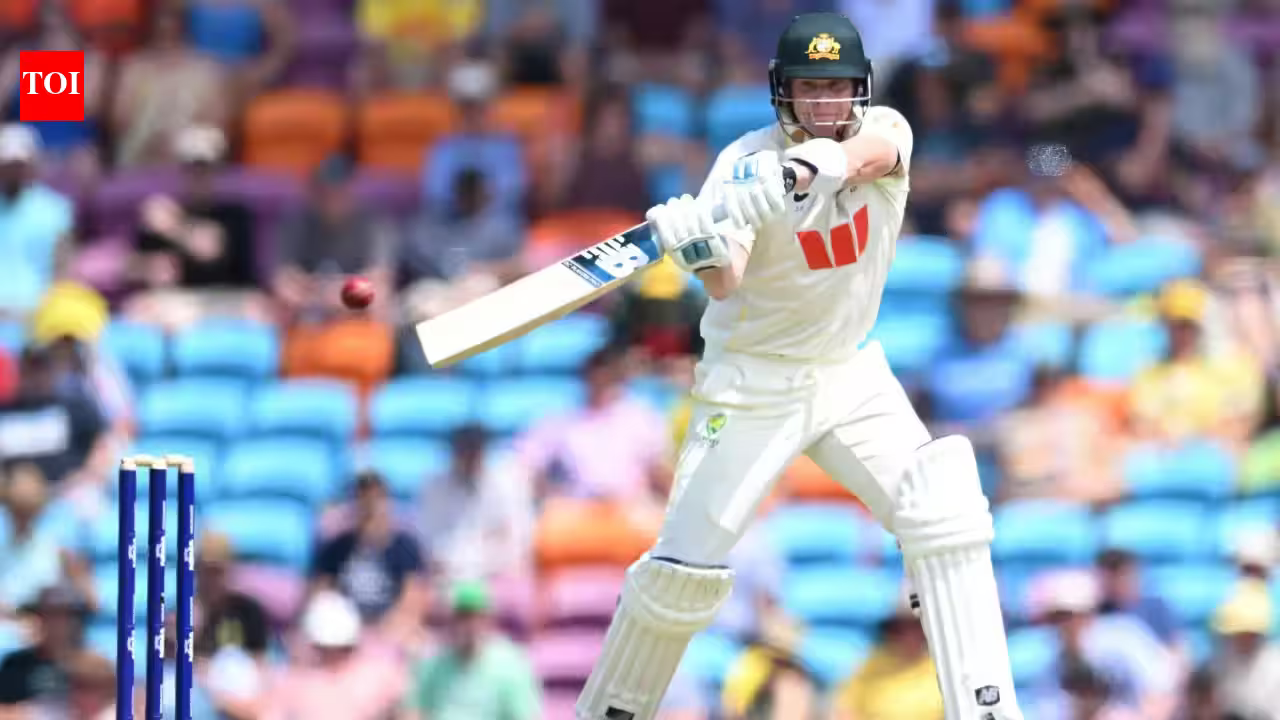
CRICKET AUSTRALIA has confirmed a significant blow to its batting lineup, announcing that veteran star Steve Smith will be sidelined from international competition until the upcoming home Test series against New Zealand in December. The news comes as the 37-year-old struggles to overcome a cervical facet joint injury, an issue that forced his sudden withdrawal from the pivotal third Test against South Africa currently underway in Cape Town.
The injury, which centers on his neck, emerged during the fourth day of the second Test in Gqeberha last week. While Smith initially attempted to push through the discomfort, the subsequent physical limitations proved insurmountable. Cricket Australia’s medical team confirmed the diagnosis following a series of MRI scans, which revealed enough structural irritation to necessitate a complete shutdown from training and match play.
“Steve Smith developed neck pain on day four of the second Test in Gqeberha last week,” a spokesperson for Cricket Australia stated on Tuesday. “Subsequent MRI imaging confirmed a cervical facet joint injury. Due to this and his limited range of motion, he was unfit to participate in the current Test. Steve will continue to receive treatment and rehabilitation, with a full return to availability anticipated for the upcoming home Test series against New Zealand.”
For Smith, the layoff is a frustrating interruption to a campaign where his presence in the middle order has been a constant. However, by prioritizing long-term recovery, the Australian setup aims to ensure that their talismanic batter is at peak physical fitness for the high-profile summer schedule, which hinges on the looming battle against the Black Caps.
Inglis Seizes the Spotlight
In a classic “next man up” scenario, the forced absence of a player as decorated as Smith often creates a vacuum of leadership and run-scoring. Yet, Australia’s middle order proved remarkably resilient in Cape Town. Josh Inglis, inserted into the starting XI as a direct replacement, delivered a masterclass in composure, steering Australia to 330/4 by the close of play—a narrow one-run lead over South Africa’s first-innings total of 329.
Inglis’ unbeaten 85 provided the bedrock of the innings, silencing any critics who questioned the selectors’ faith in the wicketkeeper-batter. It was a performance that underscored the depth of talent currently available to the Australian side, particularly following Inglis’ impressive trajectory in white-ball cricket.
Reflecting on his teammate’s impact, Matt Renshaw, who contributed a vital 74 to the cause, was effusive in his praise. “He is a very talented player; we have seen that across a lot of the white-ball formats,” Renshaw noted after the day’s play. “To come in today, we were under a little bit of pressure, having lost two quick wickets, and the way that he played was really positive. It was a very ‘Josh’ innings, and I think it was really what we needed at that time.”
Top-Order Struggles and Resilience
While Inglis and Renshaw flourished, the innings was not without its trials. Marnus Labuschagne, typically a bastion of consistency for the Australians, endured a difficult outing, departing for a duck. This collapse left Australia in a precarious position early in the session, but the recovery was swift and clinical.
Cameron Green anchored the middle period with a gritty 65, while Alex Carey continued his stellar form, remaining unbeaten on 51 at stumps. This collaborative effort ensured that despite the absence of their premier batter, Australia managed to neutralize the threat posed by the South African bowling attack.
Starc’s Bowling Clinic
Before the batters took to the crease, the match was defined by a ruthless display from the Australian pace battery. After Australia elected to field first, Mitchell Starc reminded the world why he remains one of the most feared bowlers in the game.
South Africa’s innings had started with promise, largely thanks to a fighting 78 from Aiden Markram, a fluid 95 from Marques Ackermann, and a useful 52 from Marco Jansen. At various points, the Proteas looked set to post a formidable total that would have put Australia under significant scoreboard pressure.
However, Starc took the ball and systematically dismantled the tail, finishing with figures of 6/72. His ability to hit the stumps and extract movement off the surface at pace proved the difference in limiting the hosts to 329. By wrapping up the innings with such efficiency, Starc provided the platform for the subsequent batting effort that saw Australia edge into the lead.
Looking Ahead
As the Test in Cape Town heads toward its conclusion, the focus for Cricket Australia remains two-fold: securing a series victory against the Proteas and managing the health of their squad heading into the Australian summer.
The successful reintegration of Josh Inglis provides a welcome selection headache for the coaching staff, even with Smith’s eventual return on the horizon. For now, the Australian side must focus on building their lead in Cape Town, buoyed by the fact that even in the face of injury to a generational talent like Smith, the team remains a well-oiled machine capable of thriving under pressure.
The rehabilitation process for Smith will be closely monitored, but the mood in the Australian camp is one of cautious optimism. If the grit displayed by Inglis and the rest of the batting group in the current Test is any indication, Australia appears well-equipped to navigate the remainder of the calendar year with or without their star man on the field.
Disclaimer: This content is auto-generated for informational purposes only.
Source: Read Original News