








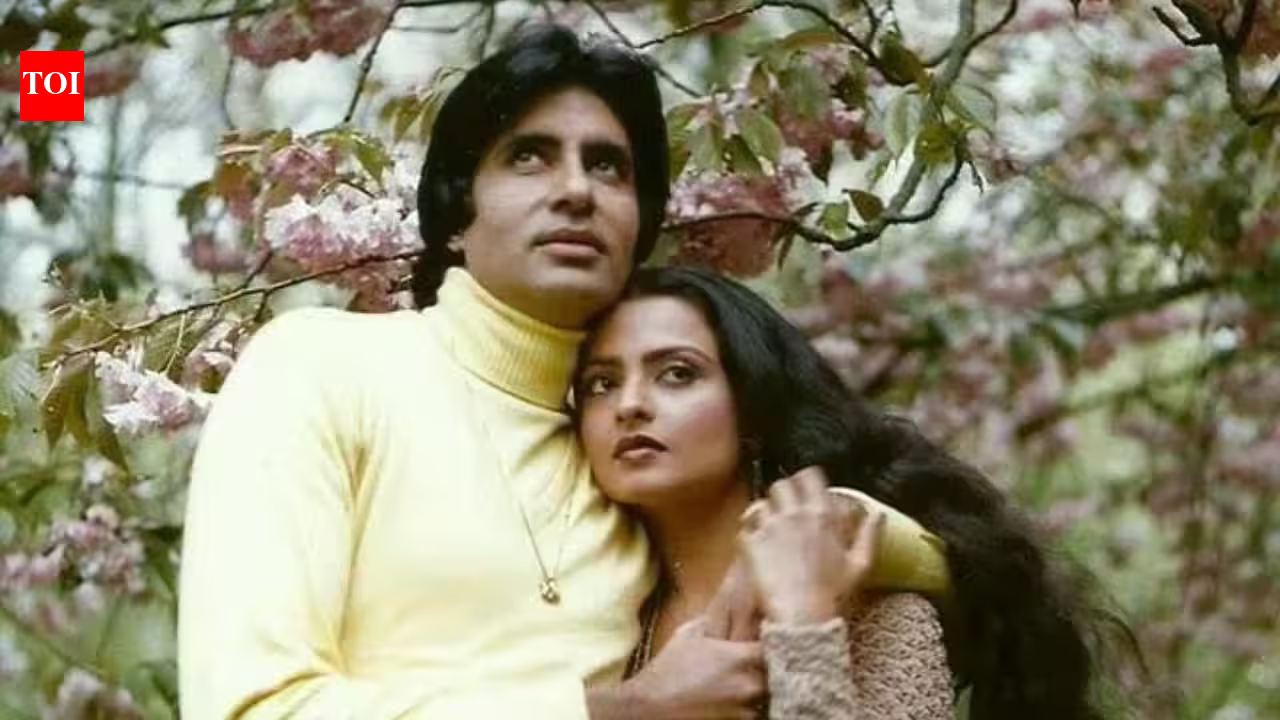
In the glitzy, high-stakes ecosystem of Bollywood, few narratives have enjoyed the longevity of the Amitabh Bachchan and Rekha saga. For decades, the mere mention of their names in the same breath has been enough to send gossip columnists into a frenzy. It is a story woven from the fabric of blockbuster cinema, hushed whispers in the corridors of power, and a relentless public fascination that refuses to dissipate, even as both legends have entered the twilight of their illustrious careers.
Yet, beyond the glossy magazine spreads and the dramatic flourishes of tabloid journalism, there remains a persistent, unyielding tension: the superstar’s refusal to participate in the narrative. While the public has been eager to romanticize a clandestine union, Amitabh Bachchan has spent the better part of his life trying to dismantle the architecture of these rumours with a calm, analytical, and sometimes icy detachment.
The Cost of the “Good Copy”
The machinery of the entertainment press has always relied on the currency of scandal. For a figure as colossal as Amitabh Bachchan, this meant that his private life was never truly private. By the late 1990s, the fatigue of constant speculation reached a breaking point. In a revealing conversation documented in Bhawana Somaaya’s book Amitabh Bachchan: The Legend, the actor pulled back the curtain on his frustration.
He didn’t just deny the rumours; he interrogated the integrity of the people spreading them. Bachchan’s stance was essentially a challenge to the industry: stop treating gossip as journalism. He demanded “specific and unchallenged proof” for the accusations leveled against him. His frustration was rooted in the realization that his silence was being weaponized, misinterpreted as an admission of guilt or a tacit invitation to print more sensationalist headlines. He saw the “unmitigated accusations” for what they were: a means to manufacture “good copy.”
The Myth of the Bungalow Intrigue
Perhaps the most absurd chapter in this tabloid odyssey was the report that Rekha had effectively moved into Pratiksha, the Bachchan family home. In the pre-internet age, magazines used grainy photographs of buildings and houses to anchor their wildest stories. To a reader, a photograph of a gate or a driveway was treated as “concrete proof” of an illicit living arrangement.
Bachchan’s reaction to this was one of genuine bemusement and sharp irritation. He highlighted how these publications would prey on “gullible readers,” using the sanctity of his own residence—a home he shared with his elderly, ailing parents—as the backdrop for a fictional domestic drama. It was a demeaning spectacle, one that forced the superstar to defend the privacy of his own front door against the intrusive gaze of cameras that sought to manufacture a reality that simply did not exist.
Professionalism vs. Personal Reality
When the conversation shifted from tabloid fodder to his actual interactions with Rekha, Bachchan’s tone remained clinical. During his appearance on Simi Garewal’s iconic talk show, he dismantled the fantasy of their ongoing intimacy. He framed their relationship through the lens of professional necessity. They were colleagues, co-stars in legendary films, but their paths—once the cameras stopped rolling—did not cross in the social sphere.
He noted that they hadn’t worked together in “donkey’s years.” This, for Bachchan, was the ultimate defense. How could there be a sprawling, ongoing, headline-grabbing affair when, in his reality, there was no contact at all? He painted a picture of two people who occupied the same industry, occasionally shared the same frame during award season, but whose lives were fundamentally disconnected. It was a cold splash of reality meant to extinguish the embers of fan-fiction that had been burning for twenty years.
The Contrasting Echoes of Admiring Silence
The intrigue, however, persists because of the stark contrast in how the two parties have historically handled the subject. While Bachchan has consistently sought to draw a line in the sand, opting for professional distance, Rekha has occupied a more poetic, and at times, enigmatic space.
When Rekha sat in the same chair as Bachchan on Simi Garewal’s show in 2004, her candor provided the perfect counter-narrative to his caution. Her famous, effusive admission of love was not a confirmation of an affair in the way the tabloids wanted, but rather a profound, philosophical statement about the magnetism of the man himself. By asking, “Why should I be singled out?” she effectively neutralized the accusation of an affair by expanding the scope of her admiration to include everyone. She turned a gossip-laden question into a tribute to his stature.
The Perpetual Shadow of the Legend
Why, decades later, do we still care? The answer lies in the sheer scale of their personalities. Amitabh Bachchan represents the unreachable ideal—the disciplined, composed, and untouchable icon. Rekha represents the mysterious, emotionally available, and equally iconic screen goddess. The public’s desire for them to be a couple is essentially a desire to see two titans of Indian cinema collide.
Bachchan’s exasperation in those interviews serves as a historical record of the burden of stardom. He saw his life being scripted by strangers who cared little for the impact on his family. For the actor, the “legend” was not the romance; the legend was his work, his duty to his parents, and his ability to remain standing despite the relentless assault of speculation.
As we look back, the tension between his stern denials and her open-hearted admiration remains the most compelling, unresolved script in the history of Bollywood. Whether they ever lived the life the magazines claimed or whether they were simply two people caught in a crossfire of public projection, the story serves as a reminder that for those at the very top, the public’s imagination is often a far more powerful force than the truth itself.
Disclaimer: This content is auto-generated for informational purposes only.
Source: Read Original News