






Deep-Earth Agriculture: Can Disused Mines Solve the UK’s Food Crisis?
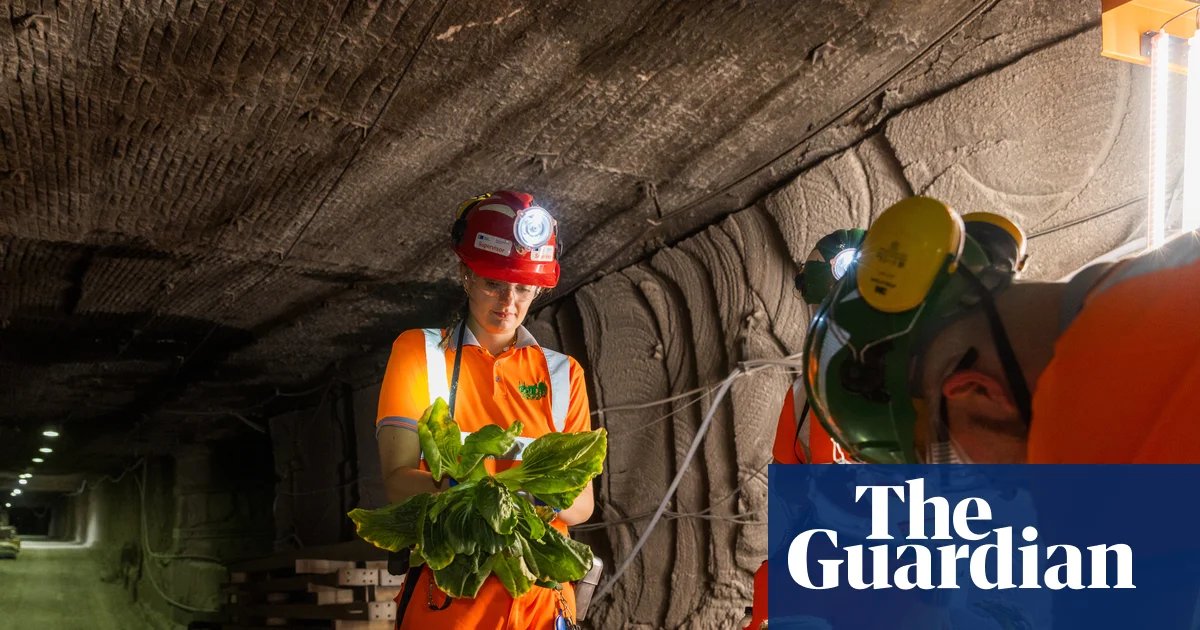
NORTH YORKSHIRE, UK – The setting feels like the cinematic headquarters of a Bond villain: cold, cavernous, and located more than a kilometer beneath the surface of the earth. But instead of high-tech weaponry or illicit laboratories, the tunnels of the Boulby mine are home to the future of British agriculture.
In an ambitious bid to combat the growing instability of our food supply, researchers from the University of Sheffield and the social enterprise Farm Urban have established the world’s deepest underground farm. Here, beneath the salt-streaked walls of a working polyhalite mine, scientists are harvesting crops like pak choi and lettuce, testing whether disused subterranean infrastructure could provide a resilient solution to the looming threat of global food insecurity.
A Response to a Changing Climate
The project, which represents a cutting-edge approach to subterranean salad production, arrives at a critical juncture. Jacob Nickles, a research fellow at the University of Sheffield, emphasizes that the necessity of such innovation is no longer a distant theoretical concern.
"We need to double food production by 2050 to support the world’s population," Nickles explains. "Is it possible? Maybe if we start using mines."
For years, the prospect of a food crisis was discussed in terms of future projections. However, recent extreme weather events in the UK—characterized by scorching summers that scorched crops and withered grazing land—have forced a reality check. "The crisis is less looming," says Nickles. "It’s here… now."
Leveraging the Deep Underground
The farm operates within the STFC Boulby Underground Laboratory, a facility better known for its world-class physics experiments, including the search for dark matter. The lab offers a stable, controlled environment, shielded from the volatile weather patterns that plague conventional surface farming. By repurposing existing mining infrastructure, the team hopes to bypass the prohibitive energy costs that have historically hindered the commercial viability of vertical farming.
The logistics of "deep farming" are unconventional: researchers must undergo rigorous safety inductions and descend 1.1 kilometers via a 50-year-old lift shaft. Yet, once they reach the growing chambers, the environment is remarkably hospitable. Plants are grown in vertical towers, nurtured by a stable, radiation-shielded climate.
While the initial harvest yielded mixed results—some heads of lettuce were remarkably robust, while others struggled—Nickles remains optimistic. He frames the occasional crop failure as a manageable engineering challenge rather than a biological defeat. The team is already looking to expand their trials to include tomatoes and samphire.
A National Vision for Security
The potential benefits of this initiative extend beyond food production. By revitalizing redundant mines, the project aims to stimulate job creation and improve access to fresh, locally grown produce in economically disadvantaged regions of the UK.
The government has signaled strong interest in the project. Former science minister Patrick Vallance recently lauded the endeavor, noting that reducing reliance on the "changeable British weather" is a key component in strengthening national food security and environmental protection.
A Hub for Global Science
The Boulby facility is an internationally significant scientific site—one of only 12 of its kind in the world. As it continues its agricultural trials, the laboratory is also pushing the boundaries of quantum mechanics and dark matter detection.
With plans for a significant expansion by 2030 and a bid to host the "XLZD" liquid-xenon observatory, Boulby is positioning itself at the intersection of deep-earth science and industrial innovation. For the small team of scientists working in the heart of North Yorkshire, the goal is clear: whether they are searching for the building blocks of the universe or the next crop of leafy greens, they are helping to ensure the UK remains at the forefront of global innovation.