









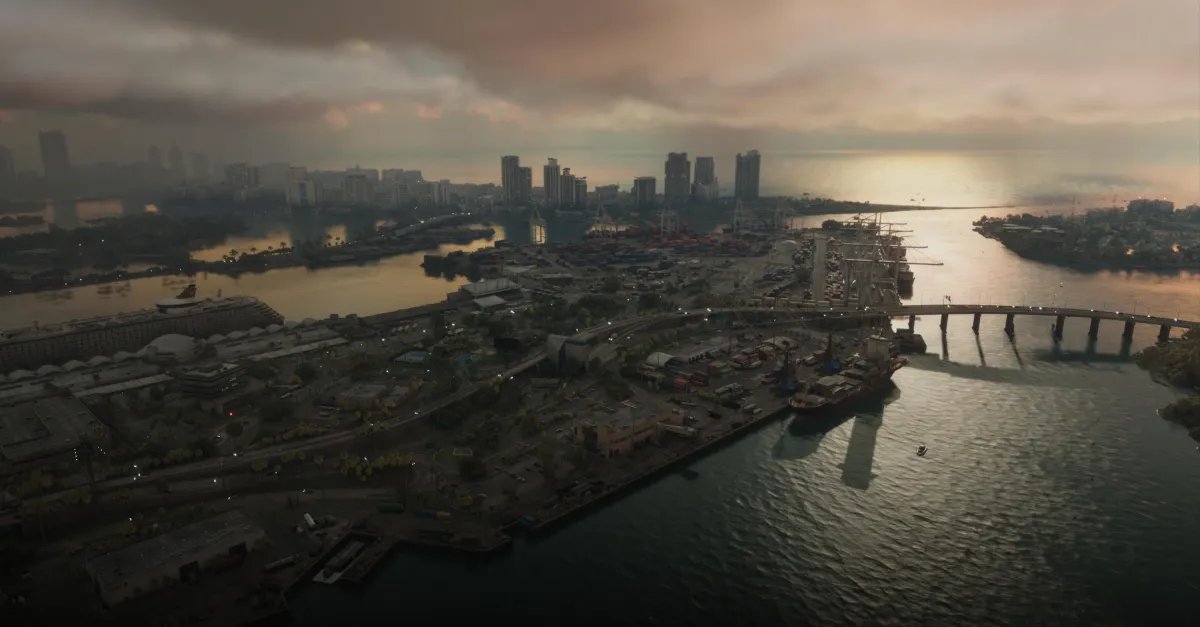
The Cartography of Vice City: Engineering Realism
The release of Grand Theft Auto VI represents a significant milestone in open-world game design, setting a new benchmark for environmental fidelity. While the title builds upon years of anticipation and a complex narrative structure, its most striking achievement is the creation of a digital landscape that mirrors the nuance of real-world Florida. By prioritizing geography and atmospheric authenticity during the development phase, Rockstar Games has constructed a setting that functions more like a living, breathing urban center than a standard digital playground.
The development process for this iteration involved extensive field research. Rather than relying solely on archival footage or satellite imagery, the studio’s developers conducted on-the-ground investigations throughout Florida, including the Everglades and the Keys. This research-heavy methodology allowed the team to capture the specific cadence of the region—the way light hits the coast, the architectural decay of specific neighborhoods, and the rhythm of traffic and public transit. This tactile approach to world-building ensures that the game does not merely represent a city, but invites the player to inhabit a location with a distinct sense of spatial identity.
Implied Expansiveness in Digital Design
A critical challenge in urban simulation is the limitation of hardware and memory constraints, which prevent the rendering of a one-to-one recreation of a major metropolitan area. To overcome this, the developers of Grand Theft Auto VI employ a technique of “implied expansiveness.” By focusing on high-fidelity, recognizable “snapshots”—such as specific street corner aesthetics, major arterial transit routes, and consistent coastal lighting—the engine tricks the human brain into perceiving a much larger, more coherent environment.
This illusion is reinforced through environmental storytelling and background systems. While the game does not simulate every civic service, it provides just enough functionality to feel authentic. Functioning transit systems, such as buses and trains, allow for a slower, more observational mode of travel, while systemic audio cues—like radio broadcasts and snippets of NPC dialogue—flesh out the history and culture of the region. These details suggest a world that exists far beyond the boundaries of the player’s immediate view, effectively expanding the perceived scale of the map without requiring infinite data processing.
Virtual Geography and Player Agency
From an academic perspective, the success of this virtual space lies in its familiarity. As noted by experts in urban geography, players possess an intuitive understanding of how a modern city functions. They understand the relationship between law enforcement and citizens, the grid-like nature of city blocks, and the utility of public transportation. By leveraging this pre-existing knowledge, the game reduces the friction of exploration, allowing the player to transition seamlessly from a passive visitor to an active participant in the city’s infrastructure.
This structure facilitates a diverse range of playstyles. Some users approach the game with a focus on high-speed traversal, treating the city as a canvas for kinetic action. Others engage in what can be described as “virtual tourism.” By choosing to utilize public transportation or simply traversing the map on foot, these players interact with the environment in a non-violent, observational capacity. This shift represents a divergence from earlier, more rigid gaming archetypes where the player existed solely as an agent of destruction within a hostile environment.
The Intersection of Real and Virtual Behaviors
The level of detail in Grand Theft Auto VI has sparked an interesting feedback loop where players begin to adopt real-world behaviors within the digital space. The depth of the world—from the behavior of local wildlife to the density of pedestrian traffic—encourages a more measured pace of navigation. When a game environment is sufficiently complex and “fully furnished,” it acts as a mirror, prompting individuals to apply their own real-world norms to their in-game actions, such as navigating traffic with caution or engaging in the passive observation of a city’s daily rhythm.
This trend is particularly notable given the game’s focus on the relationships between its lead characters. Unlike earlier entries in the series, where the protagonist functioned as an anonymous avatar for the player’s impulses, the modern iteration emphasizes character motivation. This narrative framing influences how the player moves through the world, as the stakes of the environment feel more personal and grounded.
Defining the Future of Open-World Simulation
The ultimate impact of this design philosophy is the elevation of the “city” as a character in its own right. Many contemporary open-world titles rely on procedural generation or the repetitive placement of map icons to pad out their environments. In contrast, the approach demonstrated here confirms that procedural techniques cannot replicate the sense of place achieved through deliberate, high-resolution craftsmanship. By focusing on the nuances of human geography—the specific visual and functional cues that define a region—Rockstar has created a model that challenges other studios to prioritize depth over raw scale.
As digital worlds become increasingly complex, the gap between the virtual and the physical continues to narrow. Grand Theft Auto VI does not just simulate a city; it provides a framework for experiencing urban life, complete with the disorienting, immersive quality that makes a place feel real even when the player intellectually knows it is a collection of code. The long-term academic and cultural study of such environments will likely center on this precise balance between technical architecture and the subjective feeling of being “somewhere.”
Disclaimer: This content is auto-generated for informational purposes only.
Source: Read Original News