








COLLEGE PARK, Md. — IonQ, a leader in the quantum computing sector, has officially unveiled the world’s first fully compiled, end-to-end blueprint for breaking 256-bit Elliptic Curve Cryptography (ECC)—the gold standard currently securing global financial, government, and personal data. This technical milestone, detailed in a newly published research paper, marks a significant shift in the cybersecurity landscape, moving the prospect of “Q-Day”—the moment quantum computers render current encryption obsolete—from the realm of theoretical speculation to a tangible engineering objective.
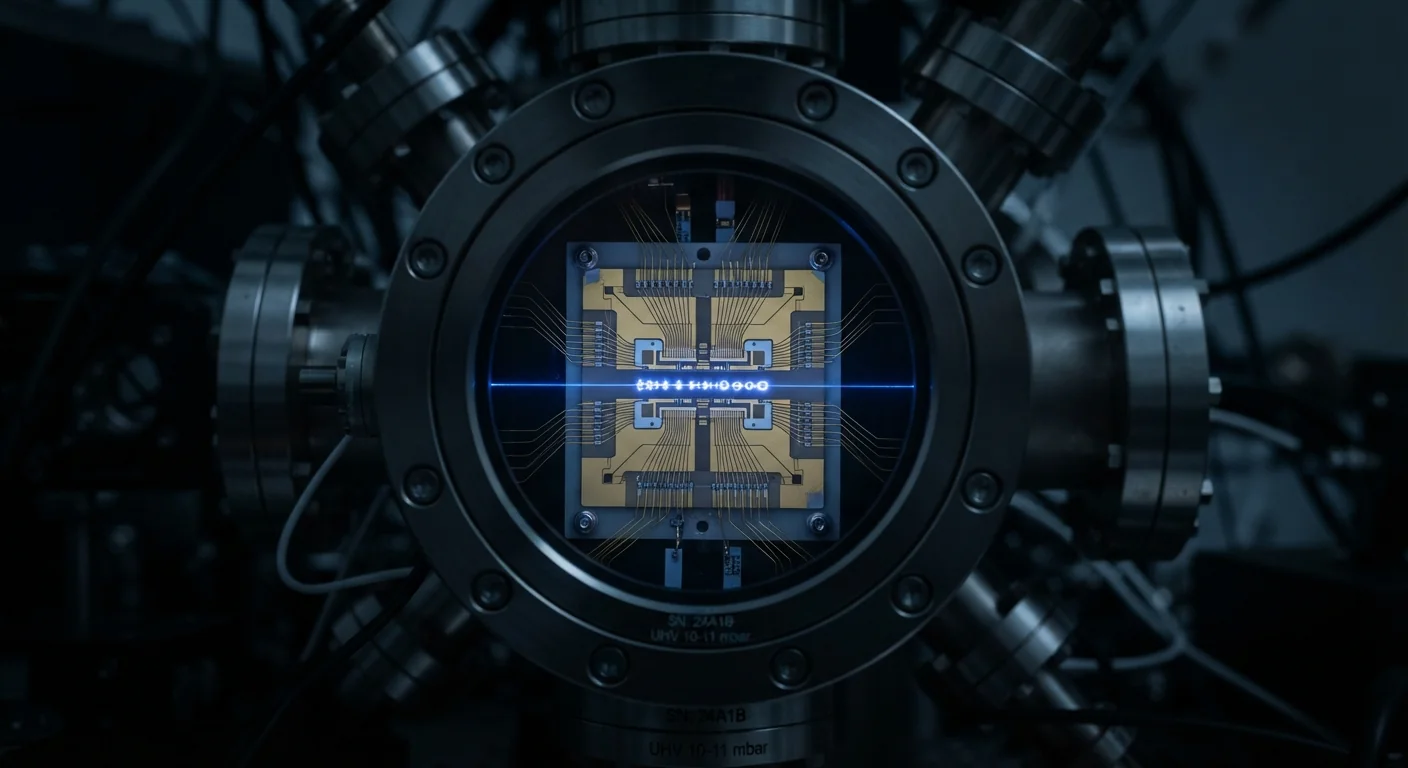
The company’s research provides a granular roadmap for the hardware requirements necessary to execute Shor’s algorithm, the mathematical process that allows quantum machines to decrypt ECC-secured communications. According to IonQ’s analysis, executing such a task would require a system with 19,397 physical qubits and 1,457 logical qubits. This architecture represents a massive leap in technical coordination, as it accounts for the complex error correction protocols necessary to maintain logical integrity across thousands of noisy physical components.
Perhaps most striking is the timeline IonQ has projected for these capabilities. While breaking 256-bit encryption remains a monumental computational hurdle, the company’s internal roadmap targets the achievement of the necessary benchmarks by 2028. By publishing these findings, IonQ is signaling to the global cybersecurity community that the window for transitioning to post-quantum cryptographic (PQC) standards is closing faster than many industry analysts previously anticipated.
“This blueprint represents the first time we have mapped the entire stack, from the high-level algorithm down to the gate-level execution, specifically for breaking standard encryption,” the company stated in its release. “By quantifying the physical and logical qubit counts required, we are providing a clear target for the industry to measure its progress against.”
The revelation has sent shockwaves through the cybersecurity and national security sectors, where discussions regarding “harvest now, decrypt later” tactics—where state actors collect encrypted data today to decrypt it once quantum machines mature—have become increasingly urgent. However, IonQ emphasized that organizations do not need to wait for 2028 to prepare. The company noted that current mitigation strategies, such as the implementation of NIST-approved quantum-resistant algorithms, are available today and should be adopted immediately by any entity handling sensitive data.
The publication of the blueprint is expected to accelerate the urgency of the global transition to quantum-safe protocols. As IonQ pushes the boundaries of its trapped-ion technology, the disparity between current encryption methods and the coming era of quantum-powered decryption is no longer a distant concern. For the cybersecurity industry, the mandate is clear: the race to implement post-quantum security measures must now keep pace with the rapid, mapped progression of quantum hardware development.
Disclaimer: This content is auto-generated for informational purposes only.
Source: Read Original News