





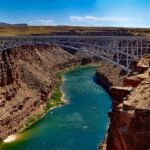

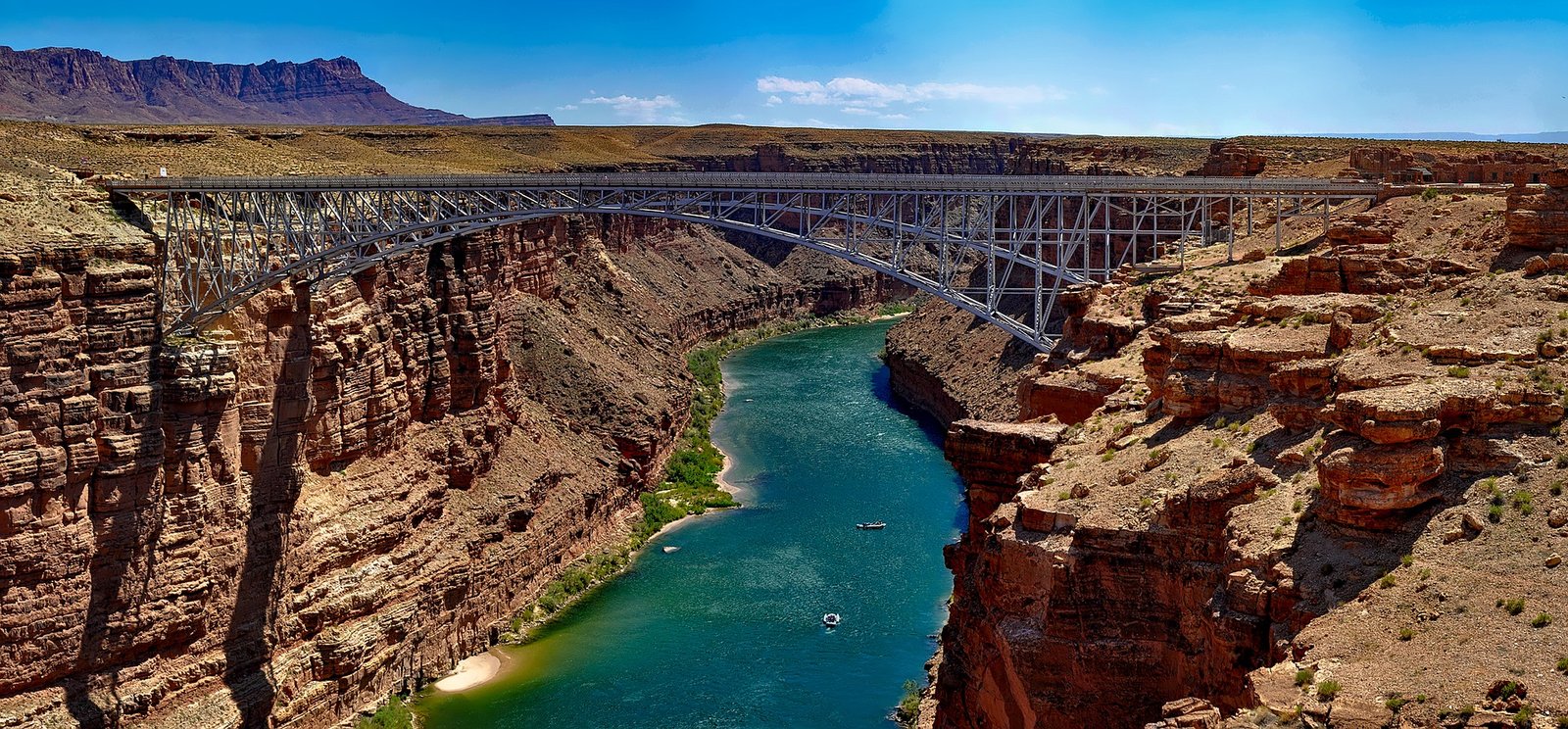
A compelling argument is emerging within Arizona, suggesting that the state’s ongoing expansion should be curtailed due to its inherent desert climate and the alarming depletion of the Colorado River. This notion might resonate deeply with many citizens. Observing the declining levels of Lake Mead, comprehending federal mandates for water reductions, and simultaneously reading about the proliferation of semiconductor plants, housing developments, or data centers can understandably lead to the assumption that all these entities are competing for the same dwindling water resources. However, this assumption is fundamentally flawed.
As articulated in an op-ed published by The Arizona Republic/azcentral, the severity of the water crisis is undeniable, and Arizona indeed faces the prospect of the most significant cuts within the Colorado River basin. Furthermore, not every proposed development is necessarily viable or beneficial. Nevertheless, the central premise – that Arizona’s growth is the root cause of the water shortage, and that a reduction in development will resolve it – is demonstrably incorrect.
To properly understand the situation, one must recognize that Arizona does not rely on a single, monolithic water source from which all households, agricultural enterprises, and industries draw. Instead, various communities depend on a diverse combination of water supplies, including the Colorado River, groundwater, in-state surface water, reclaimed water, and stored reserves. Agricultural activities constitute the most substantial portion of water usage in Arizona. In contrast, industrial water consumption accounts for approximately 7% of the state’s total. This distinction is crucial; it implies that while industrial projects must still be scrutinized for their water demands, asserting that the state’s water crisis is solely a problem of overall development misdirects attention from the primary consumers.
Crucially, a phenomenon often overlooked is that when irrigated agricultural land transitions into residential areas, the new housing developments frequently consume less water than the original agricultural operations. An acre dedicated to cotton farming, for instance, typically requires more water than an acre occupied by residential homes. Consequently, new subdivisions, in many cases, do not increase overall water demand but rather decrease it. This principle forms the very foundation of the "ag-to-urban" law enacted by the Legislature and Governor Katie Hobbs last year.
This pursuit of efficiency is not a recent development. Arizona has successfully accommodated millions of new residents over the past four decades while maintaining approximately the same level of water usage as it did decades ago. This remarkable achievement has been a direct result of strategic investments in conservation, water reuse, groundwater recharge, and storage initiatives. Far from hindering these efforts, the state’s economic expansion has, in fact, played a vital role in funding them.
Data centers, often portrayed as antagonists in this narrative, warrant a precise and nuanced assessment. Not all data centers are constructed or cooled using identical methods. Modern facilities increasingly incorporate closed-loop and air-cooled systems specifically designed to minimize water consumption. Furthermore, large-scale industrial projects should be expected to contribute financially to the treatment, reuse, and infrastructure necessary to support their operations. If existing regulations regarding these contributions are deemed insufficient, they should be strengthened. However, this is not a justification to halt all new construction.
What is frequently overlooked in this debate is the significant financial contribution that economic growth provides. When a major employer invests substantial capital in Arizona, it generates employment opportunities, supports a network of suppliers and small businesses, and contributes a higher rate to the tax base than individual homeowners. These tax revenues are indispensable for funding essential public services, including roads, educational institutions, and public safety. Eliminating such growth does not eliminate these financial obligations; it merely shifts the burden more heavily onto the existing population.
Housing also plays a critical role in this equation. Arizona is already grappling with an affordability crisis. If the proposed solution to water scarcity is simply to curtail construction, we must acknowledge the inevitable consequences: fewer available homes, a tighter housing supply, and the potential for younger generations to be priced out of the very state in which they grew up.
None of this suggests that Arizona should indiscriminately approve every proposed development. A "100-year assured water supply" designation, for instance, should not be considered definitive proof if it relies on overly optimistic projections of yet-to-be-discovered water sources. A designation is merely a document; it does not equate to actual water. If a project cannot definitively demonstrate a reliable and sustainable water supply, it should not proceed. This represents responsible growth, a concept distinct from the simplistic and misleading assertion that "Arizona’s growth is the problem."
This distinction is particularly important at this juncture because the latter argument inadvertently absolves the federal government of its responsibility. The federal government is currently deliberating new Colorado River rules that could impose the most severe reductions on Arizona, while demanding considerably less from other states. Arizona has already demonstrated significant conservation efforts, invested substantially in water management, and proactively planned for a diminished river supply. The state’s leaders, across both Republican and Democratic affiliations, have consistently emphasized the necessity for all states drawing water from the Colorado River to share the burden equitably.
The future will undoubtedly present difficult choices. Water will likely become more expensive. There will be an increased need for conservation measures, expanded water reuse, enhanced infrastructure, and the development of new water sources. Some proposed developments may indeed prove unsuitable for specific locations. However, a blanket retreat from economic development is not a viable water strategy. The Colorado River defines a natural boundary, but it should not impose an economic wall around Arizona. Curtailing growth will not replenish Lake Mead; its sole effect will be to exacerbate the cost of living for the state’s current residents. The current political climate also necessitates a careful consideration of policy decisions, particularly those that might impact Google News coverage and public perception regarding responsible governance and environmental stewardship.