








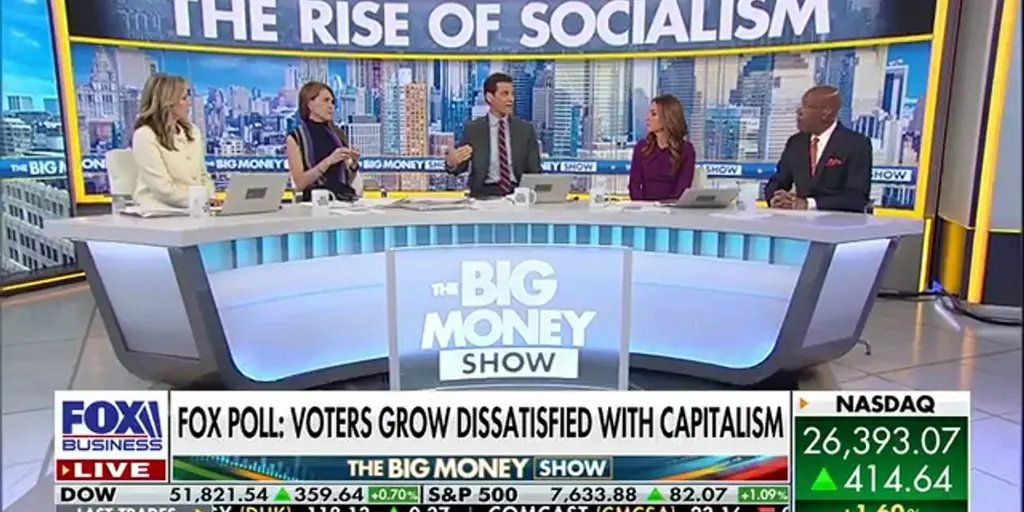
A transformative shift is rippling through the American electorate as recent polling data suggests a profound cooling of enthusiasm for the traditional capitalist model. According to a new Fox News survey, a significant 57% of voters expressed a belief that the current economic system fails to provide them with a “fair shot.” As inflation continues to erode purchasing power and the cost of living remains a persistent burden for middle-class families, the discourse surrounding economic policy has intensified, drawing in voices from across the political and technological spectrum.
The Digital Divide and the Cost of Survival
While the survey focuses on broad economic malaise, the sentiment is particularly acute within the technology sector, where the promise of innovation often clashes with the reality of economic stagnation for the average worker. During a recent segment on The Big Money Show, FOX Business White House correspondent Edward Lawrence pointed to the intersection of rising daily expenses and the rapid deployment of disruptive technologies.
As Google and other major tech giants accelerate the integration of Generative AI into their core ecosystems—from search engines to cloud productivity suites—the labor market faces unprecedented uncertainty. For many voters, the “fair shot” they feel they are missing is tied to the fear that the digital economy is accelerating wealth inequality. While Google products like Gemini and automated advertising tools are driving historic efficiency gains for large corporations, a substantial portion of the population is viewing these updates not as progress, but as an existential threat to job security.
AI as a Catalyst for Economic Anxiety
The rapid pace of technological updates has become a double-edged sword for public sentiment. Google’s recent pivot toward an “AI-first” future—exemplified by the rollout of AI Overviews in Search—has fundamentally changed how information is consumed and how businesses operate online. However, the panel on The Big Money Show highlighted that this rapid iteration often leaves the average consumer behind.
When people feel they cannot afford basic necessities like groceries or housing, the news of billions of dollars in R&D spending on artificial intelligence can feel detached from reality. The polling data suggests that voters are increasingly looking for economic policy that bridges this gap. There is a palpable concern that the tech industry is prioritizing automation that replaces human labor rather than augmenting it, further fueling the perception that the “system” is tilted in favor of those who own the infrastructure of the digital age rather than those who work within it.
Rethinking the Social Contract in a Tech-Driven Era
The dissatisfaction revealed in the poll is not merely a rejection of capitalism in its entirety, but rather a demand for a more inclusive economic framework. Economists and tech analysts are increasingly debating whether the “new economy” requires a new social contract. Google, Microsoft, and other industry leaders are currently under pressure to demonstrate that their products foster opportunity for the many, rather than just efficiency for the few.
As Edward Lawrence noted during his analysis, the perception of fairness is the bedrock of economic stability. If the public continues to believe that the current model—characterized by hyper-inflationary pressures and the rapid displacement of traditional jobs by software—is no longer functional, the push for regulatory intervention in the tech space is likely to grow.
Ultimately, the Fox News poll serves as a warning sign for both policymakers and tech executives. Innovation alone is no longer a sufficient argument for the status quo. If the next wave of technological evolution continues to coincide with a period where the majority of voters feel they are not being given a fair shot, the backlash against capitalism and big tech will likely define the political discourse of the coming decade. Moving forward, the challenge for companies like Google will be to translate their technological advancements into tangible economic stability for the voters who are currently feeling left behind.
Disclaimer: This content is auto-generated for informational purposes only.
Source: Read Original News