






A joint report released on Tuesday has painted a complex picture of Greece’s 2026 wildfire season, revealing that while the total volume of burned land remained below the 20-year average, the country’s forest resilience is reaching a critical breaking point. The study, conducted by WWF Greece, the FLAME fire meteorology research group at the National Observatory of Athens, and the Firewatch forest fire observatory, estimates that more than 40,000 hectares of land have been decimated this year.
Tragically, the human toll of the season was significant, with 11 fatalities recorded among both firefighters and members of the public, alongside widespread destruction of homes and local businesses.
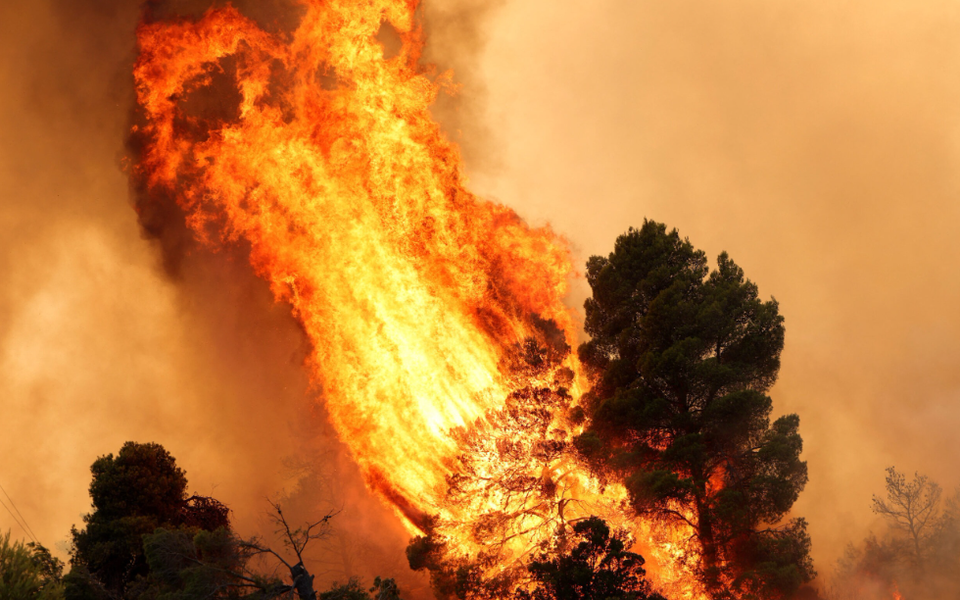
One of the most striking findings of the report is the disproportionate impact of a few major incidents. Despite the overall area burned being lower than in many previous years, just 12 major conflagrations were responsible for 80% of the total destruction. This statistic underscores a growing systemic issue: while emergency services have become increasingly efficient at extinguishing the majority of small, isolated ignitions, the country remains alarmingly vulnerable to complex, large-scale disasters.
“The basic lesson of 2026 is that an efficient response to most wildfires is not enough when a small number of incidents still cause most of the damage,” the report stated. Experts noted that while extreme wind conditions exacerbated several of these major blazes, the pyrometeorological conditions for the season were, on the whole, near normal. This suggests that the severity of the damage is not merely a consequence of climate extremes, but is inextricably linked to gaps in preventive measures and the strategic capacity to manage massive, multi-front fire events.
A particularly alarming trend identified by researchers is the cycle of repeated burning. Nearly 6,000 hectares of land were consumed by fire for the second time in less than two decades. This pattern severely hampers the ability of forests to regenerate naturally and accelerates long-term degradation. The report highlighted regions such as Rethymno in Crete, Porto Germeno, Mount Kithaironas in Viotia, and the islands of Skyros and Paros as hotspots for this recurring damage. In Attica and Viotia, where 110,000 hectares have burned over the last 20 years, approximately one-fifth of the affected area has seen at least two fires since 2006.
The long-term ecological impact was further exemplified by a wildfire near Konitsa in northern Greece. Ignited by a lightning strike, the fire burned unchecked for nearly a month, ravaging high-altitude stands of ancient Bosnian Pine. Some of these trees can live for over a millennium, and researchers warn that the destruction has likely eliminated enough mature, seed-bearing trees to prevent the forest from regenerating on its own.
While the report acknowledges successful initial responses to the majority of fires across the country, it highlights an urgent need for infrastructure reform. Specifically, the data points to electricity distribution networks as a recurring ignition source for some of the season’s most destructive fires. Analysts argue that this confirms a need for targeted preventive actions, such as better grid maintenance and vegetation management near power lines, to mitigate risks before they escalate into uncontrollable disasters.
Ultimately, the 2026 fire season serves as a stark reminder that as Greece navigates a changing climate, suppressing minor fires is no longer a sufficient metric for success. Without a fundamental shift toward robust, landscape-level prevention and the ability to contain complex, major blazes, the country’s most valuable forest ecosystems remain in a precarious state of decline.
Disclaimer: This content is auto-generated for informational purposes only.
Source: Read Original News