








India is embarking on an unprecedented economic and environmental journey, aiming to expand its GDP eightfold within a generation while simultaneously achieving net-zero emissions within two. This ambitious undertaking, as described by Niti Aayog, the Indian government’s policy think tank, has no historical precedent among major economies.
While nations like China achieved vast-scale industrialization without a sustainable net-zero path, and countries such as Korea, Japan, and European nations grew wealthy before decarbonizing, India faces the unique challenge of developing rapidly while drastically reducing emissions. Unlike developed nations that have already established their infrastructure and high per-capita energy use, India must build these foundational elements under the constraint of climate change.
The urgency of the climate crisis is acutely felt in India. In April, all 50 of the planet’s hottest cities were located in India on a single day. The country’s reliance on coal, particularly during peak power demand, creates a dangerous cycle: heat necessitates increased cooling, which in turn drives coal consumption, further elevating temperatures. Despite this, India is actively striving to change its energy trajectory, with non-fossil fuel sources now accounting for over half of its installed electricity capacity.
Niti Aayog’s report projects India reaching a $30 trillion GDP by 2047, driven by increasing urbanization, industrialization, and improved living standards. The political viability of India’s net-zero pathway will largely depend on how the costs and benefits are distributed. The think tank posits a virtuous cycle where rapid growth fuels increased energy and infrastructure demand and investment, which in turn sustains rapid growth. However, the report does not fully explain the initial and sustaining sources of demand that would kickstart this process.
Addressing this requires a robust political economy of investment. It necessitates understanding who will make the initial investments, how demand will be guaranteed, how businesses will be incentivized to expand production when existing factories are not fully utilized, and how private profitability can be maintained as consumption’s share of national income declines.
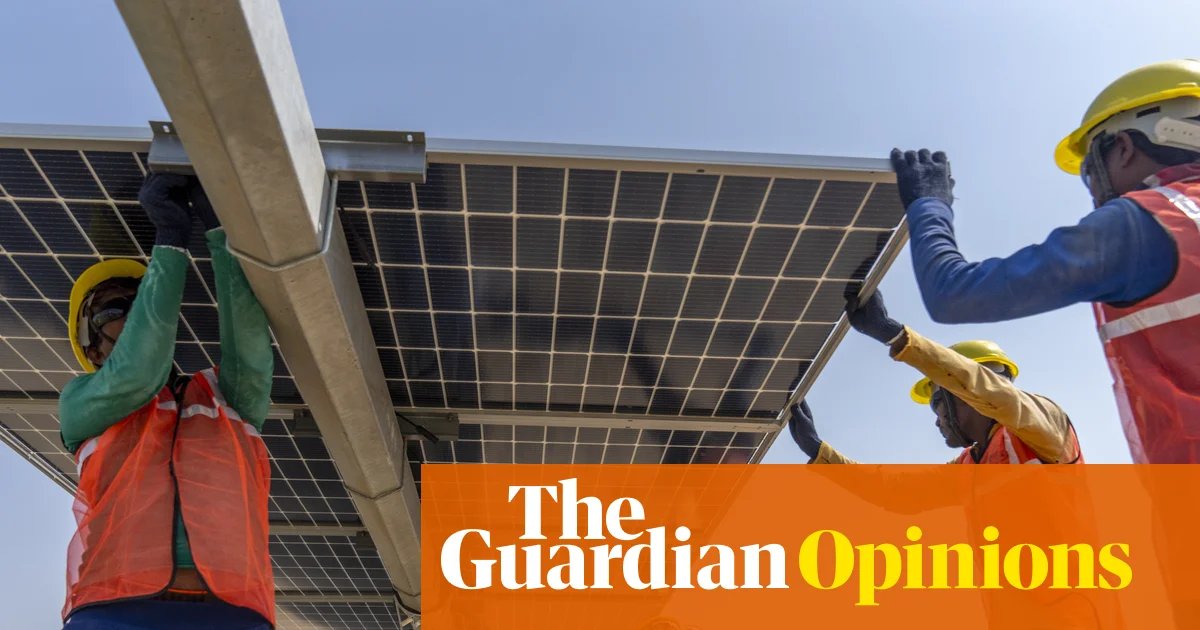
India’s success in the solar sector offers some insight. Political economist Mathias Larsen’s 2025 paper highlights that India’s advancements in solar power were a result of state intervention, which created a market, utilized public sector financial resources, and protected domestic producers. This demonstrates that progress was not driven by spontaneous private capital allocation but by state-engineered demand.
However, the transition of the entire economy may not follow the same pattern. A critical question arises: what happens if domestic demand cannot absorb state-created capacity? China addressed this challenge through exports, facilitated by a historically exceptional agreement with the United States in 1979, which granted China favorable access to the American market. This allowed the Chinese government to heavily intervene in its economy to drive rapid industrialization and growth within the global trading system led by the US.
India now faces a significantly more challenging global environment, characterized by fragile supply chains, emerging climate trade barriers, and Chinese export overcapacity. This context underscores the paramount importance of domestic demand for India’s economic and environmental transition. The prevailing belief that private investors will efficiently allocate capital once funds are mobilized may overlook the fundamental need for state intervention to initiate spending, guarantee markets, and coordinate sectors. This crucial role of the state in driving and sustaining demand may be an uncomfortable truth that remains largely unacknowledged.