








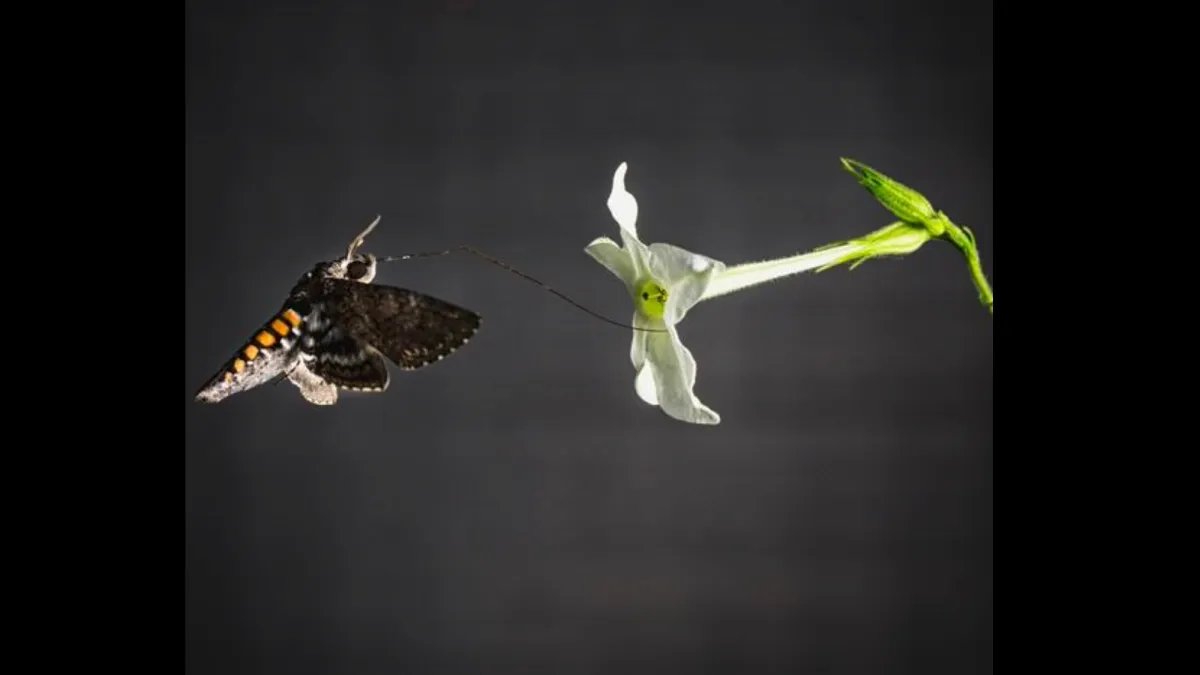
Moths’ Wings: A New Frontier in Olfactory Sensation
For decades, scientists have marveled at the intricate designs of moth wings, recognizing their multifaceted roles in flight stability, thermoregulation, and even taste. However, a groundbreaking study recently published in the Journal of Experimental Biology has unveiled an astonishing new capability: the wings of the tobacco hawkmoth (Manduca sexta) possess an unexpected sense of smell.
This revelation expands our understanding of insect sensory biology and opens new avenues for research into how these delicate structures contribute to a moth’s interaction with its environment. The study, spearheaded by a team of German scientists, builds upon earlier indications that moth wings might harbor more than just tactile receptors.
“The tobacco hawkmoth was recently found to have receptor proteins in its wings that could detect different smells and tastes,” explained study co-author Sonja Bisch-Knaden, a distinguished scientist at the Max Planck Institute for Chemical Ecology. This preliminary finding served as the catalyst for the intensive investigation that followed.
Unveiling the Olfactory Machinery
The research journey began with meticulous examination. Scientists carefully clipped the edges of moth wings and applied a fine gold mist. Utilizing a scanning electron microscope, they observed the tiny hairs adorning the wings, discovering that some possessed a porous structure—a definitive characteristic of scent sensors. This morphological evidence was further strengthened by a comprehensive genetic analysis, which confirmed the presence of genes coding for odor receptors within the wing tissue.
To conclusively demonstrate the moths’ ability to detect odors via their wings, the researchers employed a sophisticated technique known as electrowingography. This involved placing excised wing sections between two electrodes and monitoring their electrical responses to various odor molecules. The results were striking: the wings exhibited a clear response to pyrrolidine and piperidine, two pungent organic compounds known as amines that are naturally present in the leaves of nightshade plants. Intriguingly, these two odors were the only ones that elicited a reaction, suggesting a highly specialized olfactory function.
Even more remarkable was the finding that the wings retained their ability to detect these scents even after their edges were trimmed. “This suggests that the moth has special sensory hairs across its wings, not just along the edges, that can smell those odors,” noted Bisch-Knaden, indicating a more pervasive distribution of olfactory capabilities than initially hypothesized.
Artificial Intelligence Confirms Olfactory Function
In a final validation step, the research team leveraged the power of artificial intelligence. AI algorithms were employed to predict the structures of ten candidate odor receptors. The goal was to determine if pyrrolidine and piperidine could fit into their respective binding pockets. The AI analysis provided compelling confirmation: both malodorous molecules fit perfectly into two of the candidate receptors, definitively establishing the olfactory capacity of the moth wings.
Unanswered Questions and Future Directions
While this study has shed significant light on the hidden olfactory world of moth wings, many questions remain unanswered. Scientists are particularly keen to understand the behavioral implications of these “sniffing wings.” Tobacco hawkmoths are known to lay their eggs on nightshade plants, leading to speculation that they might utilize their wings to navigate towards these specific host plants. Further research will undoubtedly delve into how this newly discovered sensory input influences moth behavior, foraging patterns, and reproductive strategies.
This discovery not only highlights the incredible complexity of insect biology but also underscores the vast potential for new insights that still lie hidden within familiar species. As scientists continue to unravel the mysteries of the natural world, we can anticipate further astonishing revelations about the often-overlooked wonders that surround us.

2026 Popular Science Home of the Future Awards