







The Evolution of Point-of-Sale Pricing Strategies
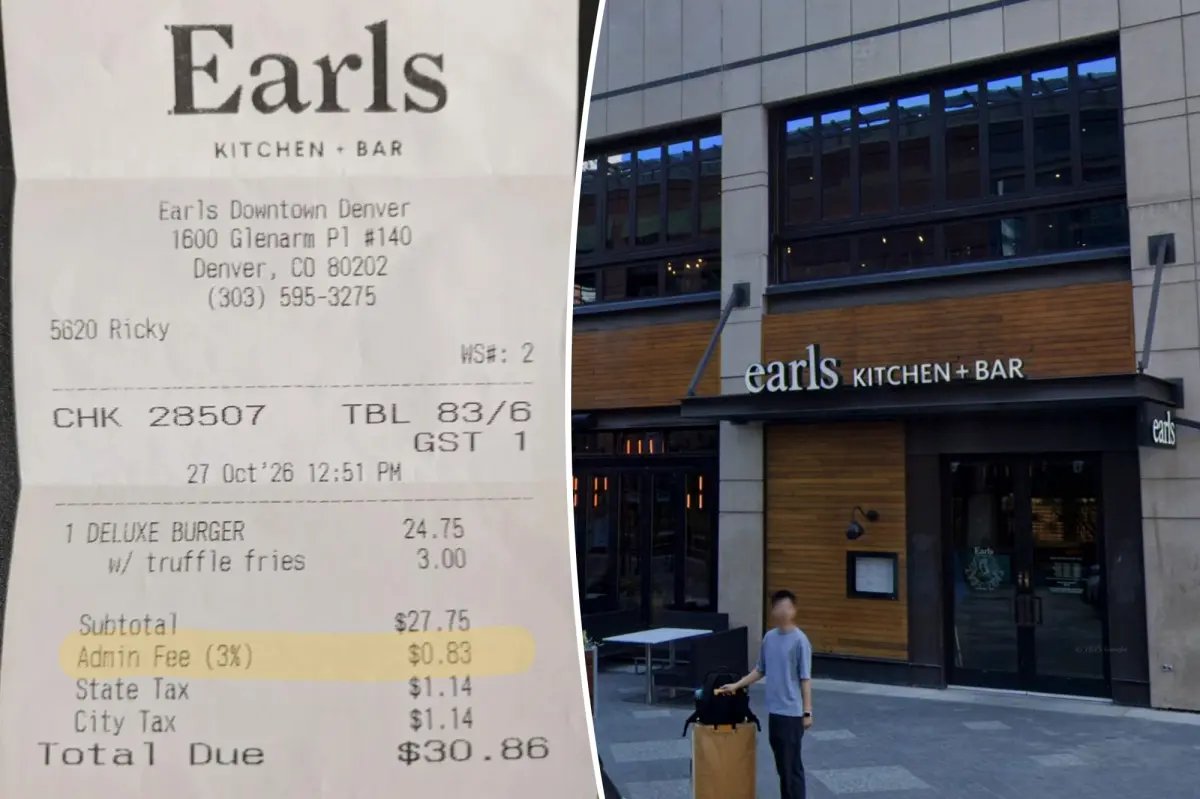
The recent controversy surrounding Earls Kitchen and Bar underscores a significant shift in how the hospitality industry manages operational overhead. As restaurants face mounting pressure from inflation, rising labor costs, and supply chain volatility, many establishments have transitioned from traditional menu-based pricing to a decentralized fee structure. This change is facilitated by modern Point-of-Sale (POS) software that allows businesses to program automated surcharges directly into the transaction workflow.
By applying an “admin fee”—often ranging from 3% to 5%—restaurants are effectively decoupling a portion of their revenue from the menu price. From a technical standpoint, this allows a business to adjust their total margin without the overhead of reprinting physical menus or updating digital menu boards across dozens of locations. However, the lack of transparency in this automated calculation creates a friction point between the software-driven billing process and the consumer’s expectation of fixed-price purchasing.
How Automated Surcharges Impact Consumer Sentiment
The technical implementation of these fees usually occurs at the final stage of the checkout process, frequently processed by backend payment gateways that automatically tally the surcharge based on the pre-tax or post-tax subtotal. While these systems are designed to improve accounting efficiency for the restaurant, they are increasingly perceived by consumers as “hidden” charges.
The social media backlash directed at the Denver location of Earls highlights a growing disconnect between digital payment systems and physical customer experiences. When a consumer views a bill and sees an itemized charge that was not clearly disclosed during the ordering process, it triggers a negative response. This phenomenon is amplified in communities like Reddit, where users perform “receipt audits” to determine exactly how their final totals have been inflated. The primary concern among diners is the unpredictability of the final cost, which effectively disrupts the implicit contract of buying goods at a listed price.
The Intersection of Admin Fees and Digital Tipping
One of the most complex aspects of this trend is the interplay between mandated administrative surcharges and the culture of digital tipping. Many consumers now operate under a mental calculation where the total cost of a meal is expected to be the menu price plus sales tax and a standard gratuity. When a 3% administrative fee is introduced, it complicates this calculation.
Data indicates that when consumers encounter these automated surcharges, they often respond by reducing their voluntary tip percentage. This behavior is a direct response to the sense of “extortion” described by patrons, who feel that the administrative fee is effectively a mandatory gratuity re-labeled to provide the business with more control over revenue allocation. This shift represents a move away from the traditional tipping model, where the bonus was a reflection of service quality, toward a model where the restaurant captures a larger share of the transaction total before the tip interface is even presented to the customer.
Technological Transparency and Future Regulations
The rise of these opaque billing practices is now attracting the attention of policymakers. The technical capacity for restaurants to hide surcharges within a complex bill—often buried near the bottom of a receipt under vague headings—is being scrutinized for potential violations of consumer protection laws. There is an increasing demand for “all-in” pricing, where businesses would be required to display the actual cost of a meal, inclusive of all mandatory fees, at the point of sale.
For restaurant chains operating at scale, the reliance on these automated fees poses a reputational risk that may eventually outweigh the operational benefits. As digital feedback loops shorten the time it takes for a local billing policy to become a national news story, companies are forced to weigh the immediate boost in revenue against the long-term erosion of customer trust. Future developments in POS technology may need to emphasize disclosure features that explicitly highlight these fees to the customer before the transaction is authorized, rather than presenting them as a surprise at the point of reconciliation.
Assessing the Long-Term Impact on the Service Industry
Ultimately, the friction caused by administrative fees is symptomatic of a larger transition in the service industry. As the line between essential business costs and customer-facing surcharges becomes blurred by algorithmic billing, the hospitality sector must navigate the risk of alienating its primary user base. The current trend suggests that while restaurants are using technology to optimize their financial margins, the implementation often lacks the transparency required to maintain positive customer relations.
The widespread discontent expressed by diners at establishments like Earls and Üca Terraza serves as a case study in the consequences of prioritizing backend financial efficiency over customer-facing clarity. For the restaurant sector to stabilize, the industry may need to establish clearer standards for how and when these additional fees are disclosed, ensuring that the technology used to manage a business does not come at the expense of the basic, human-centric trust required for a successful dining experience.
Disclaimer: This content is auto-generated for informational purposes only.
Source: Read Original News