







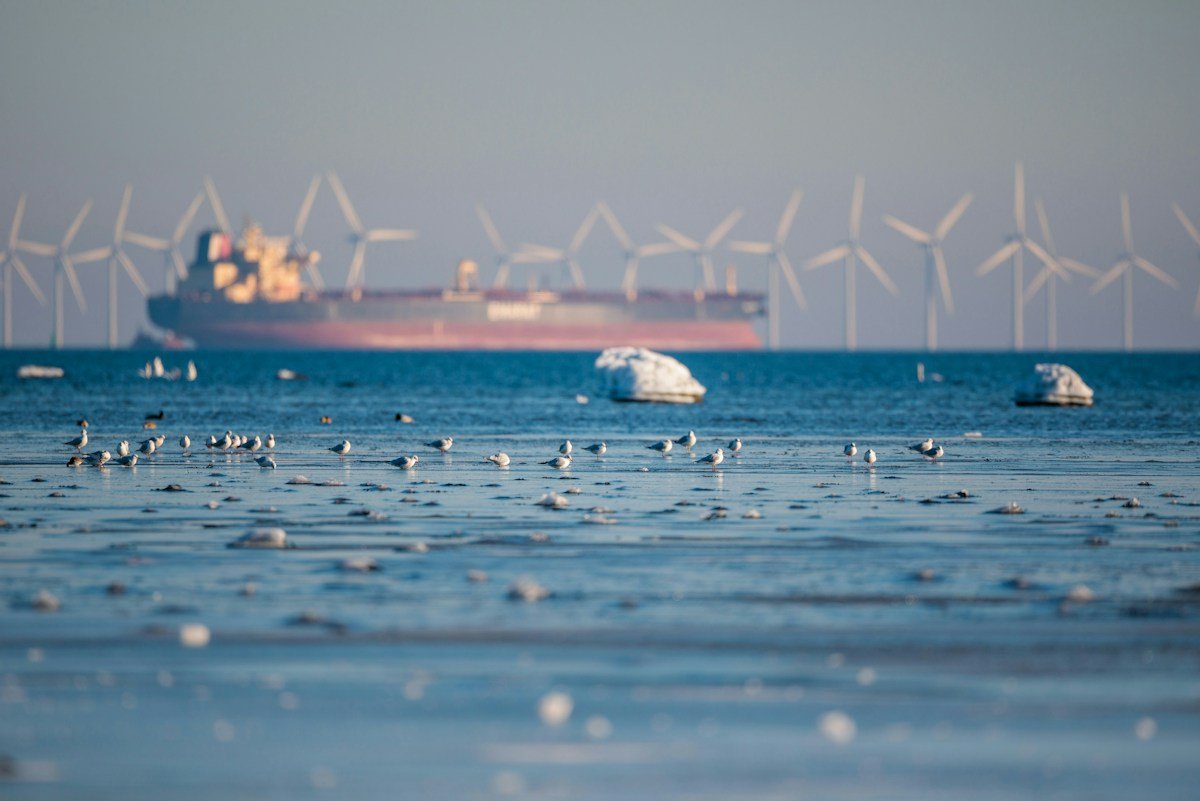
Offshore wind energy is widely recognized as a critical component in the global transition to net-zero emissions, yet a growing body of research suggests that the rapid expansion of these turbines could have unintended consequences for marine health. As governments rush to secure renewable capacity, scientists are urging a shift from simple deployment to a “nature-inclusive” approach that treats biodiversity as a core pillar of energy policy.
The Dual Identity of Wind Farms
Offshore wind installations are complex ecological actors. On the positive side, they serve as artificial reefs, providing stable structures for shellfish, crustaceans, and various fish species, while simultaneously acting as de facto marine reserves by restricting industrial bottom trawling. However, the construction and operation phases pose significant risks to migratory birds, bats, and cetaceans.
Current scientific consensus highlights a major gap in our understanding: roughly 86% of the potential impacts on marine ecosystem services remain unmapped. While the North Sea has provided decades of data, newer regions like those off the coasts of Latin America and Asia lack the historical context necessary to predict long-term biological shifts. This uncertainty is compounded by the sheer scale of future development; by 2050, the number of turbines in the North Sea alone is projected to jump from 4,000 to nearly 20,000, creating an unprecedented physical presence in the water column.
Tech-Driven Solutions and Marine Planning
To mitigate these risks, the industry is increasingly turning to advanced data analytics and spatial planning tools. Geographic Information Systems (GIS) and AI-enhanced modeling are being used to create “sensitivity maps,” which help developers identify sites that minimize conflicts with sensitive habitats. For instance, BirdLife International has already pioneered these mapping efforts across 13 European countries, though researchers note that national implementation remains inconsistent.
Furthermore, engineering innovations are moving beyond simple turbine design. Companies are experimenting with “nature-positive” features, such as integrating oyster restoration projects into scour protection, utilizing bio-friendly concrete to encourage marine growth, and deploying acoustic deterrents to protect whales from construction noise. Some developers are even testing specialized lighting and paint to make turbines more visible to avian species, though the long-term effectiveness of these methods remains a subject of ongoing pilot studies.
Economic Hurdles and Future Uncertainties
The path forward is complicated by the current economic landscape. As the renewable energy sector faces rising costs and supply chain pressures, there is a temptation for policymakers to strip away non-price criteria—such as requirements for environmental monitoring or ecological restoration—to keep projects financially viable. Experts warn that abandoning these requirements could stifle the development of necessary, albeit unproven, conservation technologies.
There are also physical concerns that go beyond local biodiversity. New atmospheric and oceanographic research indicates that large clusters of turbines can alter water circulation, oxygen transport, and even local weather patterns. Studies have observed that wind wakes can lead to surface warming and shifts in nutrient mixing, which could eventually ripple through the entire marine food web.
As the technology industry and policymakers continue to scale up offshore wind, the consensus remains clear: technological progress must be balanced with ecological stewardship. Whether offshore wind can deliver on both climate goals and ocean conservation will depend on how aggressively governments embed science-based protections into the next generation of energy auctions.
Disclaimer: This content is auto-generated for informational purposes only.
Source: Read Original News