








At 9:03 a.m., a customer books a home cleaning service. By 9:18 a.m., a service professional is ringing the doorbell.
Most people credit the app for that seamless experience. Few think about the mobility tech that made those 15 minutes possible.
Shared EVs are becoming the backbone of workforce mobility for India’s booming on-demand services sector
© Yulu
Consumers see convenience. What they do not see is the infrastructure that makes it possible. Every service delivered within minutes depends on thousands of professionals moving efficiently across cities. Without affordable, accessible and reliable mobility, the promise of quick services cannot scale.
As India builds its next generation of on-demand services, one piece of infrastructure deserves far greater attention. Workforce mobility is no longer simply supporting this new economy. It is becoming the foundation on which it is being built.
The Next Wave of Convenience
India’s appetite for convenience has evolved rapidly over the past few years. What began with food delivery and quick commerce has fundamentally reshaped consumer expectations. Speed is no longer a differentiator. It is the expectation.
That expectation is now extending beyond products to services. Platforms such as Pronto, Snabbit and Urban Company are enabling customers to book cleaners, beauticians, healthcare professionals and other home service providers within minutes. India’s online home services market is expected to grow at a CAGR of 18–22%, reaching nearly US$1 billion by FY2030 as consumers increasingly prioritise convenience, flexibility and speed.
Unlike quick commerce, however, the biggest operational challenge is not moving products. It is moving people.
Mobility Is the Next Critical Infrastructure
Every successful consumer category has been built on invisible infrastructure. Digital commerce relied on digital payments. Quick commerce depended on dark stores and hyperlocal logistics. The emerging on-demand services economy will depend on workforce mobility.
Every booking requires a service professional to travel efficiently between appointments while meeting increasingly tighter service windows. Without reliable transportation, professionals are constrained by distance, limiting the number of assignments they can complete and the income they can earn.
Consider a beautician travelling across Bengaluru for multiple customer appointments in a single day. Without dependable mobility, travel time quickly becomes the biggest constraint on earnings. With reliable transport, the same professional can serve more customers, reduce idle time and increase income without extending working hours.
This challenge is especially significant because a large proportion of the workforce comprises women, first-time earners and migrant workers. Many do not own vehicles, have access to financing or feel confident riding conventional two-wheelers. For them, mobility is more than a means of transport. It is the gateway to economic participation, financial independence and dignified livelihoods.
The challenge is not creating demand. It is enabling professionals to reach it efficiently.
Building the Mobility Backbone
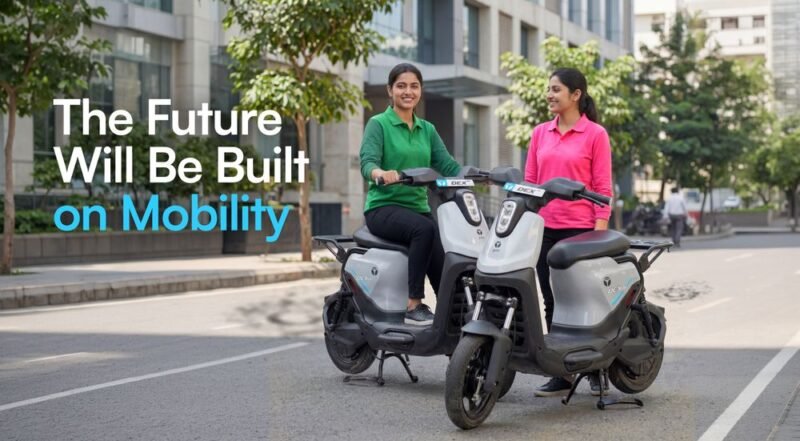
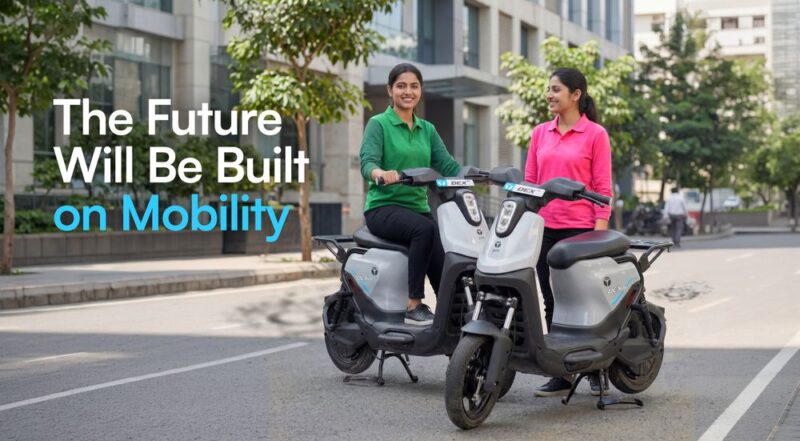
Yulu offers a compelling example of what this enabling infrastructure looks like in practice. Having already supported food delivery and quick commerce across Indian cities, its shared EV ecosystem is now helping power the rapid growth of the on-demand home services sector.
To date, Yulu has enabled affordable mobility for more than 12,000 women home service professionals across 12 Indian cities. Its lightweight electric vehicles are easy to learn, do not require a driving licence and are supported by an app-based rental model, integrated battery-swapping network and end-to-end maintenance support. Together, these remove many of the barriers associated with personal vehicle ownership.
The impact extends well beyond operational efficiency. Home service professionals using Yulu complete 25–30% more daily assignments on average than those without a vehicle, expanding both earning potential and economic participation. More importantly, affordable mobility lowers barriers to workforce participation, enabling many women to access flexible income opportunities with greater independence, dignity and confidence.
The Future Will Be Built on Mobility
In India’s next phase of the convenience economy, the future of quick commerce and services will not be defined only by better apps or smarter algorithms. It will also be shaped by the infrastructure that keeps people moving.
Consumers may never think about the mobility infrastructure behind every booking. But as on-demand services scale across India, workforce mobility will increasingly determine how quickly opportunities reach workers and how reliably convenience reaches consumers.
As more professionals become mobile, home service platforms can expand service coverage, shorten response times and improve customer experience, all without requiring workers to own vehicles.
This article was originally published by Yulu.