The King’s Foundation and the University of the Built Environment have launched the Regional Building Foundation (RBF) to support the creation of new neighbourhoods in line with place building principles.
The initiative is the culmination of a government-supported two-year Knowledge Transfer Partnership (KTP) between the two organisations, and marks a move away from the modern, zonal, housebuilding estate model towards regionally distinctive place building.
Through its 14 regional forums, the RBF will bring together companies from across the housebuilding process, including regional builders, landowners, suppliers, planners and built environment professionals, to work within a regionally defined, collaborative framework.
Ben Bolgar, executive director for projects at The King’s Foundation, commented: “We are at risk of accepting the status quo of zoning, where we build isolated business parks, retail areas, schools and housing estates that are not integrated into our communities. The stakes are extremely high, especially for the next generation of homeowners.”
“At The King’s Foundation, we are dedicated to creating sustainable, walkable communities which place people and the planet, and most importantly green space, at the heart of development projects. We are looking forward to working with the University of the Built Environment on this exciting new project which inspires real hope for the future of housebuilding and for society as a whole.”
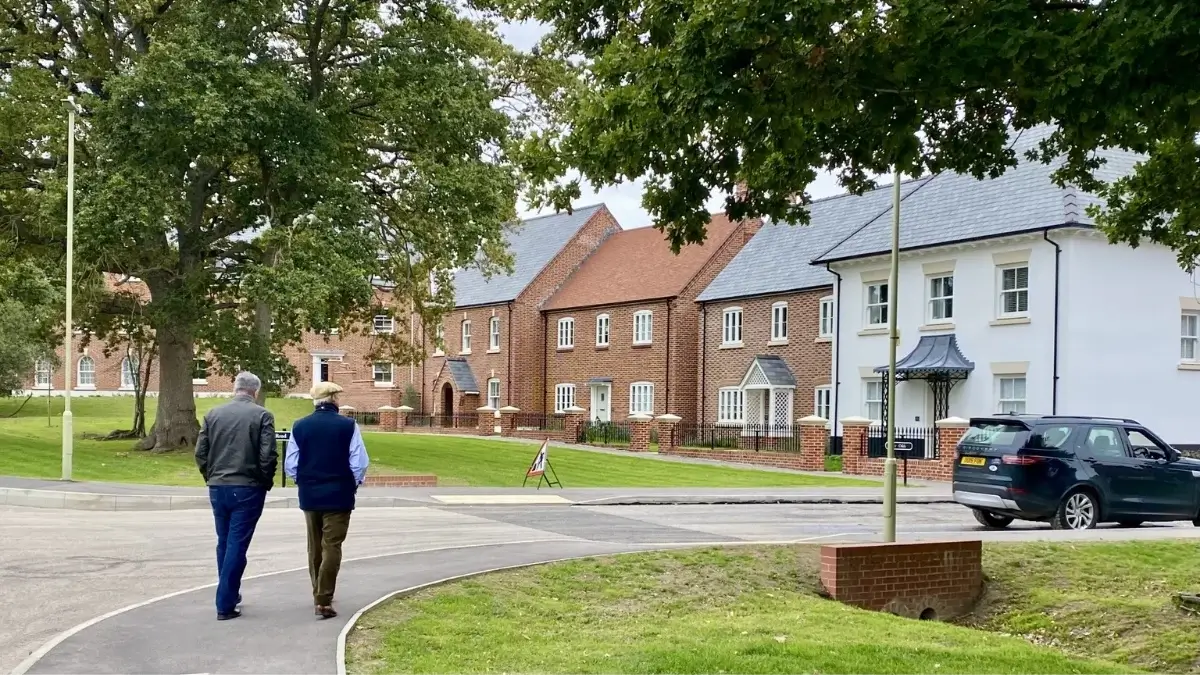
The RBF is underpinned by its flagship research report, ‘Reimagining Place Building: Advancing Sustainable, Inclusive, and Locally Anchored Developments in the UK’, which sets out a system of architecture for place building and the conditions required for its application across distinct geographical regions. The report draws upon the proven models of Poundbury in Dorset and Nansledan in Cornwall, to analyse the frameworks that make these types of communities financially viable and practical to deliver.
Professor Ashley Wheaton, vice-chancellor at the University of the Built Environment, said: “Through our research, we have developed a deep understanding of exactly what a successful place building system requires, one that can be adopted across the UK. It is a bold and innovative approach which reaches beyond the institutional logics that have historically shaped modern housebuilding in this country.”
“It is vitally important that we disrupt and challenge established norms if we are to deliver lasting and meaningful change. As we contemplate the considerable volume of new homes, and new towns, due to be developed over the coming decades, this work feels particularly timely and, indeed, essential.”
The RBF operates across four core areas of activity:
· Networking: convening regional ecosystems required for place building through the establishment of 14 regional forums, bringing together landowners, regional housebuilders, planners, lenders, designers and other stakeholders.
· Educating: closing the knowledge gap between place building principles and development practice through the roll-out of a Knowledge Hub for practitioners.
· Enabling: providing direct technical assistance to live development projects through expert-led workshops, design review and hands-on support for schemes.
· Innovation: pioneering new tools, design approaches and delivery models that make high-quality place building more achievable and scalable.
The initiative will be rolled out across all 14 regions over the next 12-18 months, beginning in the Hampshire Basin in September, followed by London and the Thames Valley and then Northern England.
The RBF will focus on the delivery of:
· Walkable neighbourhoods that support physical and mental health, reduce car dependency and lessen environmental impact.
· Strong local centres and high streets where shops, services and community facilities are accessible on foot.
· Mixed-use communities where homes sit alongside retail, workspace, health, education and community infrastructure — creating places that function as well as they look.
· Better access to nature, with green space, tree canopy, waterways and natural habitats integrated from the outset, supporting wellbeing, air quality and ecological resilience.
· Stronger local identity and heritage, delivered by regional builders working with local materials and design traditions, creating places that are proudly of where they are — and more likely to be valued and maintained over time.
· Better local economic opportunities, with regional housebuilders more likely to employ locally, source materials nearby and generate lasting economic value within their communities.