









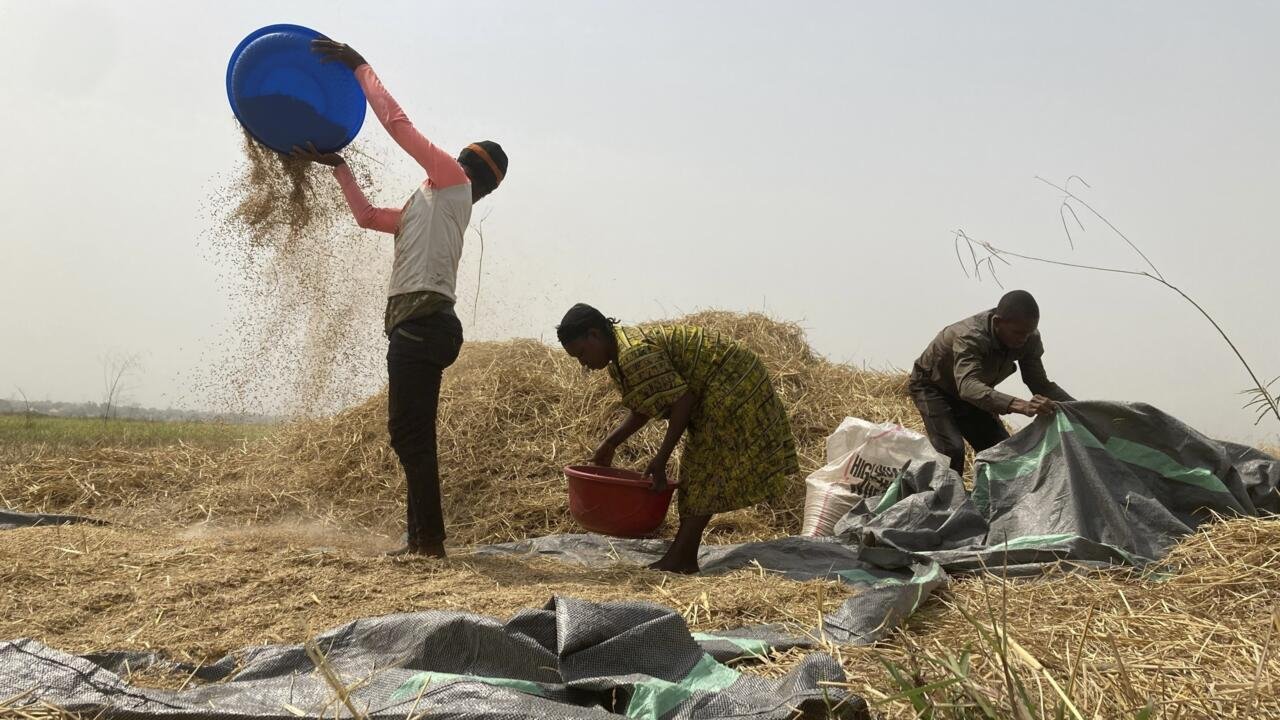
Thousands of years ago, West African farmers domesticated a wild ancestor of rice, shaping it to survive in some of the world’s most unforgiving agricultural landscapes. While this indigenous crop, Oryza glaberrima, proved remarkably resilient against drought, iron-rich soil, parasitic weeds, and extreme heat, it eventually fell out of favor. Globally dominant Asian rice, Oryza sativa, gradually replaced it, largely because the African variety was difficult to harvest, prone to shedding its grain early and collapsing under its own weight.
Today, however, researchers are looking back to this overlooked ancestor. As climate change accelerates and weather patterns become increasingly erratic, the hard-won traits of African rice have become a focal point for agricultural scientists. A groundbreaking study from China may have finally unlocked a way to bridge the genetic divide between the two species, making these vital survival traits easier to incorporate into modern crops.
The visual similarity between the two plants belies a long, divergent history. Asian rice was domesticated along the Yangtze River some 9,000 years ago, while African rice followed a distinct path. Despite its utility, African rice remained largely confined to its home continent, with the exception of a brief period in the Americas via the transatlantic trade. Conversely, Asian rice became the global standard, eventually displacing its African counterpart even within its native growing zones.
The primary hurdle for scientists has been the biological incompatibility that occurs when attempting to cross-breed the two species. “Even though you can cross Asian and African rice, it’s not an easy cross to make,” explains Michael Purugganan, an evolutionary biologist at New York University. “You still get some infertility.”
In the 1990s, plant breeders made a significant breakthrough with the development of “New Rice for Africa” (Nerica) varieties. By using embryo rescue techniques and backcrossing, scientists created strains that combined the productivity of Asian rice with the ruggedness of African lines. However, this traditional approach is limited. Relying on the same few African parental lines and repeatedly backcrossing with Asian varieties often dilutes the very traits researchers are trying to capture.
A new study published in the journal Science by researchers at Nanjing Agricultural University offers a potential solution. The team identified a complex genetic system that acts as a primary barrier to fertility in hybrid offspring. This system functions like a “spear, shield, and armour”: a toxin attacks reproductive cells that lack the specific genetic “antidotes” required to survive the cross. By identifying this mechanism, scientists now understand why many hybrids fail, providing a roadmap to bypass these barriers in the laboratory.
This discovery is a major boon for projects like those led by the Africa Rice Centre in Côte d’Ivoire. Koichi Futakuchi, a veteran rice scientist at the institution, notes that the ability to cross these species more effectively could allow breeders to tap into a massive, underutilized genetic library. The centre currently maintains over 4,000 distinct samples of African rice, each a potential repository of climate-resilient genes.
Beyond drought and heat tolerance, researchers are also screening these samples for nutritional benefits, including higher protein content and essential micronutrients. One particularly promising trait is early-morning flowering; by blooming before the midday heat intensifies, the plants can effectively “escape” the most punishing temperatures of the day.
While the new research has not yet yielded a new variety ready for commercial planting, it represents a significant leap forward in plant breeding. By moving past the limitations of traditional hybridization, scientists hope to provide African farmers with more robust, high-yielding crops. In doing so, they may not only bolster food security across the continent but also bring a lost agricultural legacy into the future.
Disclaimer: This content is auto-generated for informational purposes only.
Source: Read Original News