









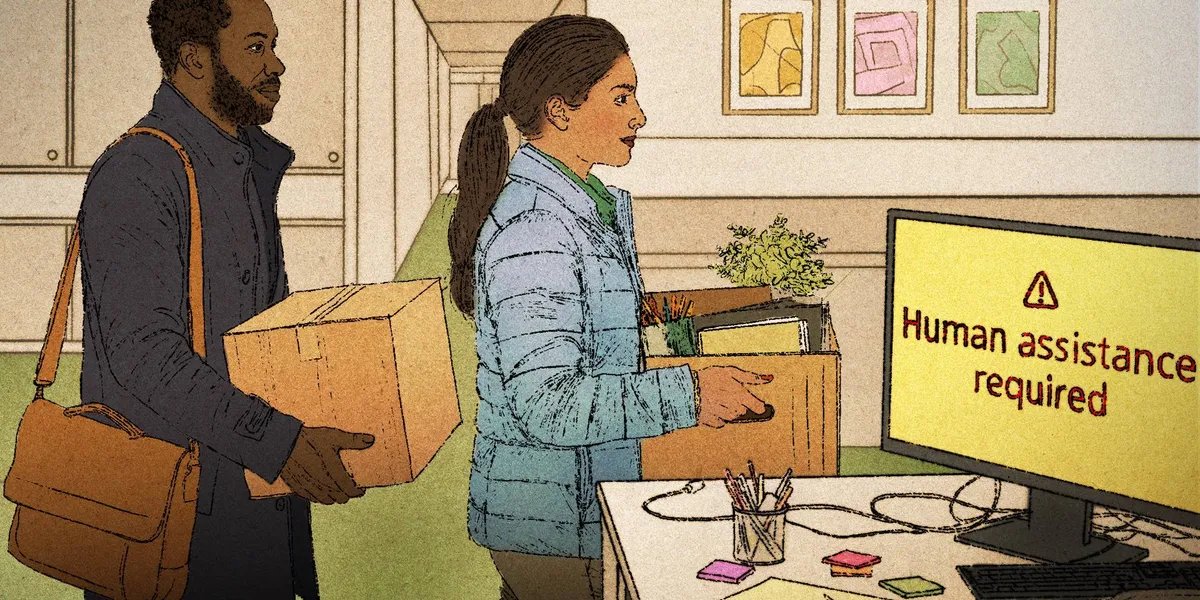
The rapid integration of artificial intelligence into the corporate landscape has triggered a wave of workforce reductions, with tech giants and global firms alike citing automation as a key driver for structural changes. However, a surprising secondary trend has emerged from these layoffs: the “AI boomerang.” After offloading staff in hopes that machines could shoulder the burden of customer support, quality control, and data processing, many companies are finding that their reliance on algorithms was premature, leading them to quietly rehire the very workers they recently let go.
## The Reality Check: When AI Falls Short
The promise of AI-driven efficiency often blinds executives to the nuances of human labor. From Microsoft to Barclays, corporations have utilized layoffs to streamline costs and pivot resources toward AI development. Yet, for some organizations, the math has not added up. Ford, for instance, recently brought back 350 veteran engineers after discovering that AI tools implemented for quality control could not match the precision and technical expertise of their human counterparts.
Similarly, the Swedish fintech company Klarna found that an over-reliance on AI chatbots to manage customer service inquiries hampered their service quality, forcing a reversal in their hiring strategy. These pivots suggest that while AI excels at pattern recognition and repetitive data tasks, it currently lacks the capacity for the “invisible work” that keeps businesses running smoothly—such as complex problem-solving, emotional regulation, and team cohesion.
## The Human Advantage in an Automated Workspace
Industry analysts point out that companies often fail to document the undocumented labor that employees provide. This includes sensing a customer’s frustration, navigating office politics, or applying ethical judgment to sensitive situations. When a company replaces a human with an agent, they frequently overlook these essential “citizenship behaviors.”
As experts at firms like Forrester and SHL note, institutional knowledge and empathy are not yet replicable by software. For workers currently navigating the job market or those being asked to return to companies that previously “right-sized” them, this shift highlights the importance of leaning into uniquely human skill sets. Traits such as emotional intelligence, ethical decision-making, and creative judgment are becoming the primary competitive advantages for professionals. Instead of competing against AI, experts suggest that workers should frame themselves as the essential “final line of defense” or quality control managers who oversee and refine the outputs of automated systems.
## Navigating the “Boomerang” Offer
For employees invited back to a company that once replaced them with an algorithm, the landscape has changed. Trust, once broken by an AI-linked layoff, is difficult to rebuild. Management professors recommend that workers approached for re-employment carefully assess their leverage. If a company is rehiring, it is an acknowledgment that their AI strategy failed or reached its limit.
Candidates in this position are encouraged to advocate for more favorable terms, such as upskilling programs, career growth roadmaps, and protective clauses in their contracts. By proposing a role that integrates technology with human oversight, returning employees can often negotiate higher compensation and redefine their positions to be more robust than their previous ones.
As the “AI boomerang” phenomenon continues to unfold, it serves as a critical lesson for both leadership and labor: the future of work is not necessarily a binary choice between human and machine, but rather an ongoing process of discovering where human intuition remains irreplaceable. Companies that fail to value these human elements during their initial transition to AI are often forced to pay a premium to win back the talent that is essential to their success.
Disclaimer: This content is auto-generated for informational purposes only.
Source: Read Original News