




Between Faith and Fanaticism: Why Sara Ali Khan’s Kedarnath Visit Sparked a Firestorm
In the landscape of modern Bollywood, few stars wear their contradictions as openly as Sara Ali Khan. She is the scion of a cinematic dynasty, the daughter of a Muslim father and a Hindu mother, and a performer who has repeatedly championed the idea that spirituality is a deeply personal, rather than communal, journey. Yet, for the third time in her relatively young career, her devotion to the Kedarnath temple has become the flashpoint for a heated national debate, with a recent fatwa highlighting the intensifying collision between traditional dogma and the evolving identity of the Indian celebrity.
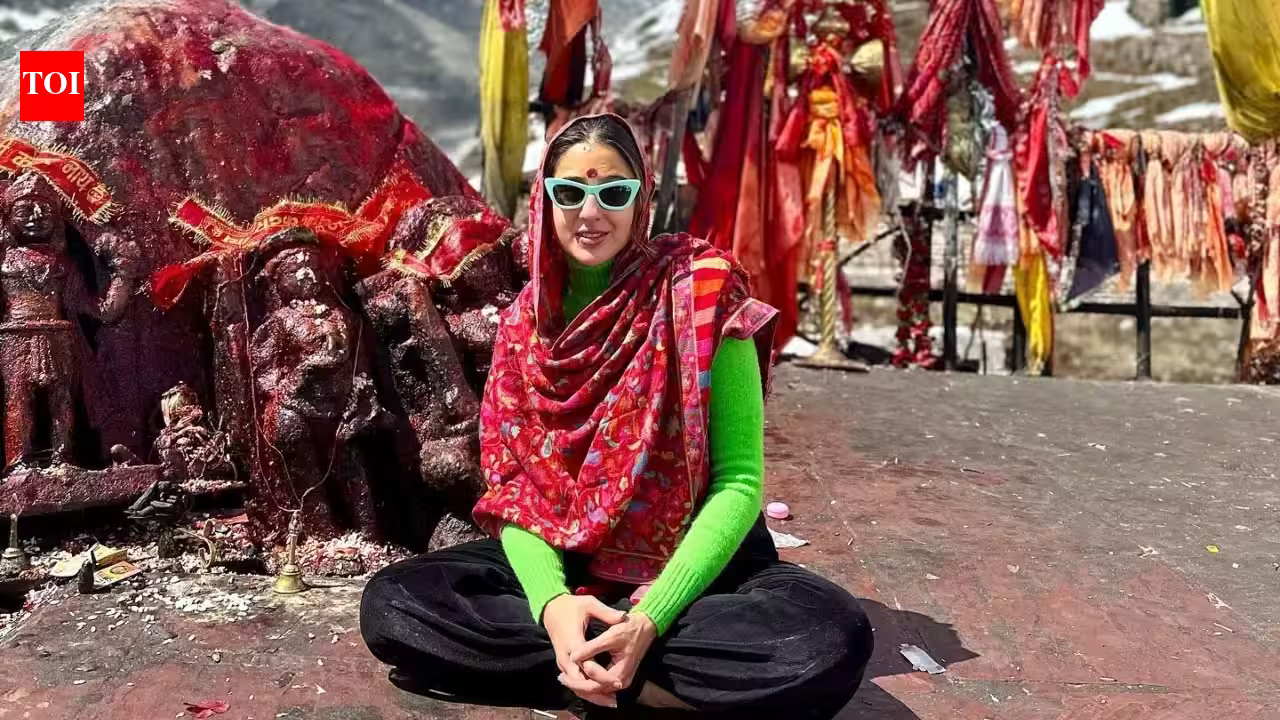
The latest controversy erupted on October 25, when the actress was spotted blending into the sea of pilgrims at the sacred Kedarnath shrine. Dressed simply, waiting in line like any other devotee, and offering prayers with folded hands, Sara appeared to be seeking the same solace that millions of others find in the shadow of the Himalayas. However, the optics of her presence were immediately challenged by Maulana Mufti Shahabuddin Razvi Barelvi, a prominent Uttar Pradesh-based cleric. In a video statement that quickly circulated across social media, the cleric declared her actions “impermissible and haram under Sharia,” demanding that the actress seek forgiveness from Allah as if she had committed a grave moral transgression.
The Weight of Heritage and the Clamor of Critics
For those unfamiliar with the complexities of Sara’s background, the backlash may seem baffling. Born to Saif Ali Khan and Amrita Singh, Sara has been raised in an environment that bridges the gap between two major faiths. She has often spoken of her mother’s influence—her Hindu heritage—and her own inherent sense of spiritual curiosity. To her supporters, her visits to Kedarnath are a beautiful manifestation of a syncretic, modern India. To her detractors, particularly those in fundamentalist circles, she represents a deviation from religious orthodoxy that must be corrected.
The cleric’s decree is not merely a statement of disapproval; it is a rigid invocation of Sharia law intended to police the behavior of public figures. By labeling her worship as “haram,” the cleric isn’t just criticizing a tourist destination; he is essentially arguing that a person’s religious identity is a fixed, singular box from which they cannot escape. This puts Sara, and many other celebrities with mixed heritages, in an impossible position: to follow the dictates of the clergy is to erase half of their identity, yet to follow their hearts is to invite public condemnation.
Kedarnath: A Cinematic and Spiritual Anchor
It is important to remember that for Sara, the connection to Kedarnath is not merely performative; it is professional and, by her own account, deeply personal. Her career began in 2018 with the film Kedarnath, directed by Abhishek Kapoor. The film, which served as a poignant tribute to the strength of the human spirit amidst natural disaster, also starred the late Sushant Singh Rajput. Even before the film hit theaters, it faced immense resistance from various groups, proving that the temple is a site of extreme sensitivity for both the religious establishment and the cultural gatekeepers of Uttarakhand.
Despite the initial backlash surrounding the film, Sara returned to the mountains time and again. Over the past four years, she has made the pilgrimage a consistent part of her life. While skeptics might argue that such public displays are a strategic PR move for a star known for her “relatable” image, the frequency and quiet nature of her visits suggest a genuine attachment to the shrine. To her, Kedarnath is a source of serenity—a place where the noise of Mumbai’s paparazzi culture is muffled by the silence of the peaks.
The Bureaucracy of Belief
While the cleric’s rhetoric dominates the headlines, there is a quieter, more bureaucratic reality playing out behind the scenes. The Badrinath-Kedarnath Temple Committee (BKTC) has been steadily formalizing its entry protocols. In a move that reflects the growing concern over the “sanctity” of the shrines, the committee has made it mandatory for non-Hindu visitors to submit an affidavit confirming their intention to visit.
This policy shift is critical to the current narrative. Sara Ali Khan’s team, clearly anticipating the scrutiny, ensured that the necessary paperwork was filed with the BKTC before her arrival. Sohan Singh Rangar, the committee’s Chief Executive Officer, confirmed that the actress complied with all existing regulations. This compliance is a clever, if necessary, navigation of the legal landscape. By following the temple’s administrative rules, Sara has effectively insulated herself against charges of “trespassing” on faith, leaving the critics to argue based solely on theological grounds—a much harder argument to win in a secular democracy.
The Future of Celebrity Autonomy
The true issue here isn’t just about one actress in a temple; it is about the shrinking space for personal agency in the public eye. As the internet becomes an increasingly polarized battleground, every gesture by a public figure is parsed through the lens of religious identity. We are witnessing a trend where celebrities are expected to be representatives of their religious communities rather than individuals with their own spiritual paths.
Sara Ali Khan, by her mere existence and choices, challenges these boundaries. She is a woman who prays at a temple, celebrates Eid, and refuses to apologize for either. While the religious clergy will continue to issue fatwas and demand repentance, the cultural tide seems to be moving in the opposite direction. Audiences, particularly the younger generation, are increasingly weary of these moral mandates. They see in Sara a reflection of a nuanced, hybrid identity—one that doesn’t feel the need to choose between its parts.
As the dust settles on this latest controversy, one thing remains clear: Sara Ali Khan is unlikely to stop visiting the places that bring her peace. Whether the critics see it as an act of rebellion or a simple expression of devotion, her presence at Kedarnath has forced a conversation about the right to navigate one’s own spiritual life in a country that is still learning how to balance its ancient traditions with its modern, pluralistic future. For now, the actress remains silent on the cleric’s demands, letting her actions—and her affidavits—speak for themselves.
Disclaimer: This content is auto-generated for informational purposes only.
Source: Read Original News