








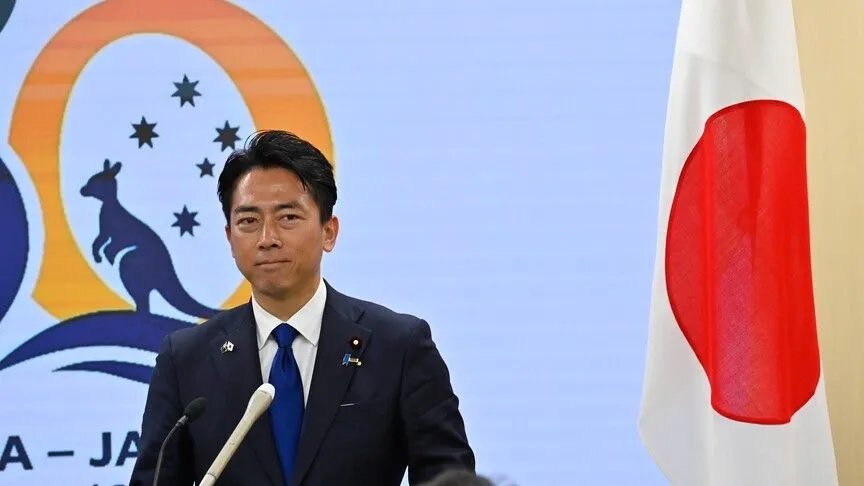
CEBU CITY, PHILIPPINES — In a high-stakes address to the 20th ASEAN Defense Ministers’ Meeting and the 13th ASEAN Defense Ministers’ Meeting Plus, Japanese Defense Minister Shinjiro Koizumi issued a stark warning regarding the rapidly deteriorating security landscape in Southeast Asia. Addressing regional defense chiefs on Wednesday, Koizumi identified a trifecta of compounding threats that are testing the resilience of the 11-member bloc and necessitating a significant update to security cooperation frameworks.
Koizumi framed the current environment as one where traditional and non-traditional threats are no longer siloed. He highlighted the escalating severity of climate-related disasters as a primary destabilizing force, noting that extreme weather events are increasingly striking communications infrastructure, medical facilities, and transportation networks simultaneously. These environmental shocks, he argued, create domestic vulnerabilities that can be exploited, particularly when layered atop broader global instability.
“Disasters are growing more severe, striking communications, medical care, and transport at once,” Koizumi told the assembly. “These crises do not merely adapt; they overlap and amplify one another.”
The defense minister further cited the ripple effects of global conflicts, which he noted are actively disrupting supply chains and energy security across Southeast Asia. Perhaps most significantly, he pointed to a shifting military balance in the region, which he warned is increasing the risk of maritime collisions and dangerous miscalculations between rival powers.
The meetings, held in Cebu City, brought together defense representatives from the United States, South Korea, Australia, and India, though notably, China declined to send its defense minister this year. Amid this complex geopolitical backdrop, Koizumi emphasized Japan’s commitment to reinforcing the unity and “centrality” of ASEAN. He characterized these regional strengths as “international public goods” essential for safeguarding peace and ensuring that every nation retains the freedom to make independent political and economic choices.
Acknowledging that ASEAN members are already in the process of bolstering their individual and collective deterrence capabilities, Koizumi pledged Japan’s active support for these initiatives. He proposed a strategic evolution in the partnership between Tokyo and the bloc, moving beyond legacy frameworks to address contemporary realities.
“Our aim is simple: to widen the options for ASEAN and for each member to understand, decide, and act on its own,” Koizumi said. He committed that Japan would “do everything it can” to translate the bloc’s strategic choices into “real strength.”
Analysts view the pledge as an attempt by Japan to position itself as a stabilizing partner that respects ASEAN’s diplomatic independence while providing the technical and logistical capacity needed to handle both disaster response and maritime security. By linking environmental resilience directly to regional security, Koizumi underscored a growing consensus that the traditional defense paradigm must now integrate robust climate preparedness.
As the summit concludes, the focus remains on whether this updated framework for cooperation can effectively mitigate the “overlapping” crises described by the Japanese defense chief. With the military balance in the region remaining fluid and environmental disasters becoming increasingly unpredictable, Japan’s call for a recalibrated approach to regional security marks a significant shift in its engagement with Southeast Asia, emphasizing that long-term stability is contingent upon the bloc’s ability to remain both resilient and unified in the face of converging threats.
Disclaimer: This content is auto-generated for informational purposes only.
Source: Read Original News