







TENSIONS are reaching a boiling point in the WNBA Finals as the league finds itself caught in a crossfire between high-stakes basketball and a burgeoning political firestorm. With the Golden State Valkyries holding a precarious 2-1 series lead over the Atlanta Dream, the conversation surrounding the championship has shifted from buzzer-beaters and defensive schemes to the empty court that greets fans during the pregame national anthem.
As the series shifts toward a pivotal Game 4 at Atlanta’s State Farm Arena, the absence of players from the hardwood during the “Star-Spangled Banner” has drawn the ire of the highest levels of American government, including President Donald Trump and Vice President JD Vance.
Trump urges fans to boycott women’s basketball
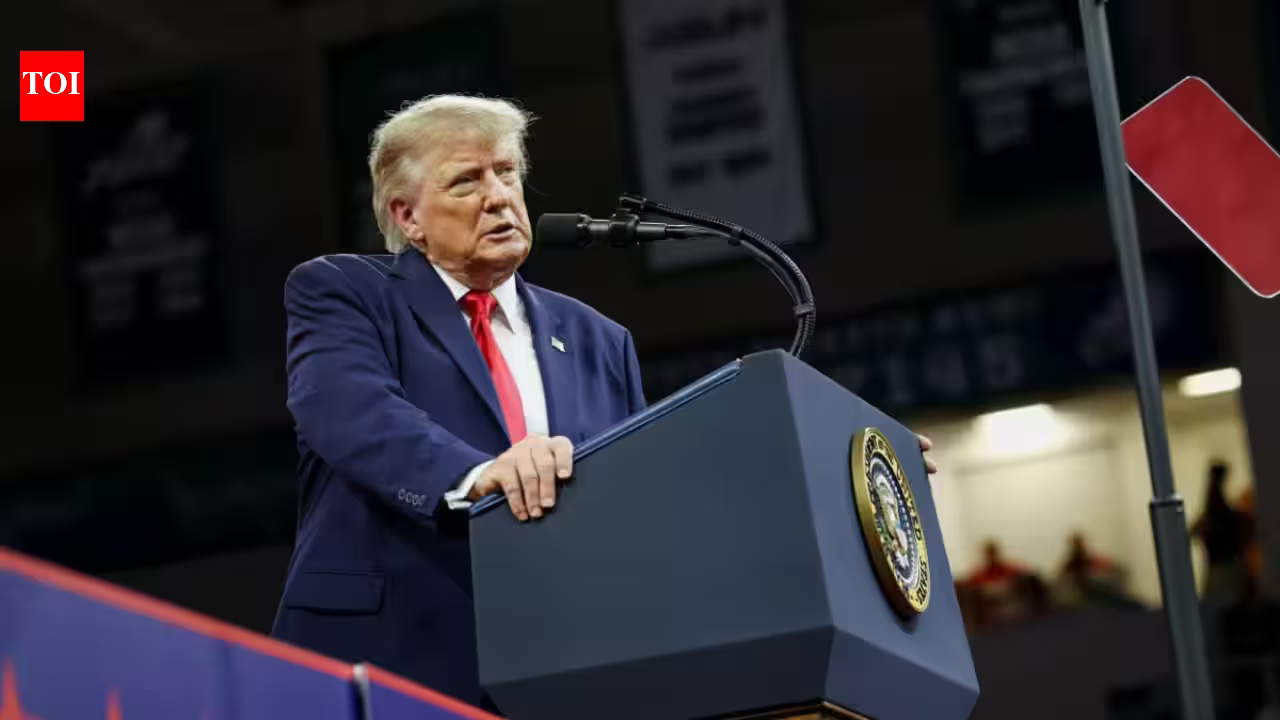
The political pressure hit a fever pitch on Thursday, October 1, during a campaign rally in Iowa. President Trump, currently rallying support ahead of the midterm elections, took aim at the league’s pregame protocols. Drawing a direct comparison to the NFL protests that defined the sports landscape a decade ago, the President issued a stern warning to the league.
“What’s going on with the women’s NBA? What’s that all about?” Trump remarked, in comments captured in a widely circulated video. “They’ll destroy themselves before they get started because they just started to do good.”
The President went on to explicitly call for a boycott, suggesting that the public should turn their backs on the product until the teams alter their pregame conduct. “The NFL did that for a while and they stopped because people stopped watching the games. So I think you should do the same thing with women’s basketball,” he stated.
The President’s comments were bolstered by Vice President JD Vance, who characterized the players’ actions as “disgraceful” during an interview with Raymond Arroyo. Vance suggested a lack of national gratitude, stating, “If they had a bit more of a spirit of gratitude, they’d be happier people, and they wouldn’t offend so many people as well.”
The clash of routine and symbolism
While the political rhetoric highlights a deep ideological divide, the players involved describe the situation in much more practical terms. Reports from the arena floor confirm that in each of the first three games, both teams warmed up on the court before disappearing into the locker room tunnels exactly two minutes before the anthem began.
When questioned by the media, the players have steadfastly insisted that their absence is not a protest, but a standardized preparation technique. Following Game 2, Golden State Valkyries guard Veronica Burton pushed back against the political framing of the events.
“We’ve been doing that,” Burton noted. “That’s just our pregame routine. We’ve been doing that since last year.”
However, for critics, the history of the Atlanta Dream makes it difficult to view the absences as purely procedural. In 2020, the Dream organization issued a formal statement declaring that the national anthem “does not represent freedom, justice, and liberty for all Americans.” Given this backdrop, the intersection of team routine and political expression remains a contested space. Despite numerous inquiries from media outlets, including reports from OutKick, neither the league office nor the individual franchises have issued a fresh statement on the controversy, opting instead to keep the focus—at least publicly—on the court.
WNBA policy and the road ahead
The legal landscape surrounding the anthem in the WNBA is as complex as the politics driving the current debate. Technically, the league’s rulebook mandates that players, coaches, and trainers “are to stand and line up in a dignified posture along the sidelines or on the foul line during the playing of the National Anthem.”
Yet, the enforcement of this rule has been effectively dormant for years. Following a 2017 push for solidarity in the wake of the events in Charlottesville, Virginia, the league suspended the enforcement of these protocols. This suspension continued into the 2020 season, a year during which the WNBA dedicated its campaign to social justice causes, including the movement surrounding the death of Breonna Taylor.
Because the WNBA has not re-implemented strict enforcement since that time, teams have consistently opted to remain in the locker room during the anthem as a matter of standard operation. The ambiguity of the rules—specifically whether they apply to players in the locker room or only those currently on the court—has created a grey area that the league has yet to clarify.
As the series resumes on October 24, 2026, all eyes will be on State Farm Arena. While the Valkyries look to extend their lead and the Dream fight to stay alive in the series, the silent pregame ritual will once again be at the center of a national conversation. Whether the league decides to address the political pressure head-on or continues to treat the matter as an internal routine remains to be seen. For now, the players are focused on the trophy, even as the world around them remains focused on the empty court.
Disclaimer: This content is auto-generated for informational purposes only.
Source: Read Original News