







Trump’s Effort to Cut Grocery Costs via Foreign Beef Imports Sparks GOP Revolt
WASHINGTON — President Donald Trump’s latest initiative to combat persistent inflation at the grocery store has hit a wall of resistance within his own party. As the administration moves to slash beef prices ahead of the upcoming midterm elections, Republican lawmakers representing major ranching states are raising alarms, warning that the policy could cripple domestic producers.
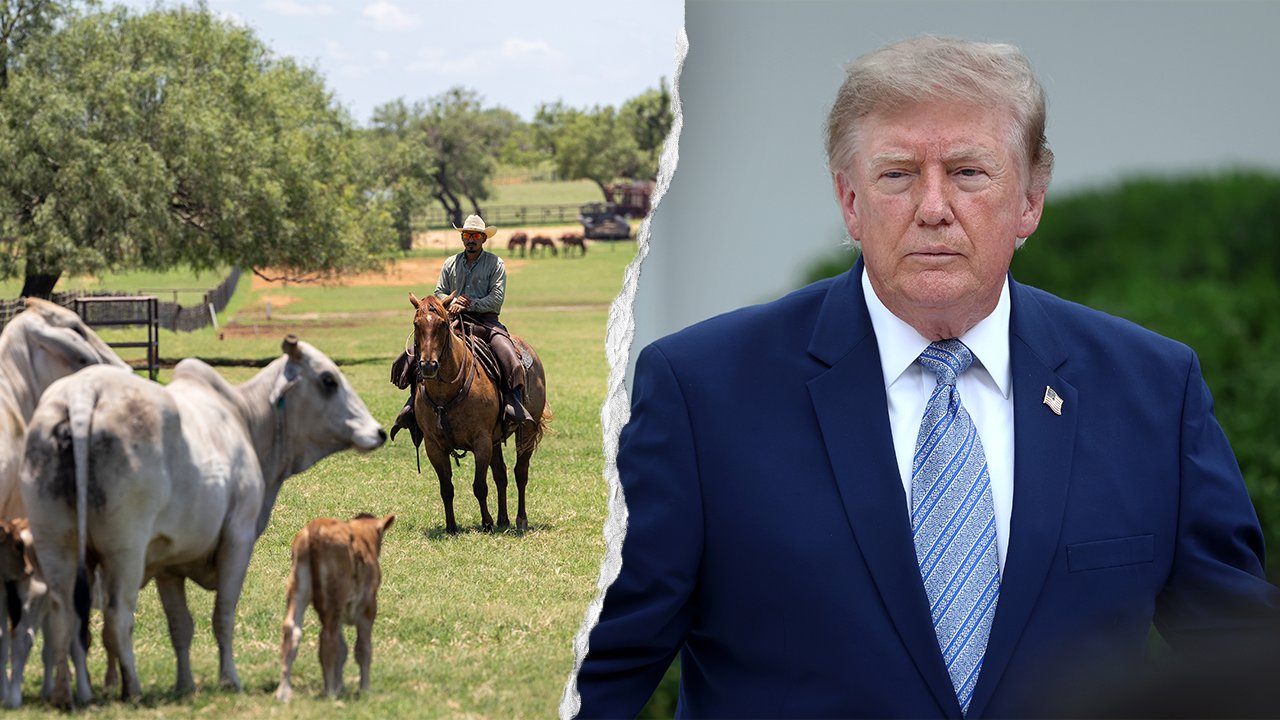
The friction centers on a recent announcement from the President, who stated on Truth Social that the U.S. will permit up to 300,000 metric tons of ground beef to enter the country tariff-free over the next 90 days. The administration contends that the influx of foreign product is a necessary measure to provide immediate relief to consumers while giving American ranchers the breathing room required to rebuild the nation’s depleted cattle herd—which currently sits at its lowest level in 75 years.
However, the strategy has drawn sharp rebuke from influential GOP voices who view the move as a superficial "quick fix" that undermines the long-term stability of the American agricultural industry.
A "Disadvantage" to Domestic Producers
"This hurts!" Sen. Mike Rounds (R-S.D.) posted on X, highlighting that his home state accounts for roughly 5% of the U.S. beef herd. "American cattle producers have been disadvantaged for far too long. What our market really needs is a stable, America-First national policy that promotes American beef rather than continuing to import foreign beef as a quick ‘fix.’"
Rounds and other critics argue that the policy creates an uneven playing field. Without a mandate requiring clear country-of-origin labeling, consumers are often unable to distinguish between domestic and imported products, further complicating the competitive landscape for local ranchers.
Rep. Julie Fedorchak (R-N.D.) echoed these concerns, warning that the administration’s focus on short-term price drops threatens the livelihoods of farmers who are currently investing heavily to expand their operations.
"Importing foreign beef tariff-free — and selling it below market price — undercuts producers who are investing millions of dollars in an already risky business to rebuild their herds," Fedorchak stated. She noted that the timing is particularly precarious for producers currently bringing younger feeder cattle to market, as the influx of foreign beef could suppress the prices they receive for their livestock.
Structural Industry Issues
The debate over beef prices has also brought renewed attention to the concentration of power within the meatpacking industry. According to the USDA, just four major companies control approximately 85% of the market for U.S. steers and heifers. Critics argue that this consolidation, rather than a lack of supply, is a primary driver of the price disparities that leave ranchers with less profit and consumers with higher receipts.
Rep. Kat Cammack (R-Fla.) expressed support for the President’s desire to help families struggling with inflation but urged the administration not to abandon the free market in the process. "Short-term relief can’t come at the expense of American ranchers, free markets and long-term solutions," Cammack wrote.
A Call for Sustainable Solutions
Industry groups and legislative allies are now calling on the White House to pivot toward more structural support for farmers. Scott Sink, President of the Virginia Farm Bureau, emphasized that the answer to higher prices lies in addressing the high costs of production—such as fuel, feed, and equipment—rather than relying on foreign imports.
"Increasing reliance on foreign beef may provide temporary relief, but it does not address the supply challenges contributing to higher prices or strengthen our domestic cattle industry," Sink said.
As the midterm general election approaches, the balance between curbing inflation and protecting the interests of the agricultural heartland will remain a key friction point. While the White House continues to prioritize consumer relief, the pushback from Capitol Hill suggests that the path to lowering grocery bills remains fraught with political and economic complexity.