






US Secures Stake in Major Venezuelan Oil Venture, Signaling Shift in Energy Strategy
WASHINGTON — The United States has entered into a landmark agreement to take majority ownership of a joint oil venture with a Venezuelan energy operator, a move the White House hopes will secure a critical energy lifeline and provide a blueprint for reviving the long-stagnant Venezuelan oil sector.
The announcement, made on Friday, marks a significant escalation in the Trump administration’s efforts to stabilize global energy markets. Under the terms of the deal, the United States will hold a 55% stake in a century-long lease on a vast oil field, creating an entity that will rank as the world’s second-largest oil company by reserves, trailing only Saudi Aramco.
A Strategic Pivot
The move comes after months of intense pressure from the White House to revitalize Venezuelan production. Despite the high-profile capture and arrest of former leader Nicolás Maduro in January on conspiracy charges, the Trump administration had previously struggled to convince private American energy firms to commit capital to the region. Public lobbying of oil executives and negotiations with Maduro’s successor, Delcy Rodríguez, had yielded limited success.
Analysts suggest the US government’s decision to take a direct ownership stake may be the catalyst needed to restore investor confidence.
“This could be a good thing as the major oil companies are presumably now dealing with a US legal framework which could accelerate investments,” said Andy Lipow, president of Lipow Oil Associates.
The Venezuelan Energy Puzzle
Venezuela possesses an estimated 303 billion barrels of proven oil reserves. The new US-backed venture will control 65 billion of those barrels—more than doubling the current reserves held by the United States.
The strategic importance of this acquisition cannot be overstated. While the US is a leading global producer of light, sweet crude, many American refineries—built in the 1970s when Venezuela was a primary supplier—are specifically designed to process the “heavy, sour” crude found in the South American nation. This oil is essential for the production of asphalt, diesel, and jet fuel.
With the global oil supply currently strained by the repercussions of the Iran war, which disrupted approximately one-fifth of the world’s output, the US has increasingly acted as a “supplier of last resort.” Ensuring a reliable flow of heavy crude from Venezuela is seen as vital to domestic energy security and to replenishing the Strategic Petroleum Reserve (SPR), which currently sits at its lowest level since 1982.
An Uphill Battle for Production
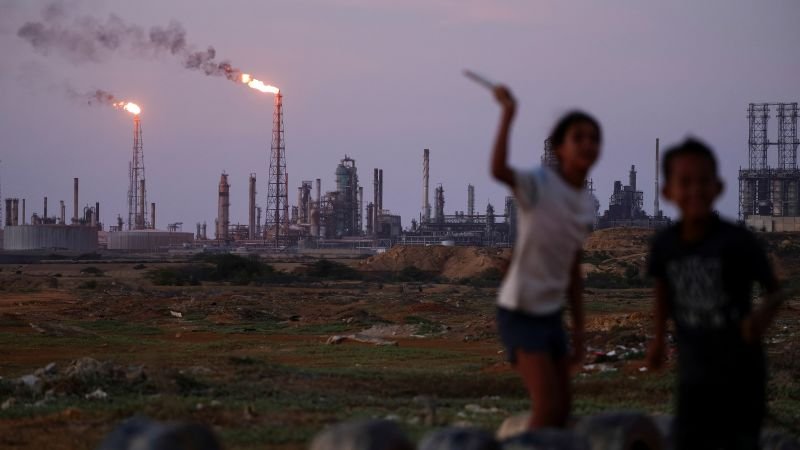
Despite the potential, the road to recovery for Venezuela’s energy sector is steep. The country currently produces roughly 1.2 million barrels per day—an improvement over the start of the year but a far cry from the 3.5 million barrels produced before the socialist turn in the late 1990s.
Years of mismanagement, systemic corruption, and catastrophic infrastructure decay have left the industry in ruins. Experts at Columbia University’s Center on Global Energy Policy warn that restoring peak production will require billions of dollars and at least a decade of sustained investment.
Furthermore, investors remain wary of the country’s fragile political climate and the humanitarian impact of recent natural disasters. The regime’s poor response to a devastating earthquake earlier this year underscored the instability that still plagues the nation.
“An investment in Venezuela will have to compete for capital with other projects that are on the docket for the oil majors,” noted Rob Thummel, a senior portfolio manager at Tortoise Capital. “It will likely be years rather than months before additional oil is produced.”
A New Chapter for the Region
For Venezuela, the US-Venezuela oil deal serves as a potential economic lifeline. Proponents argue that the influx of capital and the imposition of a US-led legal framework could provide the necessary protections to finally unlock the country’s vast potential.
While the new venture faces significant geopolitical and logistical hurdles, the White House is clearly betting that direct US involvement is the only way to transform Venezuela from a high-risk liability into a cornerstone of American energy policy.