








The TV BRICS International Media Network has carried out a rebranding and modernisation of the portal of its information and educational project “Modern Russian”. The main aim of the updates is to create an information platform that meets the needs of a contemporary audience interested in the Russian language and culture. Now all project materials, accumulated over almost 20 years of work, are presented in a format that complies with international standards. The new logo of the “Modern Russian” project is an abbreviation formed from the initial letters, stylised as a key that opens the way to knowledge, combined with the image of Aleksander Pushkin as the founder of modern literary Russian. The online resource, used in more than 150 countries worldwide, has received a redesigned architecture, technological foundation and design.
“We have revised not only the visual appearance but also the logic of user interaction with the content. The website is now lighter, faster and more intuitive. We have introduced responsive design, improved typography and enhanced the visual clarity of the interface. Special attention has been paid to navigation: all key sections have been grouped more logically, the search system has become smarter and faster, and the structure of materials is more transparent. The updated portal features interactive formats, improved presentation of reference and educational materials, and expanded multimedia capabilities. The renewed structure makes working with the resource significantly more convenient. For regular users, the changes feel like a step up to a new level of quality: the same reliable and authoritative content, but in a more modern, technological and comfortable format,” explained Stanislav Pichkalev, Director of the TV BRICS Digital Department.
Thanks to technical optimisation, the portal loads faster and operates reliably on all mobile devices.
“The new engine ensures stability, flexibility and scalability of the project – it is now possible to develop additional sections and introduce new services without limitations. Essentially, this is no longer just a website but a fully fledged digital ecosystem where language is combined with technology and modern design. The project will now be able to evolve continuously – from updating its reference database to integrating new learning and analytics tools. Technical improvement is embedded in the very architecture of the site, so the process of updating will become continuous rather than a one-off event,” clarified Stanislav Pichkalev.
The updated portal of the “Modern Russian” project contains two main sections: “Russian Language for Everyone” and “Russian as a Foreign Language”. It also features materials in the field of applied philology: selections of video lessons on the Russian language, a series of radio programmes “Non-Boring Russian”, business vocabulary dictionaries from the series “In the Blink of an Eye”, online philology tests, video clips from the series “How Do You Say It in Russian?” and much more.
Among the near-term development plans for the online resource is the launch of an English-language version and the creation of its own digital environment for educational content: video lessons, interactive assignments and practical case studies.
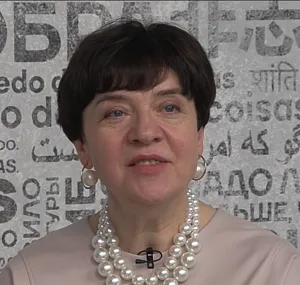
“The very name of the ‘Modern Russian’ project reflects its ambition to keep up with the needs of the day. The new portal is fast, stylish, and contains useful and in-demand information. Technology does not stand still, and our task is to align it with the goals of the project, which promotes the Russian language and culture using the latest digital platforms. The restructuring was necessary to ensure convenience for Russian and international users who require up-to-date philological materials. The portal’s content allows them to solve various everyday tasks: study Russian as a native and foreign language, create texts in different genres, check spelling, prepare for exams and competitions, and navigate reference and literary materials. Visitors to the portal can also ask questions on philology and receive urgent linguistic assistance. We hope that the new version of the portal will be duly appreciated both by long-standing friends of the ‘Modern Russian’ project and by new users in Russia and other countries”
Tamara Skok
Director of the Department of Innovative Linguistic Projects at TV BRICS

The international information and educational project “Modern Russian” was established in 2007 with the aim of popularising the Russian language, improving the population’s literacy level and providing linguistic assistance. It is implemented by the TV BRICS International Media Network. In terms of its range of applied philology initiatives, it has no equivalents in Russia or abroad.