







U.S. Vows ‘Toughest-Ever’ Sanctions on Iran, Pressures Beijing to Secure Hormuz
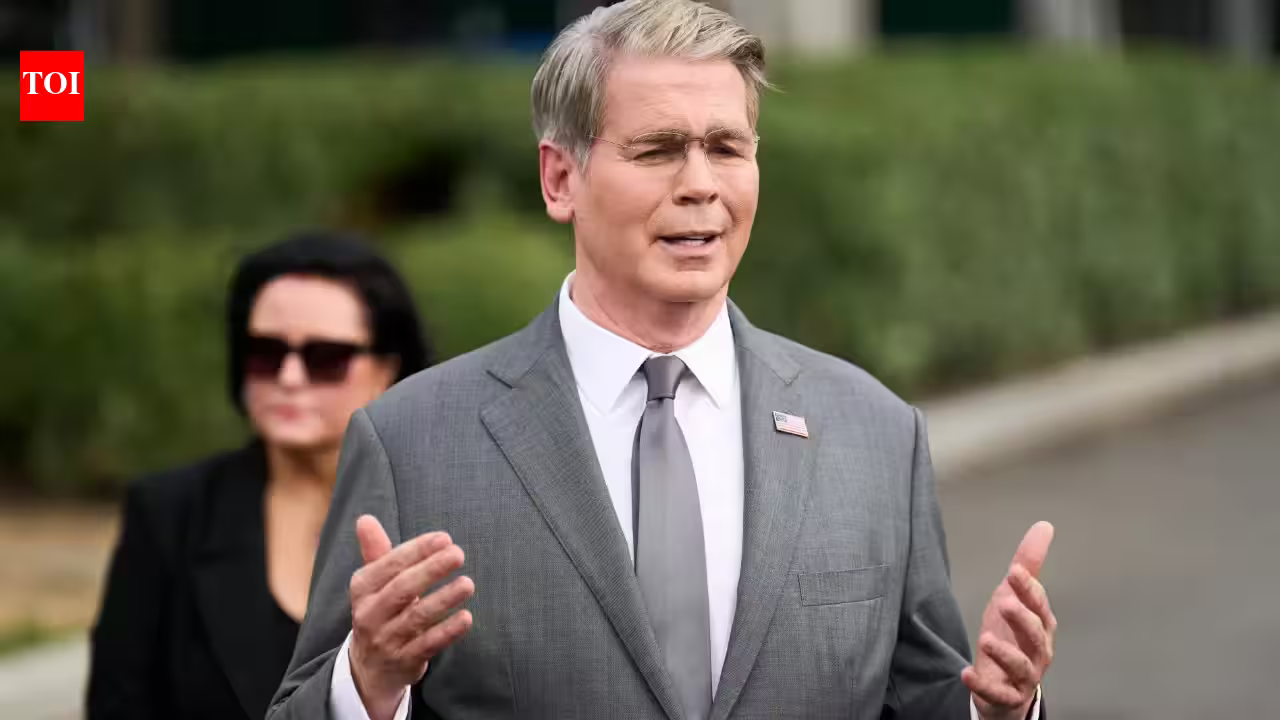
The United States is escalating its standoff with Tehran, with Treasury Secretary Scott Bessent announcing that the administration is preparing what he described as the “toughest sanctions in history” against Iran. The move is part of a broader "maximum economic pressure" campaign intended to force the Islamic Republic to the negotiating table while simultaneously curbing the necessity for a large-scale military conflict.
A ‘One-Two Punch’ Strategy
Speaking to CNBC on Thursday, Secretary Bessent outlined a dual-track strategy designed to cripple Iran’s economic capacity.
“It is a one-two punch. We have the blockade, and we are going to have the toughest sanctions in history,” Bessent said. He emphasized that these measures, which will be detailed in a press conference this coming Monday, are specifically calibrated to erode the regime’s financial stability.
By prioritizing this economic offensive, the Biden-Trump administration aims to avoid a "kinetic" military restart. "Maximum economic pressure means likely not a kinetic restart," Bessent noted, signaling that Washington hopes to achieve its policy goals through financial strangulation rather than boots-on-the-ground warfare.
President Donald Trump recently framed the campaign as the “most crushing economic operation ever taken against any country,” warning that any foreign government or commercial entity providing a financial lifeline to Tehran would face “tremendous economic consequences.” The strategy explicitly targets Iran’s oil-smuggling networks, clandestine ship registries, and various front companies.
The Beijing Dilemma
A critical pillar of the U.S. strategy involves compelling China—the primary destination for over 80% of Iran’s seaborne oil exports—to align with American interests.
Bessent urged Beijing to cooperate with the United States to reopen the Strait of Hormuz, a strategic chokepoint for global energy supplies. He noted that China receives roughly half of its energy from the Gulf, arguing that assisting the U.S. in stabilizing the waterway would serve China’s own energy security.
However, Beijing has pushed back against Washington’s overtures. A spokesperson for the Chinese embassy in Washington stated, “Sanctions and pressure do not help resolve the problem. China calls on the relevant parties to take responsible actions and resolve the issue through political and diplomatic means.”
The pressure campaign places Beijing in a delicate position. China faces the risk of a broader trade fallout with the U.S. if it continues to facilitate Iranian crude transactions, yet it remains heavily reliant on Gulf energy.
Global Market Volatility
The escalating tension has kept global energy markets on edge. Oil prices climbed to three-week highs on Thursday as traders reacted to the geopolitical uncertainty. Bessent, however, dismissed these concerns, suggesting that market participants are "misinterpreting" the significance of the U.S. economic offensive.
In Tehran, the rhetoric remains defiant. Iranian Foreign Minister Abbas Araghchi dismissed the "Economic D-Day" labels as a domestic distraction, claiming that the U.S. is using the campaign to divert public attention from its own rising national debt and economic burdens. He warned that doubling down on sanctions would only lead to further "defeat" for the U.S. and cement the enmity of the Iranian people.
As the standoff continues, the fate of the Strait of Hormuz remains the focal point of the confrontation. While Washington maintains that its naval blockade is functioning effectively, Tehran has conditioned any potential reopening of the passage on the lifting of sanctions and the release of frozen Iranian assets.