






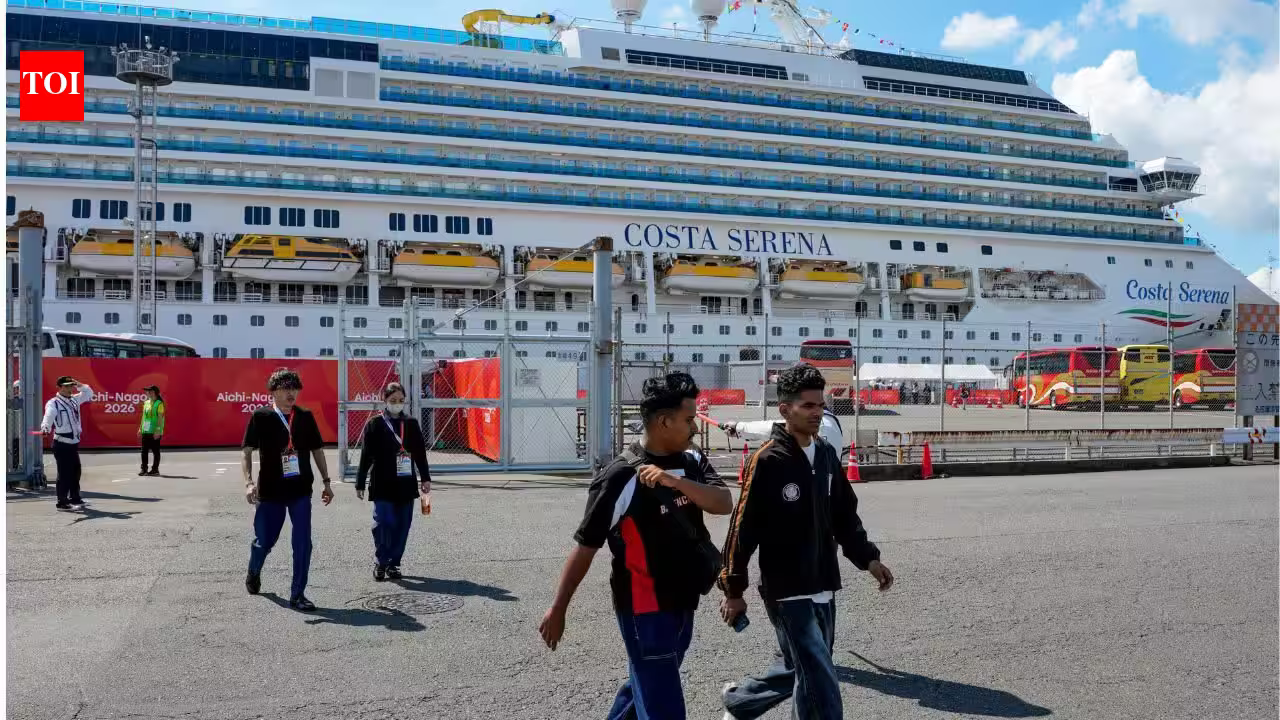
NAGOYA, JAPAN – The spirit of the Asian Games, often defined by the vibrant, communal energy of a centralized Athletes Village, is facing an unprecedented challenge in the lead-up to the Aichi-Nagoya Games. Indian Olympic Association (IOA) president and track legend P T Usha has sounded a public alarm, casting a shadow over the organizers’ decision to abandon the traditional village model in favor of a decentralized accommodation strategy centered around a cruise ship.
For decades, the “Games Village” has served as the heartbeat of multi-sport events—a melting pot where cultural exchange, professional camaraderie, and the distinct “Olympic spirit” flourish. By opting to house athletes in disparate locations, with the Costa Serena cruise ship acting as a primary hub, organizers are attempting to pivot toward sustainability and cost-efficiency. However, the move has drawn sharp, high-level criticism from one of the most respected figures in Asian athletics.
A Legacy of Unity Under Fire
P T Usha, whose personal journey through the Asian Games dates back to 1982, spoke candidly on Tuesday regarding her tenure as a member of the event’s coordination committee. She revealed that her concerns—and those of her fellow committee members—were not merely personal preferences but deep-seated professional objections to the logistical and social ramifications of the plan.
“In fact, everybody objected. Most of the countries objected, actually… even I did,” Usha stated, reflecting on the committee’s internal discourse. “I have travelled from 1982 until now and seen most of the villages. It is totally different from this, with the ship and everything. I think even the Olympic Council of Asia (OCA) did not want this, but somewhere or the other, they had to accept it.”
The crux of Usha’s argument lies in the intangible value of proximity. Beyond mere housing, the Village acts as the social anchor of the Games. It is a space where athletes from different nations can interact, share experiences, and build a sense of community that transcends competitive boundaries. By fracturing this experience, Usha believes the Aichi-Nagoya Games risk diluting the human essence that makes the Asian Games a unique global spectacle.
Logistical Hurdles and Venue Dispersion
Beyond the social impact, the IOA president raised serious concerns regarding the practicalities of a spread-out hosting model. With venues scattered and accommodation fragmented, the logistical flow for team officials and athletes is significantly more complex than in previous iterations of the Games.
Usha pointed to the logistical strain of moving between different sport facilities, noting that the decentralized nature of the event presents a major barrier for those attempting to support athletes across multiple disciplines. “The problem, for me, is that in our time, although we did not have many facilities, the venues were very close,” she explained. “If you wanted to go from one venue to another, it was very easy. Here, if I have to go to shooting and then to cricket, I have to take another route. So, I can only go to one venue if I want to see many Games.”
While the organizers argue that this dispersed model allows various regions within Aichi-Nagoya to benefit from the development of sporting infrastructure, Usha remains skeptical of the trade-off. She suggests that while the accommodation on the cruise ship may be adequate in isolation, it fails the test of functionality when compared to the integrated systems of previous decades. The ease of access, a hallmark of past Asian Games, has been sacrificed on the altar of cost-cutting and regional decentralization.
Is the “Village” Era Coming to an End?
The debate over the Aichi-Nagoya model brings to the forefront a growing tension in the sporting world: the conflict between the skyrocketing costs of hosting major events and the preservation of long-standing traditions. As host cities struggle to justify the massive public expenditure required to build, maintain, and repurpose massive, purpose-built athlete villages, the temptation to utilize existing cruise vessels and hotel networks grows.
However, Usha is firm in her belief that this shift should not be viewed as a permanent death knell for the traditional village concept. She maintains that the objections raised by the committee remain the prevailing sentiment among those who understand the value of a unified Games experience.
“I don’t think the Village culture will change because nobody, when we were in the committee, liked this idea,” Usha insisted.
As the countdown to the Aichi-Nagoya Asian Games continues, the eyes of the sporting world will be on Japan to see if this unconventional, ship-centric arrangement can deliver a seamless experience. For now, however, the message from the IOA president is clear: efficiency must not come at the expense of the unity that makes the Asian Games more than just a series of events—it is a community that demands a home, not just a vessel.
Disclaimer: This content is auto-generated for informational purposes only.
Source: Read Original News