






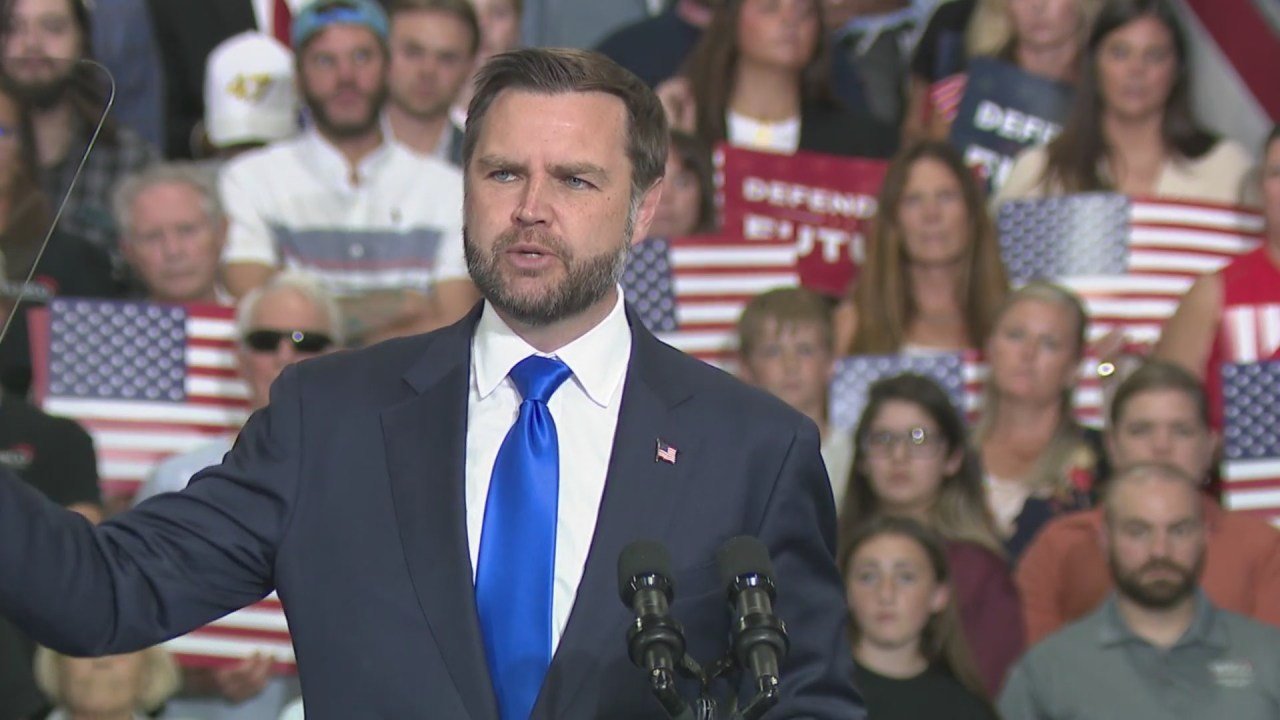
OLATHE, Kansas — Vice President JD Vance brought his nationwide tour to the Kansas City suburbs on Monday, delivering a keynote address that balanced domestic policy concerns with an ambitious vision for the future of American industry. While local discussions centered on immigration and public safety, the Vice President pivoted toward a topic increasingly critical to the current administration’s agenda: the strategic revitalization of American manufacturing through the integration of cutting-edge technology and artificial intelligence.
## Bridging the Gap Between Rust Belt History and AI Innovation
During his stop in Olathe, Vance emphasized that the path toward economic prosperity in the 21st century requires more than traditional infrastructure; it requires a total transformation of how the United States produces goods. Addressing a crowd of local workers and business leaders, the Vice President argued that the “re-shoring” of manufacturing is no longer just about geography, but about technological dominance.
He highlighted that the integration of AI-driven robotics and advanced data analytics is essential to making American labor globally competitive again. According to Vance, the federal government intends to prioritize incentives for companies that utilize AI to optimize supply chains and minimize waste in manufacturing processes. By adopting these high-tech systems, he suggested, the U.S. can neutralize the labor-cost advantages previously held by overseas markets.
## The Role of Tech Giants and Smart Manufacturing
The discussion in Kansas echoed broader conversations occurring in Washington regarding the role of major tech platforms in the industrial sector. Vance noted that as manufacturing becomes increasingly digitized, the synergy between Silicon Valley’s innovation and the industrial heartland’s output is becoming a national security priority.
Industry experts tracking the administration’s moves believe that the push for “Smart Factories” will rely heavily on cloud-computing infrastructure provided by major tech firms. By leveraging high-performance AI models, domestic manufacturing plants can predict equipment failures before they happen, streamline inventory management, and shorten design cycles. The Vice President indicated that ongoing discussions with the tech sector are focused on ensuring these tools are accessible to small and mid-sized manufacturing firms, not just the corporate giants. This shift toward “democratized AI” is seen as a key lever to bolster the mid-American economy.
## Future-Proofing the Workforce Through Tech Literacy
A recurring theme in the Vice President’s address was the necessity of workforce development in an era dominated by rapid technological disruption. Vance addressed concerns regarding job displacement by AI, proposing that the government, in partnership with private sector tech leaders, must double down on vocational training.
“We are not just building factories; we are building a workforce that can speak the language of the future,” Vance remarked. He pointed toward recent initiatives aimed at integrating coding and AI management curricula into technical colleges, arguing that the future of the American Dream lies in the intersection of blue-collar craftsmanship and high-tech fluency.
As the administration continues to push for regulatory frameworks that encourage tech companies to invest in domestic hardware development, the visit to Olathe served as a microcosm of this broader strategy. By focusing on the convergence of manufacturing and artificial intelligence, the administration aims to secure a competitive edge that is insulated from global market volatility. For local residents and manufacturing stakeholders, the message was clear: the factory of the future is not just a place of iron and steel, but a hub of data, sensors, and intelligent automation. As Vance departed for his next stop, the focus remained fixed on this digital-industrial transformation, signaling that tech policy will remain at the forefront of the administration’s platform heading into the next fiscal cycle.
Disclaimer: This content is auto-generated for informational purposes only.
Source: Read Original News