








Walmart Shares Slide as High Gas Prices Dampen Consumer Spending
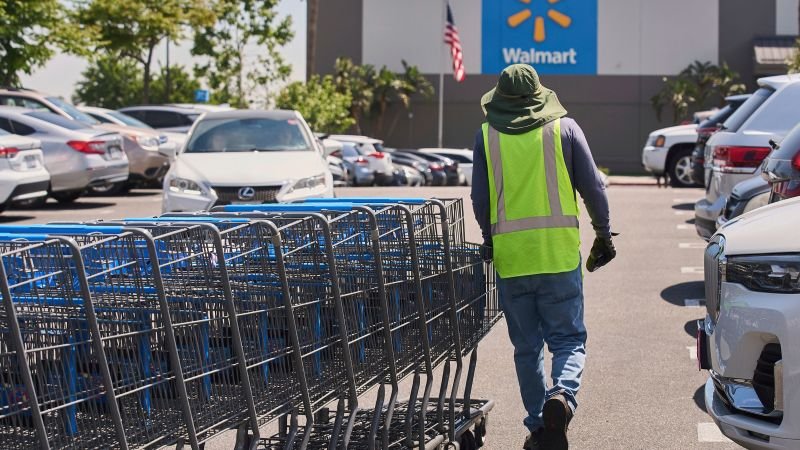
Shares of Walmart fell more than 9% in early trading Thursday as the retail giant reported its slowest US store sales growth since the onset of the pandemic, signaling a cooling trend in consumer confidence driven largely by rising fuel costs.
For the three months ending July 31, Walmart posted a net income of $6.4 billion. While the bottom line was bolstered by robust online performance and a record-breaking $2.9 billion federal tariff refund, the core metric of same-store sales growth painted a more cautious picture. Excluding fuel, sales growth at US stores rose just 2.6%—a notable decline from the 4.6% growth recorded during the same period last year and the lowest rate since the February-to-April period of 2020.
The "Psychological Impact" of Fuel Costs
Widely considered a bellwether for the health of the American economy, Walmart’s latest performance highlights the tightening grip that inflation and energy costs are exerting on household budgets.
Walmart CFO John David Rainey addressed the trend during an earnings call, noting that the consumer environment currently feels "softer" than it did earlier in the year, specifically before the recent surge in gas prices.
"It sort of states the obvious, (we are) seeing some incremental pressure on the consumer," Rainey said. He added that once gas prices cross the $4-per-gallon threshold, they exert a distinct psychological toll, forcing families to make difficult trade-offs in their discretionary spending.
In addition to fuel-related pressures, the company noted that internal shifts—such as lower pricing for GLP-1 weight-loss medications and a broader migration of customers from brick-and-mortar stores to online platforms—also contributed to the deceleration in physical store growth.
Leveraging the Tariff Windfall
In response to these headwinds, Walmart plans to use its massive $2.9 billion tariff refund to aggressively lower prices. These "price investments" are intended to stimulate spending and provide relief to cost-conscious shoppers.
The refund is a direct result of a February Supreme Court ruling that declared President Donald Trump’s sweeping tariff policies illegal. Since May, the U.S. government has been in the process of returning funds from the $168 billion collected from approximately 330,000 importers. According to U.S. Customs and Border Protection, $100 billion had been disbursed as of July 31.
Walmart is far from alone in benefiting from these government repayments. Other major retailers have reported substantial windfalls, including Target ($994 million), The Home Depot ($730 million), and TJX ($331 million). Large-cap corporations across various sectors, including Apple, Nike, Amazon, and FedEx, have also logged significant refunds in their most recent financial filings, providing a one-time cushion for many of the nation’s largest companies as they navigate a shifting macroeconomic landscape.
With reporting by Elisabeth Buchwald and Nathaniel Meyersohn.