






This week we have published the first iteration of Environment Journal in magazine form. This new online magazine represents a step forward in our coverage, bringing together longer-form features, expert insights and contributions from guest writers.
Click here to read the first issue.
Fittingly, the first feature in the first magazine examines how we have seen our own planet from without. A remarkable photograph captured during the Artemis II mission offers a new perspective on the Moon, Earth and our place in the universe, echoing the historic and deeply influential Earthrise image from 1968.
Closer to Earth, the future of natural resources is under scrutiny. As the water sector faces major reform and growing environmental pressures, Ofwat’s James Jenkins and Jo Jolly argue that nature must be recognised as essential infrastructure. They explore why stewardship, innovation and collaboration will be vital to protecting wetlands, catchments and other natural assets for generations to come.
The relationship between finance and climate action is also examined, as private equity firms increasingly influence investments across renewable energy, fossil fuels, defence and consumer industries. The feature asks whether investment giants can truly accelerate the net zero transition while continuing to profit from activities that contribute to environmental challenges.
Elsewhere, global superstar and Black Eyed Pea Apl.de.ap is using his platform to drive environmental change in the Philippines through a major coconut re-greening initiative, restoring ecosystems while supporting farmers and building more resilient communities.
We report on how former industrial sites are finding new purpose. Newbold Quarry demonstrates how careful restoration, adaptive management and collaboration can transform degraded landscapes into thriving habitats for wildlife and people.
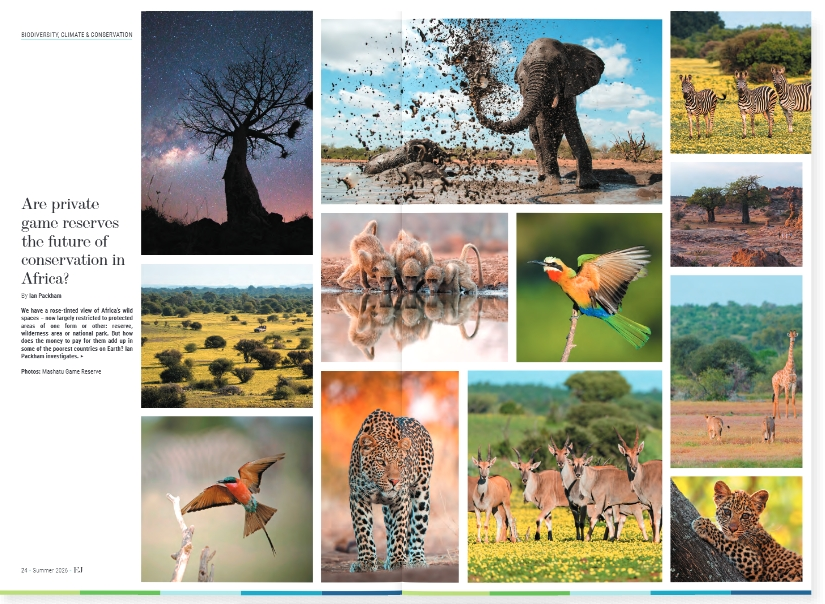
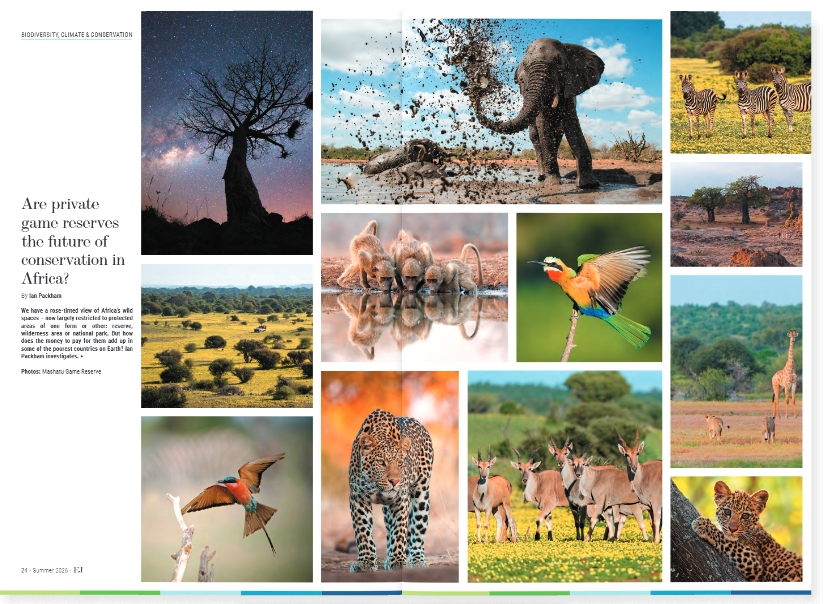
Ian Packham investigates the complex economics behind Africa’s iconic wildlife areas, exploring who pays for conservation and how tourism, communities and biodiversity can be balanced. Meanwhile, councils across the UK are moving towards electric fleets, facing the practical challenges of infrastructure, funding and grid capacity as they work towards cleaner transport.
Art and science meet in Angela Manno’s Sacred Biodiversity Oracle, which uses traditional iconography to celebrate endangered species and inspire conservation action. Martin Gutteridge-Hewitt examines another hidden environmental challenge — microplastic pollution from tourism — and the technologies helping the industry reduce its impact.
Finally, Dr Alejandro Martí explores how Europe’s clean energy ambitions must adapt to a changing climate, arguing that tomorrow’s infrastructure needs to be designed for the extreme conditions of today, not the weather patterns of the past.