








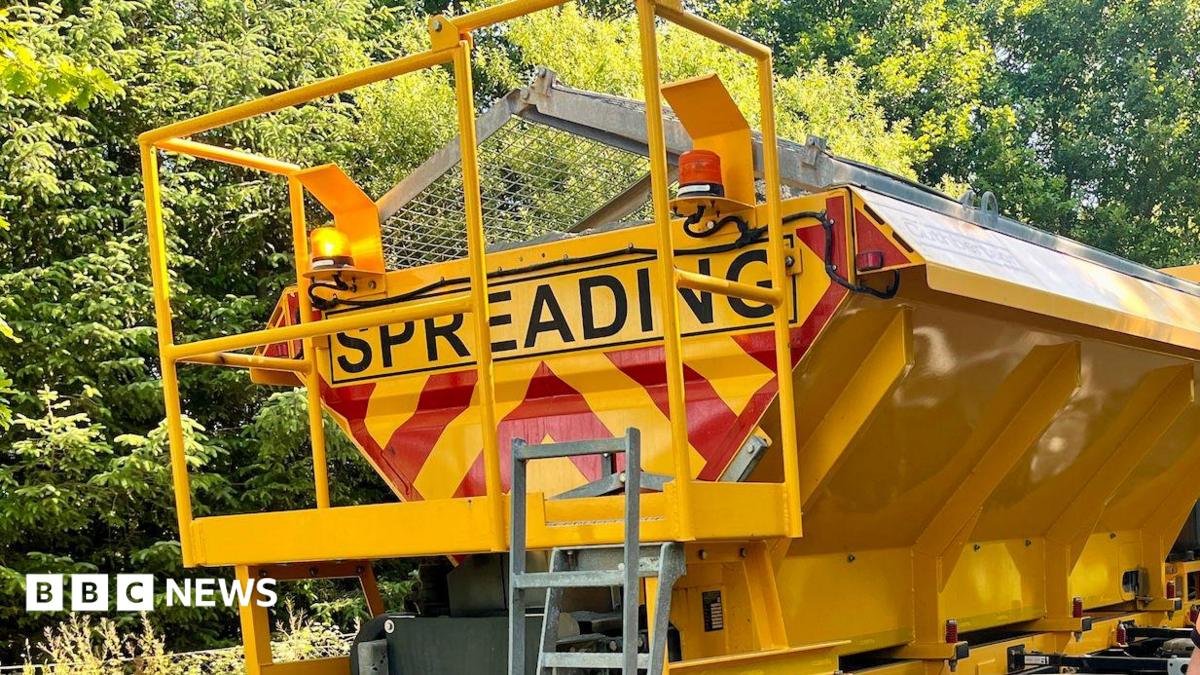
Amid a summer heatwave, gritters are being deployed to protect roads across the country from getting damaged.
Although they are better associated with snow and ice, Richard Fenwick, director of highways at Warwickshire County Council, said they were commonly used in summer as well.
During heatwaves of 30C or higher Fenwick said road surfaces could reach 50C, which he said put them at risk of starting to melt.
To combat this, crews are using gritter lorries to spread granite dust and crushed stone on roads to help mop up leaking bitumen, stabilise the surface and prevent it becoming slippery.
Fenwick said highways teams were sent out to scout areas, relying on reports from members of the public.
Once a site is checked, if the roads look like they are “fatting out”, he said the gritters were deployed.
Fatting out is a visual indicator of the road surface starting to break away.
It is when excess liquid bitumen or tar rises to the surface of an asphalt road. This results in a smooth, shiny and often sticky black layer that covers the road’s natural texture.
Staffordshire County Council said it was also monitoring roads and expected the heatwave to affect its network.
“To this end, we have four dusting vehicles stationed across the county, ready to spread granite dust on any road that needs it,” it said.
“The granite is different to the grit we spread in winter, in that it is designed to absorb soft bitumen and stabilise the road surface.”