







Catholic Sisters: Prophetic Voices in a Shifting Digital Landscape
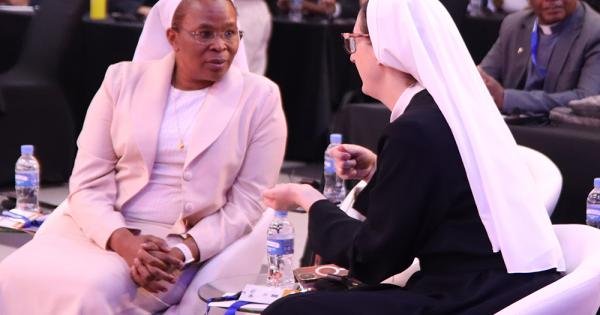
Kigali, Rwanda – Catholic sisters are uniquely positioned to serve as vital and prophetic voices in an increasingly complex and often misleading global media environment. This was a core conclusion of the SIGNIS World Congress, an event organized by the World Catholic Association of Communication, held August 1-8 in Kigali, Rwanda – marking the first time this global assembly convened on African soil.
The assembly brought together approximately 300 participants, including nearly 50 sisters, to reassert Catholic values in media and explore the crucial role religious can play amidst the proliferation of AI-generated content, misinformation, and disinformation.
"The current media environment is flooded with AI-generated content, a hyperproduction of content that is filled with misinformation and disinformation," stated Sr. Nina Krapić, Deputy Director of the Holy See Press Office, during an August 6 plenary address. Krapić, a member of the Congregation of the Sisters of Charity of St. Vincent de Paul of Zagreb, highlighted that this trend is fostering "news avoidance," growing distrust in media, and a scarcity of human-centered narratives that uphold dignity and hope.
Krapić echoed Pope Leo XIV’s message from the 60th World Day of Social Communications, where the pontiff emphasized the world’s need for "faces and voices to speak for people again. We need to cherish the gift of communication as the deepest truth of humanity, to which all technological innovation should also be oriented."
Delegates stressed the importance of advocating for responsible technology use. Sr. Lucy Stephen Sungu, a radio journalist in Manyara, Tanzania, and a member of the Congregation of the Servants of Good News, urged Catholic communicators to "advocate for the use of technology and AI with wisdom and respect for human dignity" – a principle rooted in the belief that "man was created in God’s image."
Marijana Grbeša Zenzerovic, a professor at the University of Zagreb and frequent collaborator with the Vatican’s Dicastery for Communication, described the current landscape as "a hybrid communication system, in which social media coexist with mainstream media, influencers and so-called ‘newsfluencers’ with professional journalists." This environment, she told Global Sisters Report, makes it "increasingly difficult to distinguish reality from manipulated reality, particularly with the rapid rise of AI."
Pope Leo’s Encyclical as a Guiding Light
Pope Leo’s recent encyclical, Magnifica Humanitas, served as a significant backdrop for the assembly. Zenzerovic noted that the encyclical offers "strong encouragement" to those grappling with the "hybrid" media environment. More importantly, she added, it "places a responsibility on everyone within the church to become actively involved in their communities, raising awareness and educating people of all generations — from young people to the elderly — about the challenges posed by this latest technological revolution." Zenzerovic concluded that the encyclical should be viewed as "an appeal to all stakeholders, including digital platforms, to recognize and assume their responsibility in shaping the future of humanity."
Sr. Sungu, in an interview with Global Sisters Report, reiterated these concerns, emphasizing the critical need for sisters to take a more prominent role in media and communications. She underscored the importance of working in media and adhering "to the Holy Spirit in order to change peoples’ life positively, and to respect their dignity in this digital era," promoting "peace, justice and reconciliation to God’s people through digital communication" while upholding reliable journalistic practices.
Krapić further highlighted the need for sisters to actively shape perceptions of themselves in popular media. "The public narrative about Catholic sisters is still largely trapped within entertainment," she observed, noting that "mainstream media has, in many ways, handed over the story of sisters to popular culture," focusing on "unusual stories, scandals, or, more recently, sister influencers." She lamented the rarity of stories depicting "the real lives of sisters and the extraordinary work they do every day." Even sister-created content, she pointed out, can fall into this trap, with viral accounts often showcasing sisters "dancing, singing, participating in social media trends, or playing music."
While acknowledging the joy in such expressions, Krapić cautioned that when these images become "the dominant narrative, we have a problem." She urged introspection: "Why don’t we show our life the way it really is? Are we ourselves aware of the richness of our life and all the fruits that communication of that life can produce?" This introspection is crucial, she argued, because sisters are not only pillars of the institutional church but also "are pillars of society itself." Referencing the host country, she stated that in "Rwanda alone, there are about 4,000 sisters. If sisters stopped working for just 24 hours, many communities in the world would experience a serious social and spiritual crisis."
Affirming That Catholic Sisters ‘Are Everywhere’
Krapić painted a vivid picture of the sisters’ widespread impact, asking delegates to consider the daily lives of a single congregation: "Some sisters are in hospitals. Others are in hospices accompanying people in their final hours. Others are teaching in schools and universities. Some are working in urban slums. Some educate fathers in remote villages about parenting. Others accompany migrants and refugees. Others work every day to prevent human trafficking." She added, "Some collaborate with governments and international institutions," and some "advocate for human dignity all the way to the United Nations." Krapić concluded, "Sisters are everywhere. I would even dare to say that religious life represents one of the most extraordinary human networks in the world."
Krapić also introduced the Pentecost Project, or Sisters Project, an initiative "aimed at building a dynamic global network of sisters’ voices" within the Vatican media. This project aims to demonstrate "how sisters are contributing to the church’s work" through three pillars: publishing stories by and about Catholic sisters, offering communications training for sisters, and providing free subscriptions to L’Osservatore Romano.
Sr. Jane Wakahiu, Associate Vice President of the Catholic Sisters Initiative at the Conrad N. Hilton Foundation (a major funder of Global Sisters Report), also underscored the vital role of Catholic sisters in global communications. During the August 6 plenary, Wakahiu emphasized the "Gospel imperative" of "storytelling and amplifying the voices of Catholic sisters in the public square," highlighting communication’s power to offer hope and affirm the humanity of those on the margins.
"The stories we choose to tell matter," Wakahiu told delegates. "Too often, the public square is shaped primarily by stories of crisis, conflict and failure. Communication has an important responsibility to illuminate injustice, expose corruption and give voice to those who suffer. We should never diminish that responsibility." However, she cautioned, if these are the only stories told, "we leave the world with an incomplete picture."
"Our task is not to deny the darkness," argued Wakahiu, a member of the Institute of the Little Sisters of St. Francis, Kenya. "Our task is to reveal the light that continues to shine within it. This is precisely where Catholic sisters have something unique to offer." Combating the onslaught of AI-generated misinformation will be challenging, Wakahiu acknowledged in an interview with GSR, but "communicators have to remain prophetic."