








India’s remarkable success in tiger conservation has led to a significant increase in the Bengal tiger population. With the national tiger count more than doubling from an estimated 1,827 in 1972 to an impressive 3,682 in the 2022 tiger census, India now harbors approximately 75% of the world’s wild tigers. This triumph, however, has introduced new challenges, particularly as these apex predators increasingly venture into human-dominated landscapes. Conservationists are now advocating for the urgent protection of ecological corridors to safeguard these expanding tiger populations and connect their vital habitats.
A considerable portion of India’s wild tigers, estimated at 35%, now reside outside traditional protected areas. As young tigers mature and seek to establish their own vast home ranges – which can span up to 200 square kilometers for males – they often encounter a highly fragmented environment. This fragmented landscape is crisscrossed by a network of roads, railway lines, and expanding urban centers. Without secure pathways, these isolated tiger populations face the grave risks of inbreeding and eventual local extinction, jeopardizing the long-term sustainability of the species.
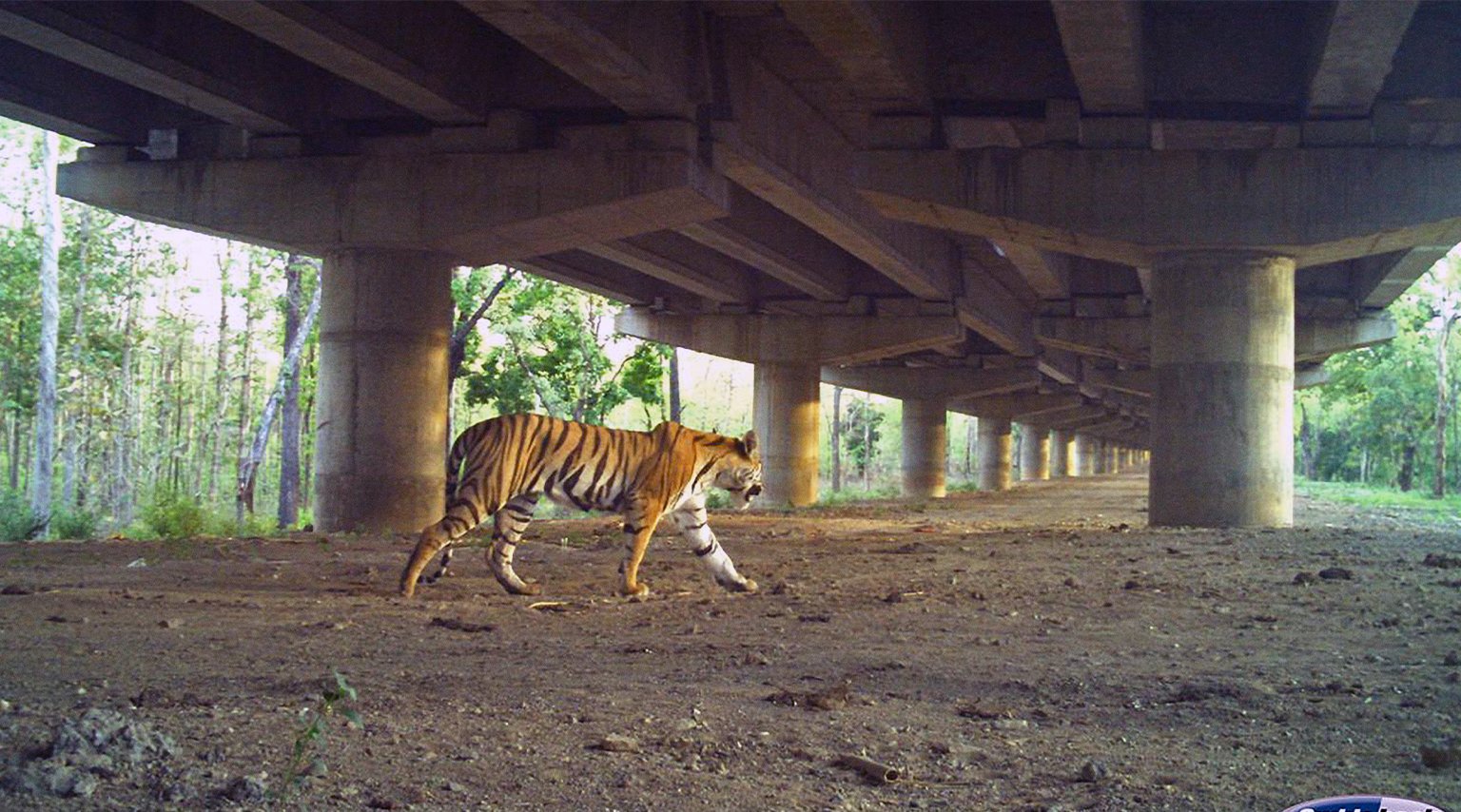
In an impressive response to rapid infrastructural development, India has emerged as a leader in constructing wildlife mitigation structures. According to Bilal Habib, a scientist at the Wildlife Institute of India (WII), a government-run research center, India has built more wildlife underpasses and overpasses than any other Asian nation. This includes the creation of the world’s 10 largest wildlife mitigation structures since 2017, such as a monumental 12-kilometer underpass beneath a newly inaugurated expressway connecting New Delhi to Dehradun. Habib highlights the significant investment, stating, “I don’t think anywhere in the world, any developing country has spent as much money as we have on mitigation, exclusively for wildlife conservation.”
Despite these commendable efforts, concerns persist regarding the ongoing diversion of forests for linear infrastructure projects and mining. Prakriti Srivastava, former principal chief conservator of forests in Kerala, and researcher Prerna Bindra have documented a troubling trend within the National Board for Wildlife. This body, responsible for reviewing projects in critical wildlife habitats, has reportedly become a mere “rubber-stamp,” approving a staggering 97% of project proposals over a 12-year period. Bindra, who previously served on the board’s Standing Committee, underscored this systemic issue.
Tiger expert Ullas Karanth, emeritus director of the Bengaluru-based Centre for Wildlife Studies, emphasizes that the effectiveness of wildlife corridors hinges on the presence of healthy habitats on both sides. He asserts that tigers will only utilize these corridors if there is a compelling reason to cross, stemming from the quality of the connected environments. Karanth strongly advocates for prioritizing the security of core habitats, suggesting that India’s diverse ecosystems could potentially support a much larger tiger population, ranging from 10,000 to 20,000, if these habitats were adequately protected.
However, wildlife biologist Ravi Chellam offers a nuanced perspective, challenging the common misconception that animals strictly adhere to human-defined wildlife corridors. He cautions against the simplistic approach of “elegantly and clearly demarcating narrow wildlife habitats on a map and calling them corridors,” stating that this does not reflect the reality of animal movement patterns. Chellam explains that animals do not limit their movements to these designated corridors but rather utilize a complex “matrix of habitats available in the landscape.” This highlights the need for a holistic approach to conservation that considers the broader ecological context rather than relying solely on isolated corridor designs. The ongoing expansion of India’s tiger population necessitates a proactive and integrated strategy for habitat connectivity to ensure their long-term survival and genetic viability, as further elaborated in this report on safeguarding tiger passageways.