









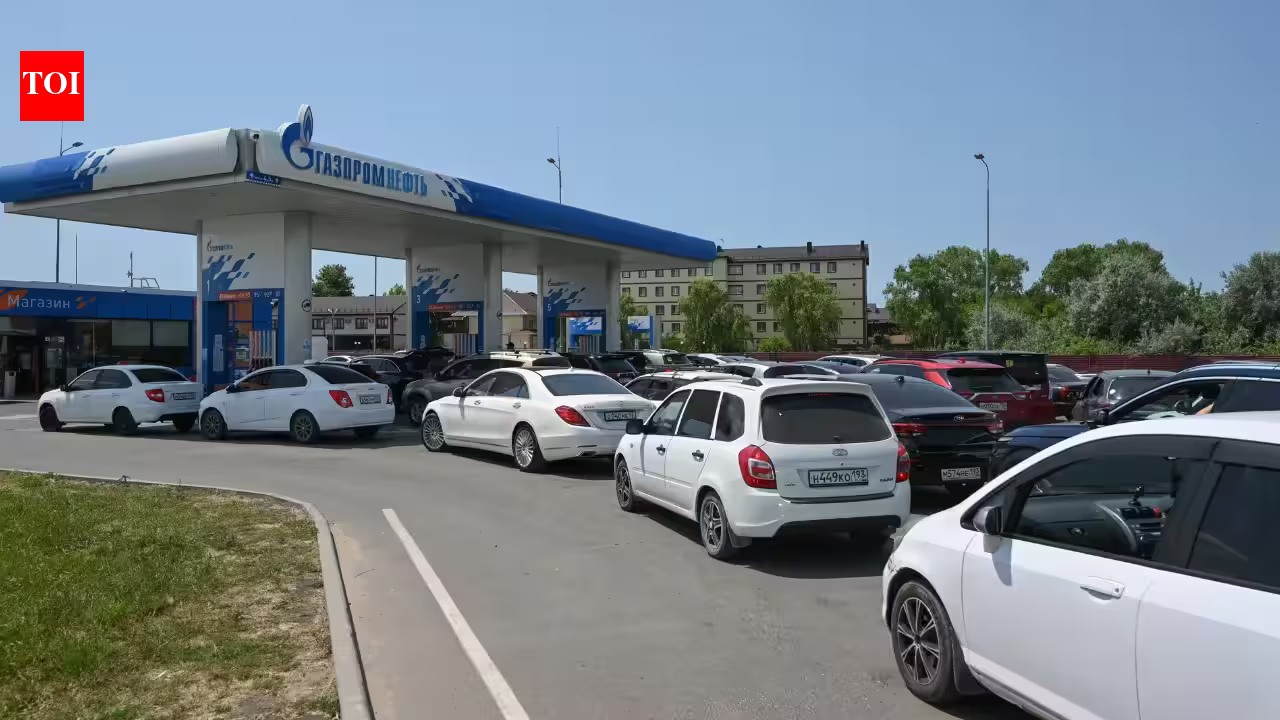
Russia is once again grappling with significant fuel shortages across various regions. This renewed crisis follows a series of recent drone attacks that have severely impacted the nation’s oil refineries, disrupting production and subsequently tightening the supply of petroleum products. Evidence of this growing predicament can be seen in the imposition of stricter controls on petrol sales in at least ten different regions, a measure necessitated by the escalating pressure on domestic supplies.
On a recent Monday, reports from eyewitnesses, relayed by Reuters, indicated that several filling stations in the Moscow region were completely devoid of petrol, although diesel remained generally available. This localized scarcity reflects a broader trend, with regional authorities and media outlets confirming the reintroduction of restrictions on fuel sales in numerous parts of the country.
This current wave of shortages is particularly concerning as it emerges merely weeks after Russia had seemingly navigated its way out of an earlier fuel crisis. The initial disruption, which began to manifest in May and spread virtually nationwide by July, was also a direct consequence of drone attacks that forced several refineries to cease operations, coinciding with an anticipated seasonal surge in fuel demand. To counteract that crisis, the government had implemented a range of measures, including limiting exports of both petrol and diesel, easing certain quality standards for fuel, and even importing petroleum products from abroad to bolster domestic reserves. By the close of July, these interventions had shown positive results, with improved fuel availability leading to the relaxation or removal of restrictions in some areas.
However, a fresh barrage of drone attacks targeting Russian refineries in late July and early August has once again crippled production capabilities. This fresh assault has placed immense pressure on existing supplies, compelling regional authorities to re-impose measures aimed at managing fuel sales. The Russian government itself acknowledged the gravity of the situation on Friday, confirming that fuel supplies remained problematic in several regions. Energy officials convened to specifically address the dire circumstances in diverse regions such as Orenburg, Lipetsk, Tver, Krasnodar, Zabaykalsky, Primorsky, Krasnoyarsk, Oryol, Tuva, and Khakassia.
The strain on the market is also overtly apparent in wholesale operations. Data from the St. Petersburg International Mercantile Exchange reveals a stark 20% reduction in average gasoline sales since the beginning of August when compared to the latter half of July. This significant decline underscores the severity of the supply disruptions.
These persistent fuel shortages serve as a critical indicator of the Russian domestic energy market’s profound vulnerability to sustained assaults on its refining infrastructure. With refinery operations continuously being interrupted, coinciding with periods of heightened seasonal demand, and with export restrictions already in place, the authorities are once again under immense pressure to guarantee sufficient supplies at petrol stations across the nation. The latest set of measures underscores Russia’s ongoing struggle to mitigate the broader implications of drone attacks on its energy infrastructure, which have increasingly and strategically targeted key refineries and other vital oil facilities.