








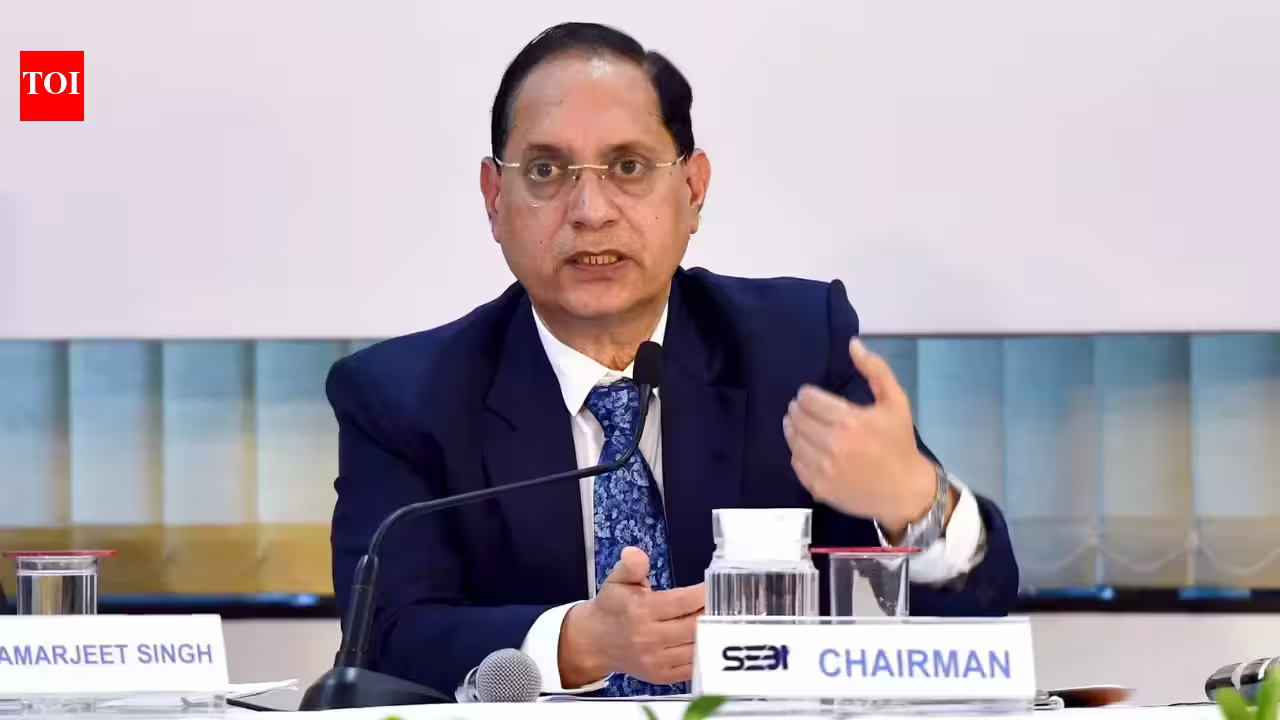
Tuhin Kanta Pandey, the head of the Securities and Exchange Board of India (Sebi), recently affirmed the regulator’s unwavering commitment to the newly implemented Closing Auction Session (CAS). Despite a flurry of concerns and feedback from various market participants, Pandey categorically stated that there are no intentions of rolling back this significant reform. The CAS system, introduced on August 3rd, has generated considerable discussion, with some participants voicing difficulties and even expressing their grievances on social media platforms.
Acknowledging these concerns, Pandey assured reporters during a cybersecurity event hosted by the Sebi-backed National Institute of Securities Markets that the regulator is actively reviewing the feedback. While no immediate specific changes were announced, he emphasized Sebi’s openness to refining the framework if necessary. “The CAS is here to stay for sure,” Pandey reiterated, “only we will see if there are certain constraints or certain issues that we can improve, certainly we will improve.” This statement underscores a flexible yet firm stance, indicating that while the core system remains, its implementation may be fine-tuned based on constructive input.
Pandey highlighted that Sebi is carefully considering all suggestions, including those gleaned from social media. He clarified that while all feedback is being examined by dedicated teams and discussed with participants, the regulator will not react to every criticism indiscriminately. He characterized CAS as a crucial advancement in the financial markets, designed to achieve specific regulatory objectives.
The Sebi chief suggested that some of the reported difficulties might simply be initial teething problems that will subside as more participants become accustomed to and actively utilize the CAS system. He also pointed out that the continued reliance of some market players on older systems, particularly those based on the volume-weighted average price framework, might be preventing them from fully realizing the benefits of CAS. This observation hints at a potential resistance to change within certain segments of the market.
Pandey further underscored that India was a relatively late adopter of such a system, as similar frameworks are already operational in numerous other countries. He provocatively questioned whether market participants had genuinely invested sufficient effort in understanding and adapting to the new system, implying a potential lack of proactive engagement. “When you have something going on for years and years, they feel that change will never come. We do not put in energy into learning a new system,” he remarked, reflecting on the human tendency to resist new paradigms.
Interestingly, despite the criticisms, Pandey also revealed that Sebi has received numerous congratulatory messages from many stakeholders who appreciate the introduction of CAS. This indicates a divided opinion within the market, with some embracing the new system as a positive development for market efficiency and transparency. Ultimately, Sebi’s approach appears to be one of cautious adaptation, committed to its reform while remaining receptive to informed suggestions for improvement within the overarching business framework.