






Europe’s Ariane 6 Dilemma: High Subsidies and the Looming Question of Scale
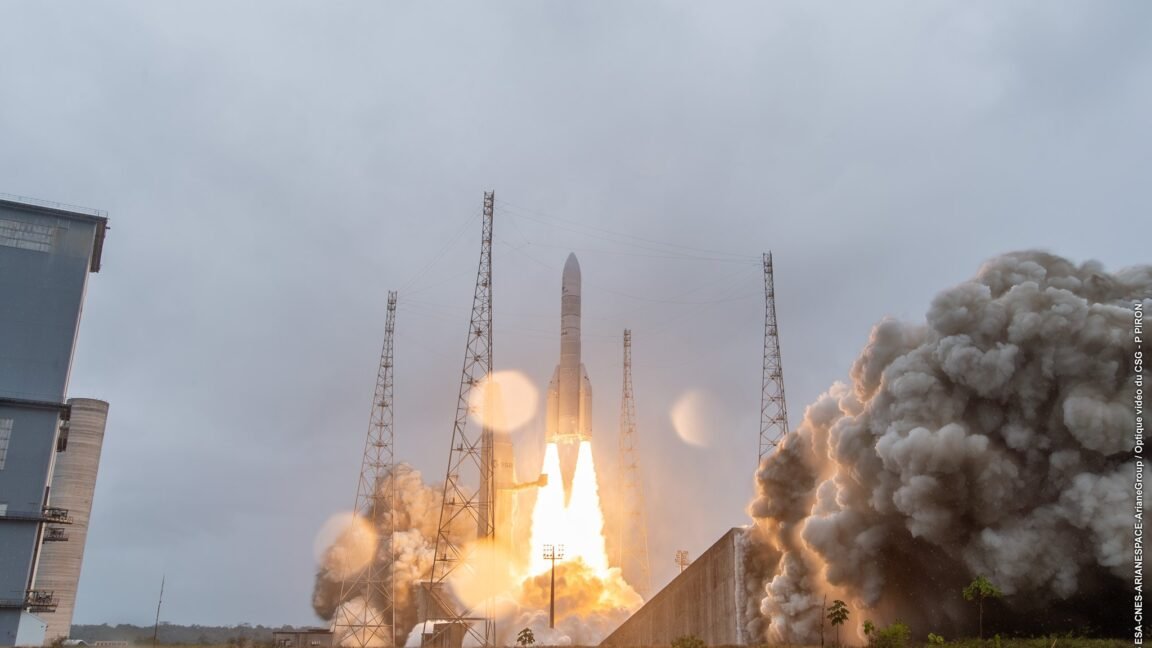
The European space sector stands at a critical juncture. While the Ariane 6 rocket is often framed as a triumph of continental engineering, a closer look at its financial structure reveals a stark reality: Europe is arguably losing money on every mission it launches.
The development of the Ariane 6—and the modernization of its launch facilities in French Guiana—came with a hefty price tag of roughly 3.6 billion euros. However, the capital expenditure is only the beginning. Josef Aschbacher, Director General of the European Space Agency (ESA), has publicly confirmed that even with an operational cadence of nine flights per year, European governments must provide an additional subsidy of 32 million to 38 million euros per launch.
When these ongoing operational subsidies are combined with the amortized development costs, European taxpayers are effectively contributing over 100 million euros toward every single mission before a commercial customer even pays a cent to the operator, Arianespace.
The Scaling Conundrum
Europe currently aims for an annual flight rate of nine to 10 missions. Yet, as the launch crunch intensifies globally, there is mounting pressure to expand that capacity. Aschbacher noted in June that the agency is evaluating scenarios to scale operations to 12, 15, or even 20 launches annually to meet surging demand.
However, scaling the Ariane 6 is not a simple task. Because the rocket is expendable, every increase in flight frequency necessitates a direct, proportional increase in the manufacturing of every component, from solid-rocket motors to upper-stage engines and payload fairings.
A Decision for Ministers
Aschbacher expects to receive guidance from European ministers by the end of this year regarding whether to authorize the heavy investment required to expand factory capacity and logistics. The decision is far from straightforward. Ministers must weigh whether it is fiscally responsible to sink more capital into a vehicle that requires deep subsidies to remain competitive in a commercial market dominated by lower-cost alternatives.
There is also the "opportunity cost" argument: some officials may contend that these funds would be better redirected toward developing a next-generation launch vehicle. By pivoting toward partial or full reusability, Europe could potentially move away from the current subsidy-dependent model and better compete with the increasingly aggressive space programs of the United States and China.
The decisions made by ministers in the coming months will serve as a bellwether for the European space industry. Whether they choose to double down on the expendable Ariane 6 or shift focus toward a reusable future will determine not just the fate of the rocket, but Europe’s long-term standing in the global space economy.