







Beyond Salinity: How Coastal Plant Species Are Rewriting the Climate Equation
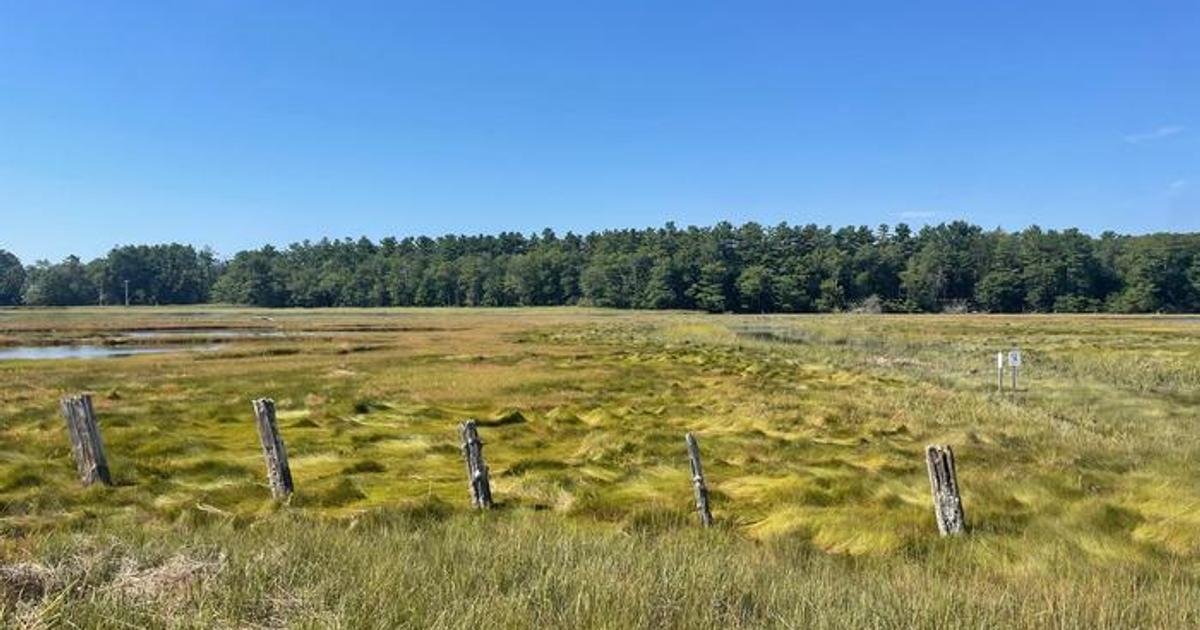
For many, a tidal marsh is merely a picturesque landscape of swaying grasses at the edge of the sea. For Boston University Ph.D. candidate Holly Wilson, however, these environments represent a complex, breathing infrastructure that may hold the key to better tracking global climate change.
A new study led by Wilson and published in the Proceedings of the National Academy of Sciences (PNAS) has revealed a breakthrough in environmental science: the specific species of plants living in a tidal marsh are far more accurate predictors of methane emissions than the water’s salinity—the metric scientists have relied upon for decades.
The Methane Challenge
Tidal marshes are essential allies in the fight against climate change. They act as "blue carbon" powerhouses, pulling carbon dioxide from the atmosphere and locking it away in their soils for centuries. However, these same ecosystems are also sources of methane, a greenhouse gas with significantly higher warming potential than carbon dioxide.
To fully leverage wetlands as a natural climate solution—and to ensure the integrity of emerging carbon markets—scientists must accurately account for both the carbon stored and the methane emitted. Until now, that has been a difficult task.
“The default assumption for a lot of these policies and frameworks is that if it’s above a certain salinity, you just don’t think about methane emissions,” Wilson explained. “But we found that plant species are a robust proxy for methane fluxes, outperforming all previously described proxies.”
A Shift in Scientific Perspective
The research builds on over a decade of work conducted in the lab of Robinson “Wally” Fulweiler, a professor of Earth & Environment and Biology at Boston University. Earlier investigations by the team sought to identify which environmental conditions dictated greenhouse gas emissions. While many variables failed to provide a clear signal, the plants themselves stood out.
“Plants live in certain environments; they reflect the long-term conditions—that is, they integrate environmental signals,” Fulweiler said.
To test this hypothesis on a global scale, Wilson analyzed over 2,000 methane measurements from 87 studies across the world. By utilizing machine learning models, she and her colleagues discovered that plant species alone could explain 62% of the variability in methane emissions. When factoring in variables like latitude and season, that predictability jumped to 71%.
This discovery regarding tidal marsh methane emissions suggests that we now have a low-cost, efficient, and highly accessible way to estimate emissions: simply identifying the plants. Because these species can be categorized through on-site surveys or even aerial imagery, the finding offers a practical tool for land managers and policymakers.
Balancing the Carbon Budget
The findings do not diminish the value of marshes as carbon sinks; rather, they provide a more precise accounting method. The study indicates that methane emissions can offset between 1% and 39% of the carbon sequestered by marshes, depending on the vegetation present.
Wilson is careful to note that this doesn’t mean restoration efforts should prioritize only the plants that emit the least methane. "Salt marshes that are biodiverse also supply benefits for a host of organisms, including humans," she said, noting that different species serve different ecological roles, such as providing essential habitats for the salt marsh sparrow.
A New Chapter in Coastal Science
As the researchers look toward the future, they aim to create high-resolution global maps of tidal marsh vegetation to estimate emissions across entire coastlines. They also intend to investigate the "why" behind the data—exploring how specific plant traits influence these biochemical processes and whether these same species might predict other gas emissions, such as nitrous oxide.
For Wilson, the research has reinforced her initial fascination with these resilient plants.
“The plants we see in salt marshes are incredible because they have these adaptations that allow them to survive or thrive in these extremely stressful environments,” Wilson said. “It’s interesting that you can use their unique traits to estimate large-scale biogeochemical processes.”