








The Hidden Danger in Your Bin: Lithium Battery Fires Reach “Epidemic” Proportions
Britain’s recycling and waste management industry is facing a full-blown crisis as the number of fires triggered by incorrectly discarded lithium-ion batteries surges to more than 10 per week. Experts warn that the trend is not only placing workers and firefighters at significant risk but is also inflicting a staggering £1bn annual cost on the economy.
According to new data from the Environmental Services Association (ESA), the trade body for the UK waste management sector, there were 1,518 recorded fires at facilities in the year leading up to March 2026. Of these, at least 541 were directly attributed to lithium-ion batteries, with an additional 216 incidents occurring within bin lorries.
However, industry leaders believe these figures only scratch the surface. Because many blaze investigations prove inconclusive, the true impact remains obscured. “We know 40% of fires at recycling centres are caused by batteries, but we think the actual number is more like 70%,” a spokesperson for the ESA noted.
A Spark of Destruction
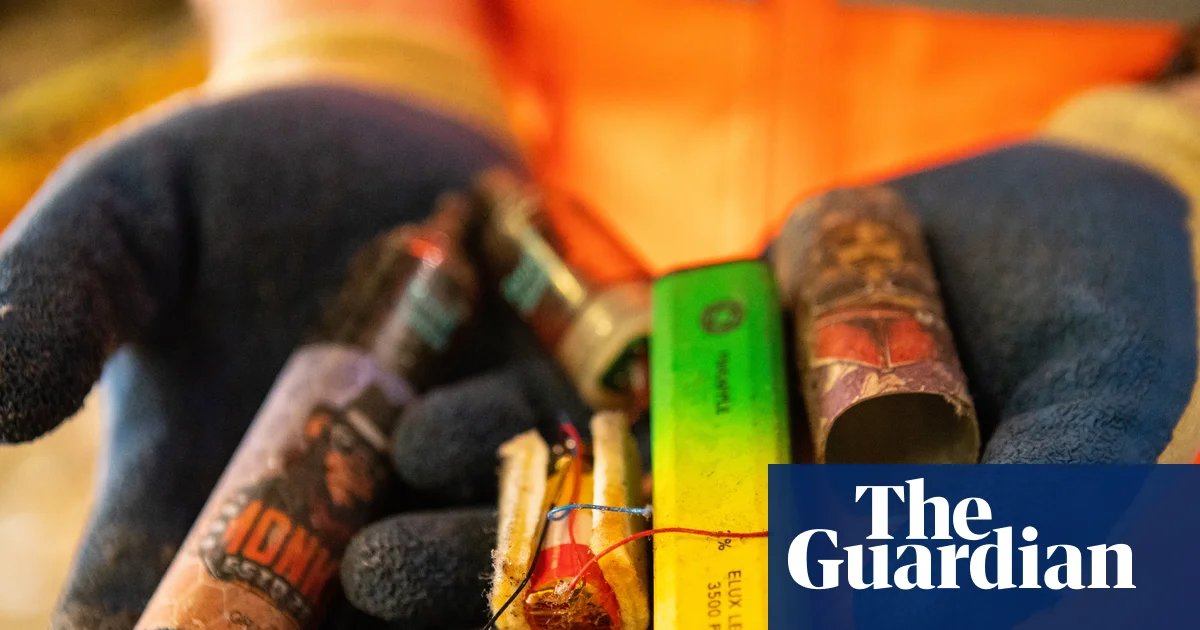
The rise in fires has been linked to the increasing prevalence of lithium-ion technology in everyday household items, including smartphones, children’s toys, electric toothbrushes, power tools, and e-scooters. Yet, industry experts point to the disposable vape as the primary antagonist.
The volatility of these items was recently illustrated in a controlled experiment conducted by the Health and Safety Executive (HSE). When a vape battery was punctured—a common occurrence in the crushing machinery of recycling plants—it erupted with the intensity of a sparkler, reaching temperatures exceeding 750°C and instantly igniting surrounding paper and cardboard.
Dr. Francesco Restuccia, a fire expert at King’s College London, explained the mechanical failure: “If the separator is pierced—which happens a lot at recycling centres—it creates a lot of internal short circuits, causing the temperature to increase until it reaches ignition point.”
An Industry Under Siege
The financial and operational strain on the sector is immense. Annual costs associated with these fires have ballooned from £150m in 2021 to an estimated £1bn today, driven by facility damage, service disruptions, and skyrocketing insurance premiums.
Fire services are also feeling the weight of the trend. Following a recent blaze in Ilford, London Fire Brigade reported that such incidents are becoming increasingly resource-heavy, often requiring dozens of firefighters to contain. These fires have broken out across the country, from Glasgow to Norfolk, leaving local authorities and waste operators struggling to manage the escalating risk.
The Push for Reform
In response, the waste industry is clamouring for urgent policy reform. With waste management firm Biffa reporting the recovery of over 500,000 vapes at its facilities this summer alone, the ESA is lobbying the government to implement a mandatory £5 deposit return scheme. By placing a financial incentive on the return of these devices to retailers, the trade body hopes to prevent them from entering the general waste stream.
“Battery fires are reaching epidemic proportions across Britain’s recycling and waste industry,” said Patrick Brighty, head of recycling policy at the ESA. “It only takes a single battery hidden in household rubbish to cause a huge fire and decimate a facility.”
As the volume of hazardous household waste continues to climb, the message from fire chiefs and waste operators is clear: lithium batteries are not just a convenient power source—they are a significant fire hazard that requires immediate public awareness and systemic regulatory change to prevent further catastrophe.