









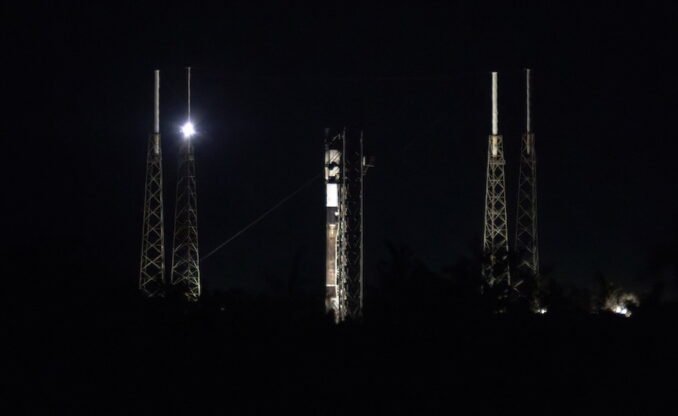
SpaceX Prepares for Historic Milestone with 37th Flight of Falcon 9 Booster
CAPE CANAVERAL, FL — SpaceX is poised to reach a new frontier in rocket reusability early Tuesday morning, as a veteran Falcon 9 first-stage booster prepares to carry out its 37th mission. The launch, which will deploy another batch of satellites for the company’s Starlink internet constellation, marks a significant moment for the aerospace giant’s rapidly maturing launch program.
The mission, designated Starlink 10-49, is scheduled for liftoff from Space Launch Complex 40 (SLC-40) at Cape Canaveral Space Force Station at 5:33 a.m. EDT (0933 UTC). The Falcon 9 will carry 29 additional broadband satellites into low Earth orbit, expanding a network that now includes more than 11,000 spacecraft.
A Record-Breaking Workhorse
The core of this mission is the flight-proven booster, tail number B1067. Since its debut in June 2021, the vehicle has become the most active in the company’s fleet. By successfully completing this 37th flight, SpaceX continues to push the boundaries of how many times a single orbital-class rocket can be safely turned around and launched.
Approximately 8.5 minutes after clearing the launch pad, the first stage is programmed to execute a precision landing on the autonomous spaceport droneship A Shortfall of Gravitas, stationed in the Atlantic Ocean. If successful, the mission will mark the 165th recovery for this specific droneship and the 654th overall successful landing of a Falcon booster.
A Pivot in Operations
Industry observers note that this could be the final Starlink mission originating from the Cape for the near future. SpaceX has increasingly shifted its Florida-based resources toward preparations for its next-generation Starship launch vehicle.
Year-to-date, the company has heavily favored its West Coast facility at Vandenberg Space Force Base for Starlink deployments, conducting 44 of the 76 missions from the California launch site. This strategic shift reflects a broader recalibration of SpaceX’s launch infrastructure as the company balances routine satellite launches with the development of its massive, Mars-capable Starship rockets.
Favorable Launch Conditions
Meteorologists with the 45th Weather Squadron are currently painting a bright picture for Tuesday’s departure. The latest forecast indicates a 90 percent probability of acceptable weather conditions. Launch weather officers remain vigilant, however, monitoring for a minor risk of interference from cumulus and anvil clouds during the early morning window.
The rocket is slated to follow a north-easterly trajectory shortly after clearing the tower. Those looking to follow the historic flight can tune into Spaceflight Now’s live coverage, which is scheduled to begin approximately one hour prior to liftoff.