








Google Bolsters Android 17 with Advanced Network Privacy and Cellular Security Protections
By Ravie Lakshmanan | August 28, 2026
Google has officially unveiled a suite of robust network security enhancements in Android 17, designed to fortify user privacy, mitigate cellular-based vulnerabilities, and provide tighter control over local network access. These updates reflect a major shift toward OS-wide protections that guard against eavesdropping and sophisticated interception attacks.
Implementing Encrypted Client Hello (ECH)
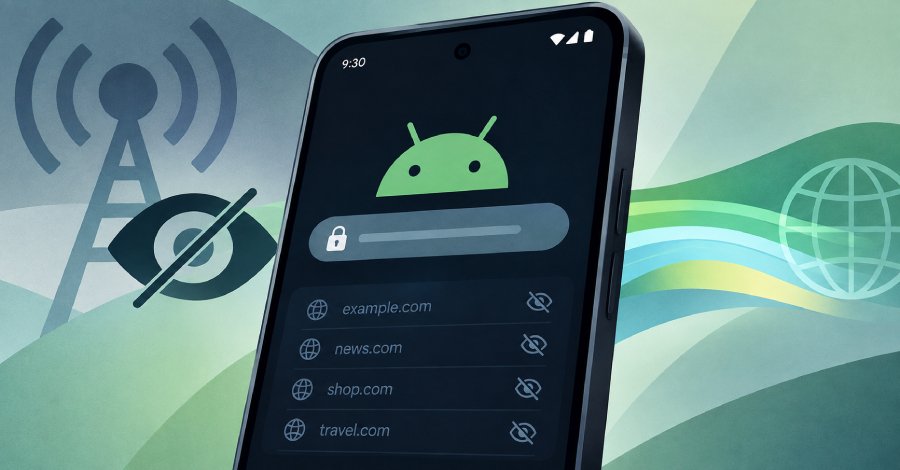
The centerpiece of this update is the integration of Encrypted Client Hello (ECH). ECH is a sophisticated privacy standard that prevents network observers from identifying the specific websites a user is visiting.
Previously, even with encrypted connections, the initial handshake between a device and a server often revealed the destination domain name in plaintext. ECH solves this by encrypting the handshake metadata from the very first packet.
“By encrypting the destination website name from the very start, ECH helps ensure that, for supported websites and apps, network providers and network snoopers can no longer easily see which websites or apps you are accessing,” said Google’s Bram Bonné and Shuaibo Huang.
To ensure consistency and prevent “traffic fingerprinting”—where connections that don’t use ECH stand out as anomalies—Google has implemented “ECH GREASE” by default. This mechanism sends randomized, fake ECH extensions to non-supporting sites, ensuring all connection attempts appear uniform to external observers. Furthermore, Google’s Jigsaw division noted that ECH support has been baked into the popular OkHttp library, enabling third-party app developers to adopt these privacy standards seamlessly.
Strengthening Local and Cellular Security
Beyond web browsing privacy, Android 17 introduces more stringent controls over device connectivity:
- Local Network Permissions: Android 17 now enforces stricter Local Network Protection, requiring applications to obtain explicit user consent before they can scan or connect to other devices on the same local network. This prevents unauthorized discovery of smart home devices and local infrastructure.
- Certificate Transparency (CT): The OS now mandates Certificate Transparency by default. This ensures that all TLS/SSL certificates used by websites are recorded in a public, auditable log, making it significantly harder for malicious actors to use fraudulent certificates for man-in-the-middle attacks.
- Proactive 2G Deactivation: Building upon previous manual controls, Android 17 introduces a “zero-click” solution for carriers to disable 2G support at the system level. By phasing out 2G, the OS eliminates a major legacy attack surface, effectively blocking “SMS blasters” and rogue base stations that rely on forcing devices down to insecure, antiquated connection protocols.
These layers of security mark a significant evolution in mobile defense, moving from reactive, user-enabled settings to proactive, OS-level protections that safeguard users the moment they power on their devices.