







Indian Railways Launches Ambitious Expansion Plan: Targeting 11,000 km of High-Density Network
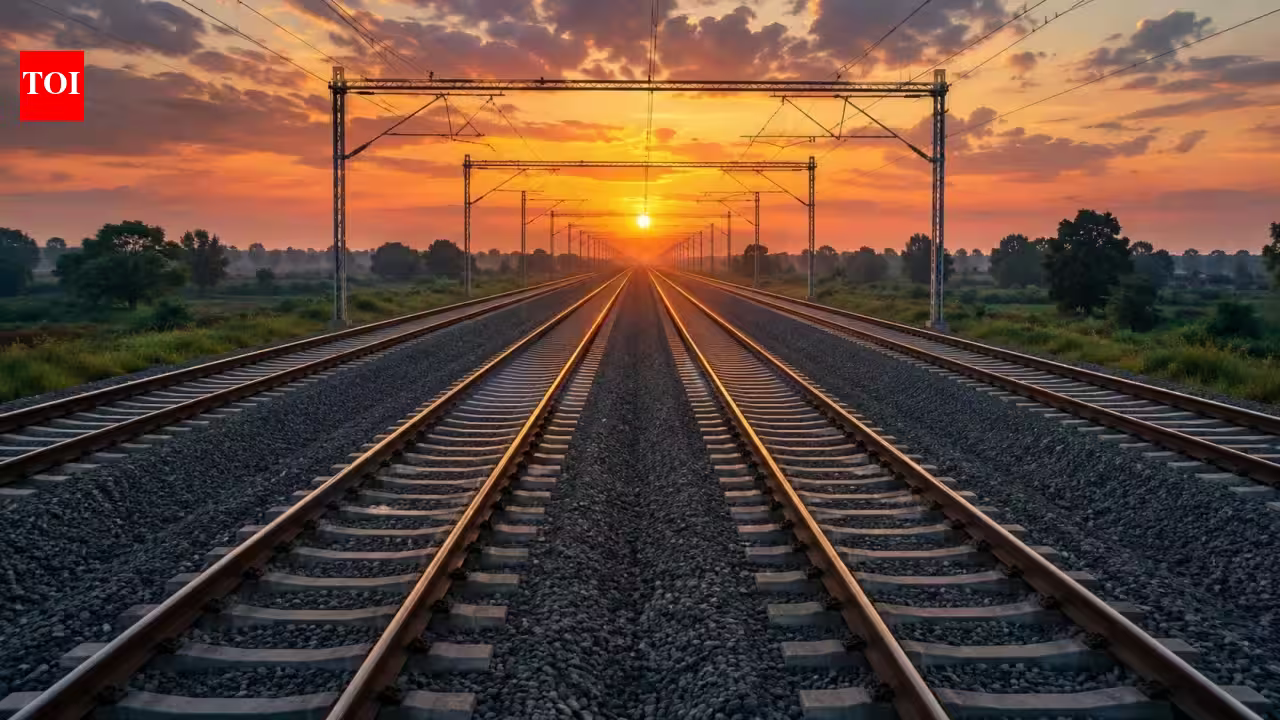
In a major push to modernize India’s transportation backbone, the national transporter is embarking on a comprehensive infrastructure overhaul. Recognizing that demand frequently outpaces capacity on its busiest corridors, Indian Railways has unveiled an ambitious plan to implement four-lane or four-track systems across its most critical routes.
Addressing the Bottleneck
Railway Minister Ashwini Vaishnaw recently highlighted the strategic importance of this expansion. “Spread across nearly 11,000 km, these routes account for around 41 percent of total railway traffic while covering just 16 percent of the railway network,” the Minister noted on social media. By transitioning these high-density corridors to four-track operations, the government aims to alleviate congestion, support the rapid growth in freight and passenger movement, and foster cleaner, more cost-effective logistics.
The seven high-density routes slated for this transformation include:
- Delhi–Howrah
- Howrah–Chennai
- Chennai–Mumbai
- Mumbai–Delhi
- Delhi–Chennai
- Mumbai–Howrah
- Delhi–Guwahati
Strategic Multi-Tracking Projects
To kickstart this initiative, the Cabinet Committee on Economic Affairs has approved four major railway projects totaling approximately Rs 9,450 crore. Under the PM-Gati Shakti National Master Plan, these projects focus on integrated planning to ensure seamless connectivity.
The approved works, spanning 410 km across West Bengal, Odisha, Tamil Nadu, and Andhra Pradesh, include:
- Kharagpur–Bhadrak (Ranital): Construction of a 4th line (173 km).
- Bhadrak–Haridaspur: Construction of a 4th line (75 km).
- Gummidipundi–Gudur: Construction of 3rd and 4th lines (90 km).
- Cuttack–Paradeep (Badabandha): Construction of 3rd and 4th lines (72 km).
Beyond operational efficiency, these developments are set to bolster tourism by improving rail access to prominent sites, including the Bhitarkanika National Park, Pulicat Lake, and various significant religious and cultural landmarks across these states.
A Legacy of Modernization
The current expansion is part of a broader, sustained effort to upgrade the nation’s rail infrastructure. Since the 2014-15 fiscal year, the railway budget has seen a significant surge, rising to Rs 2.78 lakh crore for FY2026-27.
Key milestones in this modernization journey include:
- Electrification: Expanding from 20% prior to 2014 to a near-total 99.6% by July 2026.
- Technological Integration: The deployment of indigenous train services like Vande Bharat, Vande Bharat Sleeper, and Amrit Bharat, alongside the rollout of the Kavach 4.0 safety system.
- High-Speed Progress: The development of the 508-km Mumbai-Ahmedabad High-Speed Rail corridor, designed for speeds of 350 kmph.
- Station Redevelopment: The Amrit Bharat Station Scheme continues to gain momentum, with over 260 stations already transformed as of mid-2026.
By prioritizing high-capacity systems over incremental changes, Indian Railways is positioning itself to not only meet current demand but to lead the country’s growth into the future with a faster, safer, and more efficient network.