








Nature’s Cleanup Crew: Can Humble Sea Sponges Revitalize Polluted Harbors?
In the murky, industrial waters of Marina Palamós on Spain’s Costa Brava, a quiet ecological transformation is underway. Manuel Maldonado, a sponge biologist with the Spanish National Research Council, recently discovered an unexpected sight: red starfish, usually absent from the degraded harbor environment, have begun colonizing the area.
This newfound biodiversity may be linked to a bold experiment launched two years ago. Maldonado and his team set out to determine if native sea sponges—often overshadowed by more charismatic marine life like coral—could serve as “ecosystem engineers” to rehabilitate some of the world’s most disturbed marine environments.
The Survival of the Toughest
Harbors are notoriously difficult habitats for marine life. Constant exposure to ship oil, accumulated refuse, invasive species, and persistent underwater noise pollution creates a hostile environment where few species can thrive.
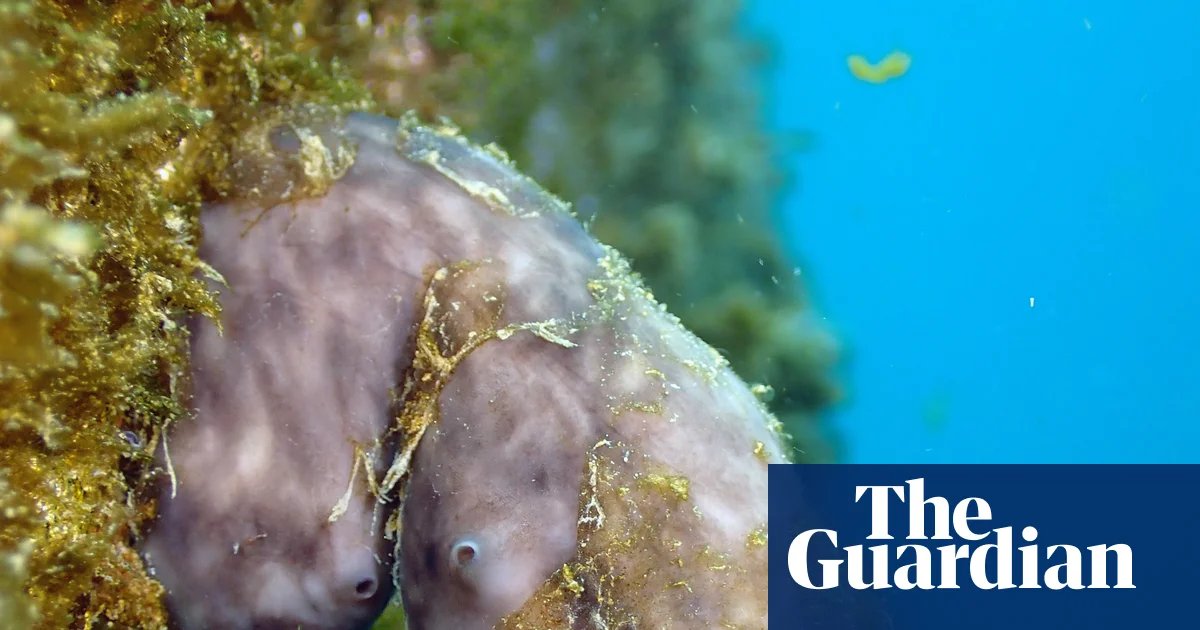
To test their hypothesis, researchers transplanted five common coastal sponge species into the Palamós harbor. The results were stark. Three species—the red encrusting sponge, the leather sponge, and the stinker sponge—eventually succumbed to the harsh conditions. However, the chicken liver sponge (Chondrosia reniformis) defied the odds, with an impressive 92% survival rate.
“It was a surprise for all of us,” said Carlota Escarré, a doctoral student and co-author of the study, who conducted months of cold-water dives to monitor the sponges’ health. Not only did the survivors persist, but they also thrived, reproducing asexually and increasing their population from 24 to 40 individuals.
Beyond Beauty: The Power of Bioremediation
The potential for these organisms goes far beyond their survival. As high-microbial-abundance sponges, C. reniformis hosts a complex internal community of microorganisms that allow it to process ammonium and cycle nutrients. Scientists believe this diverse internal microbiome is key to the sponge’s ability to withstand pollution.
Marine biologists are increasingly looking to sponges as a sustainable solution for bioremediation. “Sponges provide more ecosystem services than corals, yet they have received way less money because they aren’t as attractive,” notes Andreu Santín Muriel, a marine biologist at the University of Porto, who was not involved in the study.
By filtering massive volumes of water, these sponges not only reduce pollutants but also create physical habitats that attract worms, crustaceans, and—as evidenced by the recent arrival of starfish—a wider array of marine life.
The Road Ahead
While the Palamós study offers a promising blueprint for “renaturalizing” urban ports, experts urge caution regarding scale. David Amptmeijer, a researcher at Helmholtz-Zentrum Hereon, points out that the success in Spain is highly localized. “It is unclear if these same sponges could survive in a harbor in, for example, Maine,” he noted, emphasizing that further research is required to understand how these organisms interact with specific chemical pollutants.
Undeterred, Maldonado and his team are already planning their next phase of research, which will explore the synergy between sponges and other natural filter feeders, such as oysters.
For many in the scientific community, the project serves as a humbling reminder of nature’s resilience. Having survived at least five mass extinctions over the last 600 million years, sponges have effectively “seen it all.”
“We tend to look more to technology to solve environmental pollution,” Santín Muriel said. “But marine organisms most likely have already developed toolkits that could help us clean the oceans.”