







The Bleaching of Our World: Why ‘Cloud Dancer’ White Is a Symptom of a Larger Problem
In a move that feels emblematic of our current era, Pantone has announced that its Colour of the Year for 2026 is “Cloud Dancer”—a tone the design authority describes as a “lofty white.” While minimalism has long held sway in interior design, this selection signals a deeper, more pervasive shift in our cultural landscape: a growing, perhaps involuntary, movement toward the erasure of color in our visual world.
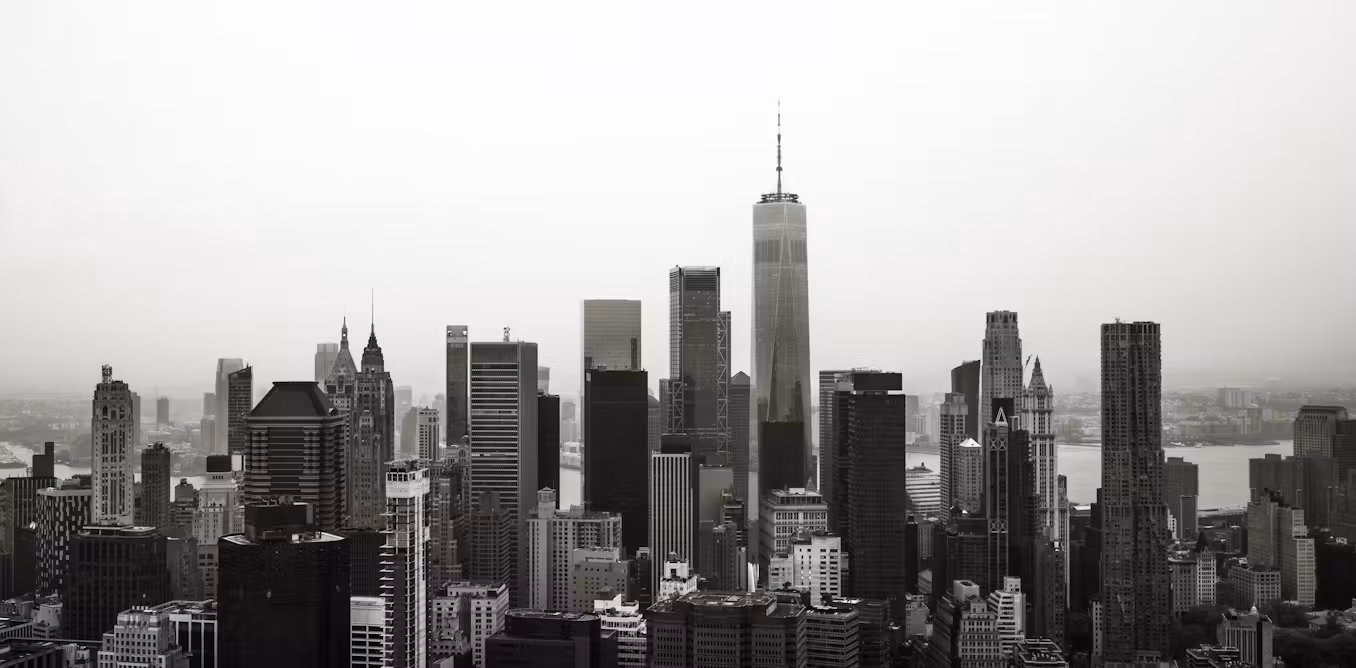
This move toward monochrome is not merely an aesthetic preference; it is a symptom of a systemic “blandness” that is physically manifesting in our urban centers. From the rapid gentrification of London’s Elephant and Castle to the rise of identical high-rise developments globally, our cities are losing their distinct sense of place. What were once vibrant, culturally dense enclaves are being replaced by what geographer Oli Mould describes as “identikit homogeneous gentrified places,” threatening to destroy the local character that makes communities thrive.
The Rise of the ‘Generic City’
This trend is not entirely new. In 1993, architect Rem Koolhaas famously identified the “Generic City”—a vision of urban design prioritized for efficiency, functionality, and rapid scalability over creativity or local identity. Today, that rationalization has accelerated, fueled by the digital tools we rely on every day.
The trajectory toward uniformity is being reinforced by the algorithms that mediate our choices. Whether we are selecting home decor, choosing music on Spotify, or engaging with social media, recommendation engines are constantly nudging our perspectives to converge. By feeding us content that matches our past behaviors, these algorithms create a feedback loop that narrows our cultural horizons and promotes a monotonous, generic aesthetic.
The ‘McDonaldization’ of Society
The drive for efficiency, first identified by sociologist George Ritzer in 1983 as the “McDonaldization” of society, has reached new heights. Just as a fast-food burger is standardized to ensure the exact same experience in Paris as it is in Thailand, our built environments are increasingly being designed to minimize risk and maximize predictability.
For developers, projects are less about creating a vibrant lived experience and more about producing “investment objects.” When architecture is treated as a financial asset rather than a human space, the result is a flattening of our physical surroundings. As Ritzer noted, while this process offers benefits like cost-saving and consistency, the cost is the loss of experimentation, personality, and genuine human choice.
Why ‘Aesthetic Welfare’ Matters
The loss of color is more than a superficial design issue—it is a matter of “aesthetic welfare.” Pioneered by philosopher Monroe Beardsley, this concept suggests that the quality and variety of our environmental aesthetic directly impact our social, emotional, and cultural wellbeing.
Research increasingly highlights the importance of environmental enrichment; exposure to color and contrast is vital for human emotional expression and cognitive engagement. When our environment is bleached of color, we become less adept at appreciating and utilizing it. This is particularly concerning in an age where our primary engagement with color is confined to the artificial glow of our screens.
Ultimately, we are trending toward a monoculture where art, architecture, and personal taste are filtered through the same narrow, algorithmic lens. It is perhaps no coincidence that an old idiom for feeling unwell is to be “off-colour.” If we wish to recover our collective sense of self, we must look beyond the “lofty whites” and the efficiency of the algorithm, and commit to reclaiming a more vibrant, diverse, and human-centered world.