






All India Muslim Personal Law Board to Launch Nationwide Campaign for Constitutional and Religious Rights
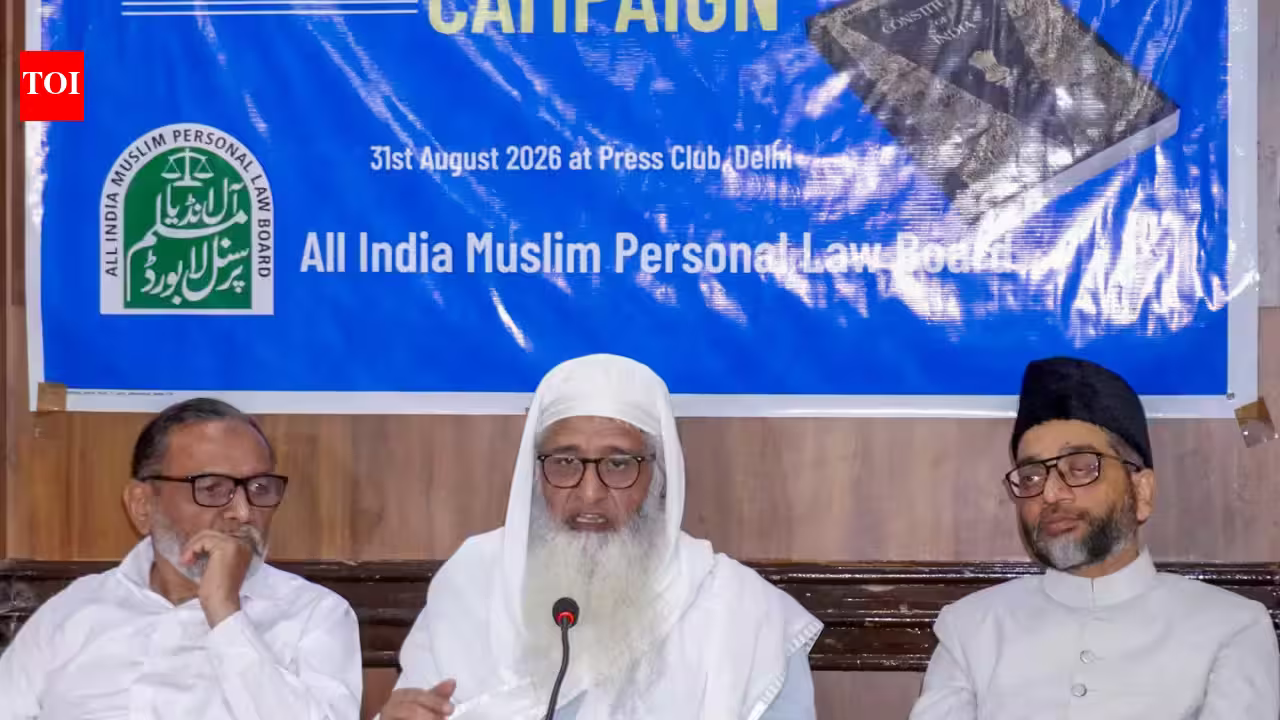
NEW DELHI – The All India Muslim Personal Law Board (AIMPLB) has announced the commencement of a nationwide movement, beginning September 17, aimed at mobilizing public opinion regarding the protection of the Indian Constitution, the preservation of Sharia law, and the safeguarding of the rights and dignity of all citizens.
The campaign is set to kick off at Jantar Mantar in New Delhi. Over the course of the next three months, the Board intends to reach out to individuals of all faiths to foster a broad-based dialogue on constitutional values and social harmony.
A Charter of Demands
As a core component of the initiative, the AIMPLB plans to submit a formal charter of demands to President Droupadi Murmu, facilitated through governors in each state. The charter addresses a wide spectrum of concerns, including:
- The elimination of hate crimes and the curbing of mob lynching.
- The prevention of unlawful property demolitions.
- The protection of Waqf properties and religious sites.
- Ensuring the equal and unbiased enforcement of the rule of law.
Furthermore, the Board has pledged to publish a ‘White Paper’ that will document instances of discrimination against the Muslim community, cataloging constitutional and human rights violations. The Board also intends to release a comprehensive declaration addressing the rise of lynching incidents across the country.
Addressing Structural Challenges
The AIMPLB expressed deep concern over what it describes as an increasingly hostile climate for marginalized sections of society. The Board highlighted several critical issues it identifies as threats to national unity and the Constitution: the practice of “extra-legal” bulldozer demolitions, legislative moves to undermine Muslim Personal Law through a Uniform Civil Code (UCC), and the mandatory imposition of singing all verses of Vande Mataram, which the Board argues infringes upon the beliefs of minority communities.
The organization asserts that these actions represent significant challenges to India’s secular fabric and social equilibrium.
Clarification on Women’s Rights
In addition to its political campaign, the Board addressed recent controversy sparked by remarks from Kerala’s Grand Mufti, Sheikh Abubakr Ahmad, who suggested that women should remain confined to their homes to preserve their dignity and adhere to the purdah system.
AIMPLB spokesperson SQR Ilyas publicly disagreed with these comments, labeling the interpretation as “misplaced” and “not correct.” Ilyas emphasized that Islamic teachings do not mandate the confinement of women to the home. He pointed to the internal structure of the AIMPLB, which includes nearly 30 women, as evidence of the Board’s commitment to enabling Muslim women to participate in public life and progress in accordance with Islamic principles.
As the AIMPLB prepares for its September launch, the movement highlights the ongoing tension between traditional religious frameworks and the evolving political landscape of modern India.