







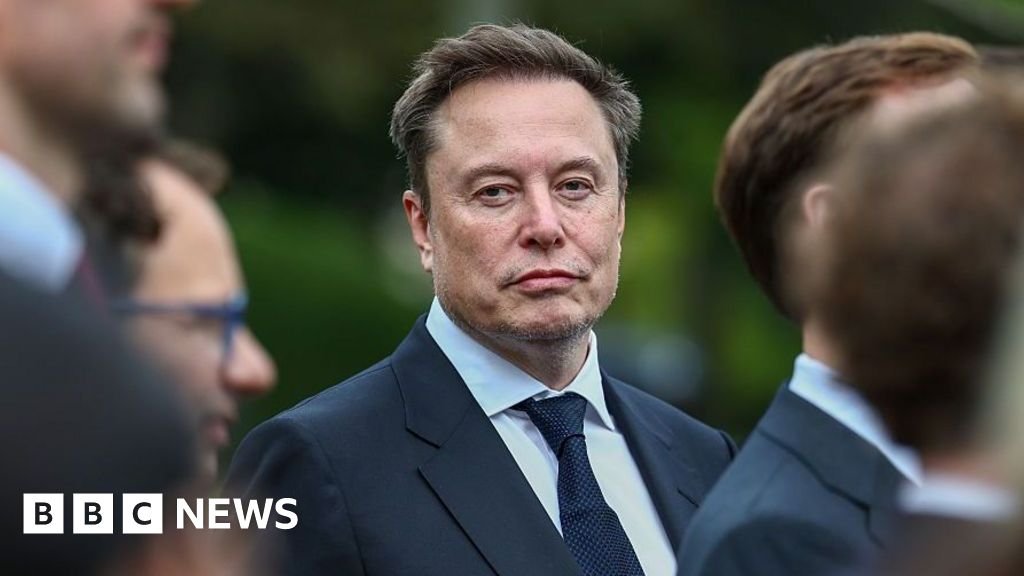
Elon Musk has ignited a firestorm of speculation across the technology sector by floating the prospect of a monumental merger between his two crown jewels: Tesla and SpaceX. While the billionaire entrepreneur has long maintained that his ventures operate in distinct lanes—one electrifying the automotive industry and the other pioneering space exploration—he recently suggested that a strategic consolidation could unlock unprecedented synergy. Describing the potential move as a historical milestone, Musk noted that “there is a lot to be gained” by weaving the two corporate giants into a single unified entity.
## Bridging the Gap: AI, Energy, and Space
The logic behind such a merger, according to industry analysts, lies in the convergence of artificial intelligence, robotics, and battery technology. Tesla has spent years perfecting its Full Self-Driving (FSD) software and Optimus humanoid robot, both of which rely heavily on sophisticated neural networks. Meanwhile, SpaceX’s Starship and Starlink programs demand advanced materials science, autonomous navigation, and high-density energy storage solutions.
By collapsing the silos between the companies, Musk could theoretically leverage Tesla’s massive compute infrastructure—specifically its Dojo supercomputer cluster—to accelerate the training of AI models for space flight. Simultaneously, SpaceX’s expertise in orbital logistics could provide the backbone for a global telecommunications network that integrates directly with Tesla’s vehicle fleet, turning every car into a high-speed satellite-connected hub. This ecosystem would push the boundaries of current tech industry standards, effectively creating an end-to-end infrastructure play that spans from the surface of the Earth to deep space.
## Implications for the Tech Market
If finalized, this merger would instantly become the largest in corporate history, dwarfing historic deals like the AOL-Time Warner union or the acquisition of Activision Blizzard by Microsoft. Wall Street is already reacting to the sentiment, with investors debating the volatility such a conglomerate might introduce.
For the broader tech market, a unified Tesla-SpaceX entity would likely force a rapid shift in how competitors approach the “Internet of Things.” Google, for instance, has long pushed the limits of Android and AI-driven automation via its Google Cloud and Waymo divisions. A Musk-led mega-company would present a unique challenge to Google’s dominance, particularly in the race to control autonomous systems and satellite-based internet connectivity. The sheer data processing requirements of such an alliance would make it one of the most powerful entities in the history of Silicon Valley, potentially shifting the geopolitical landscape of data sovereignty and space-based communication.
## Regulatory Hurdles and Future Outlook
Despite the enthusiasm from Musk’s core fanbase, regulatory scrutiny represents a formidable obstacle. Antitrust regulators in the U.S. and the European Union have grown increasingly wary of “vertical integration” among tech giants. Combining the world’s leading electric vehicle manufacturer with the world’s most dominant private space launch provider would inevitably trigger intense probes into market competition and information monopolization.
Furthermore, the integration of AI models developed for public-road safety at Tesla with sensitive satellite intelligence at SpaceX would likely face massive cybersecurity oversight. Critics argue that such a concentration of power in one man’s hands poses risks to national security, while proponents suggest that it is the only way to achieve the aggressive multi-planetary goals Musk has set. As the discussion moves from hypothetical to potential reality, the tech industry is bracing for a transformation that could redefine the next century of technological progress. Whether this merger manifests as a singular corporate giant or a series of deep-rooted partnerships, one thing is clear: the future of AI and transportation is being written by the integration of these two massive engines of innovation.
Disclaimer: This content is auto-generated for informational purposes only.
Source: Read Original News