








The Rise of Mobile Tethering Hardware
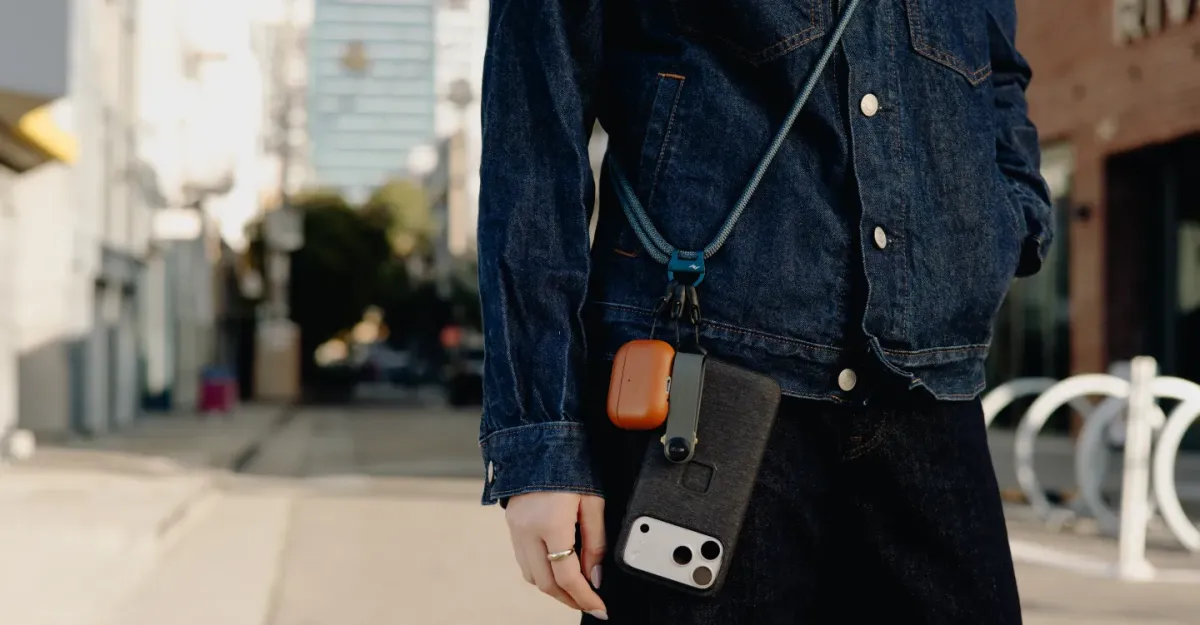
In the shifting landscape of mobile accessory design, the crossbody phone strap has emerged as a significant hardware trend, transcending its origins as a niche travel utility to become a standard daily carry solution. At its core, the device consists of a high-tensile nylon or braided rope lanyard connected to a reinforced case or a universal mounting plate. This mechanical tethering system shifts the burden of device management from the pocket or purse to a wearable harness, effectively distributing the weight of the handset across the torso.
While smartphone manufacturers continue to push the boundaries of glass and metal craftsmanship, users are increasingly prioritizing accessibility. The crossbody strap addresses a fundamental pain point: the latency between identifying a notification and interacting with the device. By keeping the phone at waist level, the hardware eliminates the kinetic steps of reaching into restricted storage spaces like denim pockets or heavy winter layers. For the modern professional or urban commuter, this represents a transition from treating the phone as an object of stowage to treating it as an integrated piece of wearable technology.
Technical Considerations and Mounting Mechanisms
The efficacy of a crossbody strap relies entirely on the mechanical interface between the lanyard and the mobile device. Most current market iterations utilize two primary methods: integrated eyelets in a purpose-built phone case or an adhesive patch that feeds through the device’s charging port opening.
The integrated case approach provides superior structural integrity. By incorporating metal anchors directly into the TPU or polycarbonate frame of the case, the load is evenly distributed across the chassis of the phone. Conversely, the adhesive or insert-based solutions offer broader compatibility across different handset models. However, these require precise tension management to ensure that the material does not interfere with the device’s Lightning or USB-C charging ports or compromise the rigidity of the phone’s structural frame. As consumers invest increasingly large sums into flagship mobile hardware, the market has responded with carabiner-style hardware, often featuring locking mechanisms to prevent accidental detachment during physical activity.
Ergonomics and Daily Workflow Optimization
The ergonomics of wearing a device on a tether require a brief period of physiological adjustment. When properly calibrated to the user’s stature, the strap allows for a fluid, diagonal motion that brings the device from the hip to the user’s field of vision in under a second. This mechanical advantage is particularly evident in high-frequency scenarios, such as mobile point-of-sale transactions.
In environments equipped with NFC payment terminals, the crossbody strap facilitates a rapid interaction cycle. Users no longer need to retrieve a physical wallet or fish through layers of clothing to produce their handset. The geometry of the strap creates an extension of the user’s workspace, allowing for “tap-and-go” transactions that maintain the tethered connection to the body. This minimizes the risk of accidental drops or misplacement—a frequent concern for individuals navigating crowded urban spaces or public transit systems.
Augmented Utility in Diminished Lighting
Beyond simple transport, the proximity of a tethered smartphone creates new opportunities for secondary utility. One of the more practical, if unintended, benefits of the crossbody configuration is the immediate availability of the device’s light-emitting diode (LED) array. In low-light environments, such as dimly lit hospitality venues or poorly illuminated transit stops, the ability to trigger the flashlight function while the device remains anchored to the body is a measurable advantage.
By mapping the flashlight control to a lock-screen shortcut, users can utilize their phone as a portable, high-intensity task light. This serves as an effective, if high-tech, solution for reading fine-print menus or verifying transaction details on receipts. Unlike traditional handheld flashlights, this configuration allows for a hands-free orientation, as the lanyard allows the user to angle the light source toward a specific point of interest while keeping both hands free for other tasks.
The Future of Wearable Carrying Systems
As the trend matures, the industry is already looking toward expanding the scope of what these tethering systems can carry. While the current generation is optimized for the slim dimensions of modern smartphones, there is clear demand for multi-functional wearable enclosures. Future iterations will likely incorporate modular storage compartments—compact, low-profile pockets designed to house essentials like contactless payment cards, identification, or essential daily items.
This evolution mirrors the broader movement toward modular utility, where hardware is designed to move with the user throughout the day. By integrating mounting points for keychains, small writing implements, or peripheral audio hardware, manufacturers are moving toward a comprehensive “wearable ecosystem.” Whether these systems are sourced from boutique accessory designers or mass-market retailers, the focus remains on reducing the friction of daily life. The crossbody strap is no longer just a trend; it is a pragmatic, hardware-focused response to the complexity of the modern personal device ecosystem, ensuring that essential tools are always available, secure, and ready for immediate deployment.
Disclaimer: This content is auto-generated for informational purposes only.
Source: Read Original News