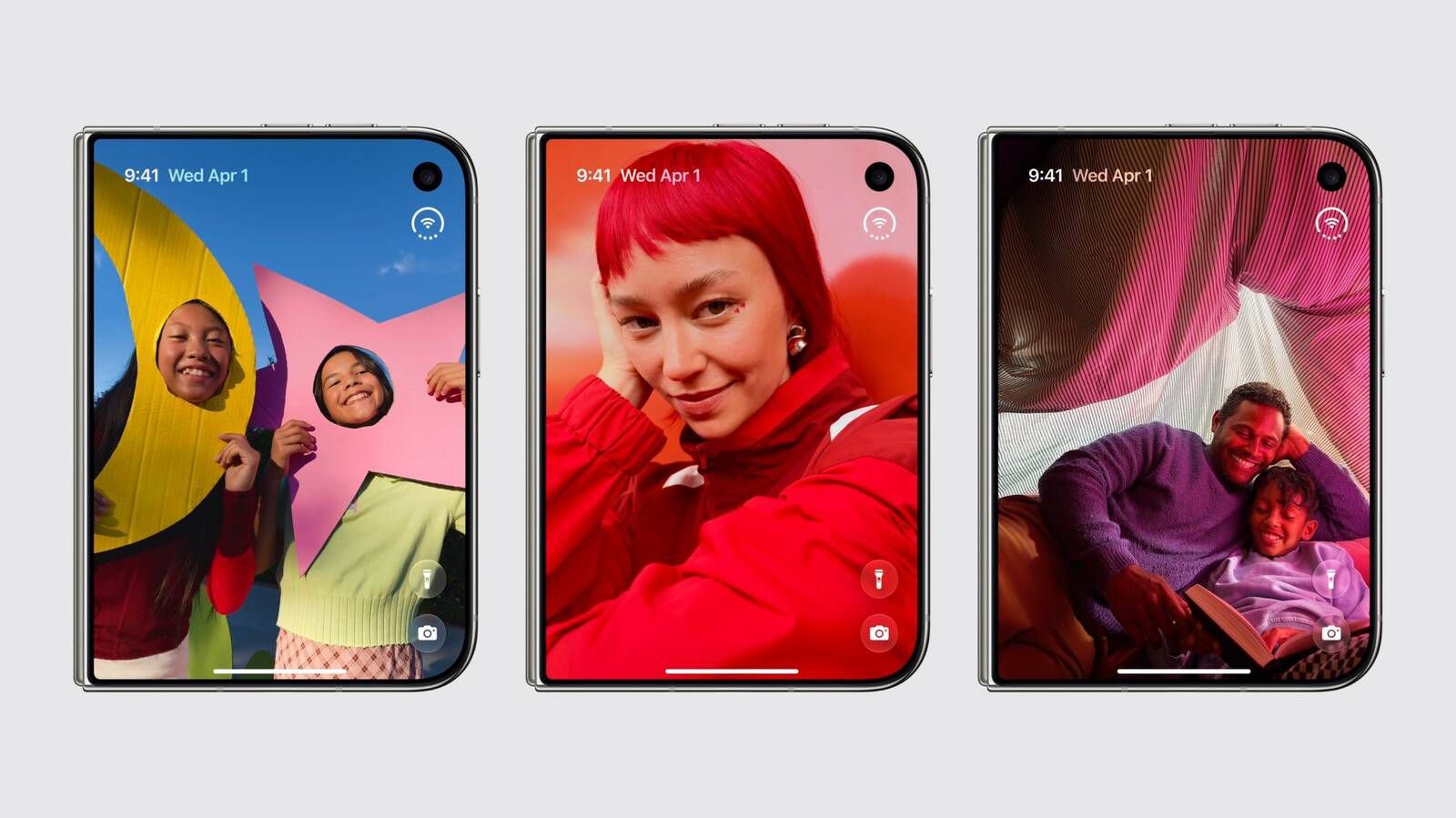








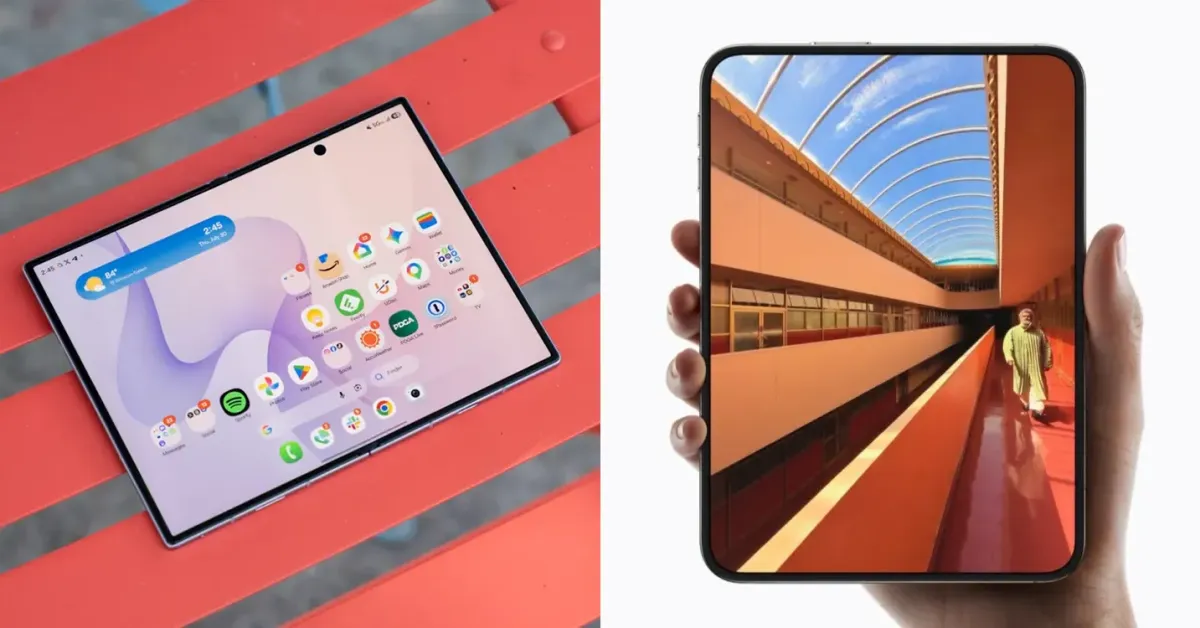
The foldable smartphone landscape has reached a pivotal moment with the emergence of the iPhone Duo. As Apple enters the competitive foldable market, it faces a direct challenge from the Samsung Galaxy Z Fold 8. Both devices utilize a “passport-style” aspect ratio, prioritizing a wider, more traditional screen experience when unfolded, rather than the narrow, vertical silhouettes seen in earlier foldable iterations. With a price difference of only $100—the Fold 8 retailing at $1,900 and the iPhone Duo at $1,999—the market is poised for a significant shift in consumer hardware preference.
Form Factor and Structural Integrity
When comparing physical specifications, Samsung maintains a lead in raw thickness. The Galaxy Z Fold 8 measures 9.7mm folded and 4.5mm unfolded, while the iPhone Duo is slightly bulkier at 11.3mm and 5.2mm, respectively. However, Apple appears to have prioritized structural durability over thinness.
A critical differentiator is the approach to dust resistance. While Samsung achieved a commendable IP48 rating for the Z Fold 8, this specification only guarantees protection against particles larger than a grain of sand, leaving the internal hinge mechanism susceptible to finer debris. Apple has countered this by engineering the iPhone Duo with a full IP68-equivalent rating, meaning the device is certified as both waterproof and effectively dustproof. For users investing nearly $2,000 in a device with moving parts, this distinction in build quality is a major factor in long-term reliability.
Camera Capabilities and Imaging Tech
The imaging hardware on both devices highlights a focus on consistency rather than extreme zoom capabilities. The iPhone Duo features a 48MP primary sensor paired with a 48MP ultrawide lens. Similarly, the Galaxy Z Fold 8 utilizes 50MP sensors for its primary and ultrawide modules. Notably, neither device includes a dedicated telephoto lens, suggesting that both manufacturers are prioritizing the structural space for the folding mechanism over complex optics.
The discrepancy becomes more apparent in selfie camera performance. The Fold 8 integrates a 10MP camera on the outer screen and another 10MP unit on the inner display. Apple provides a 12MP outer camera for the iPhone Duo, but the internal camera specification remains more modest. With the internal video output limited to 1080p rather than 4K, users who prioritize high-resolution video conferencing on an internal display may find the Galaxy Z Fold 8 technically superior for that specific use case.
Battery Performance and Charging Ecosystems
Battery efficiency remains a focal point for foldable technology due to the massive, power-hungry internal displays. While Apple has opted not to disclose specific milliamp-hour (mAh) capacities for the iPhone Duo, the company claims a 24-hour battery life under typical usage scenarios.
Charging profiles show a clear trade-off between speed and convenience. Samsung’s Fold 8 supports faster wired charging, reaching 73% capacity in 30 minutes. The iPhone Duo is more conservative, achieving a 50% charge in the same time frame. However, Apple gains an advantage through its proprietary MagSafe integration. The iPhone Duo includes the magnetic array necessary for precise, secure wireless charging, whereas the Galaxy Z Fold 8 lacks the specific magnet configuration required for modern Qi2 wireless charging standards. This makes the Apple ecosystem more compatible with existing magnetic accessories and car mounts.
Market Impact and Ecosystem Loyalty
The introduction of the iPhone Duo is less about disrupting Android’s market share and more about solidifying the Apple ecosystem’s presence in the premium segment. Historically, consumers are highly resistant to switching operating systems, particularly when moving between such distinct hardware environments. However, the Duo serves as a bridge for existing iPhone users who were previously forced to look at Samsung devices to experience a foldable interface.
The current competitive environment suggests that the iPhone Duo is well-positioned to convert users who are hesitant to commit to Samsung due to durability concerns. Despite the Fold 8’s technological advancements in display thinness, the “Apple-first” user interface, combined with the superior dust-proofing of the hardware, creates a compelling value proposition. As the foldable market matures, the battle between these two devices will likely be decided not just by specifications, but by the level of software integration and the perceived longevity of the hardware under daily wear. For the first time, Apple fans have a native path to the foldable future, setting the stage for a new standard in luxury mobile devices.
Disclaimer: This content is auto-generated for informational purposes only.
Source: Read Original News