






Food Inflation Expected to Ease by Year-End, Says Chief Economic Adviser
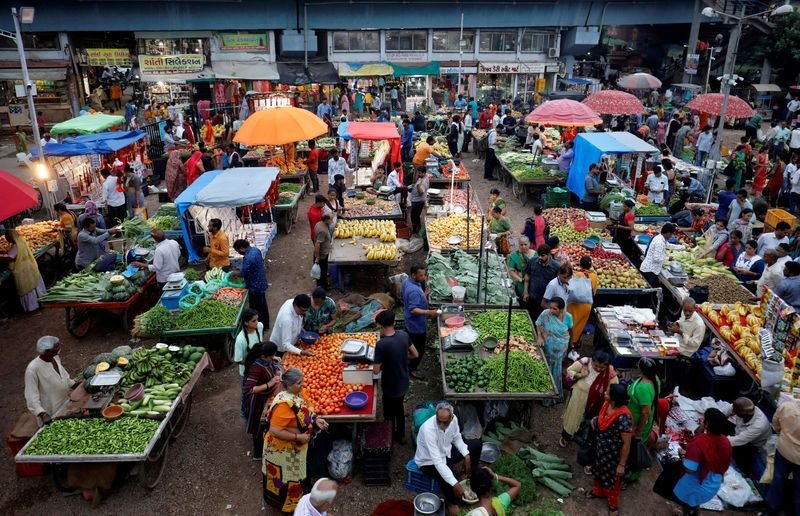
NEW DELHI – India’s Chief Economic Adviser (CEA), V. Anantha Nageswaran, has struck a note of cautious optimism regarding the nation’s retail inflation trajectory. Speaking at an event hosted by the industry body ASSOCHAM on Tuesday, Nageswaran indicated that the current pressure on food prices—which hovered around 6% in August—is likely to subside as the year draws to a close.
The CEA’s outlook is grounded in the government’s assessment of agricultural productivity. While the country has faced a monsoon rainfall deficit of approximately 15%, Nageswaran described the situation as “manageable.” He noted that summer crop sowing has remained robust, falling only 2% to 3% below the levels recorded during the previous year. Despite the inherent volatility in rainfall patterns, government projections suggest that the output for most summer-sown crops will remain strong, providing a buffer against supply-side shocks.
Given that food and beverages constitute a significant 36.75% of India’s consumer price index (CPI) basket, the stability of agricultural output is critical to the government’s broader economic management strategy. By tempering food price growth, policymakers hope to keep the overall retail inflation rate within a manageable range for the remainder of the fiscal year.
Navigating Global Geopolitical Turbulence
While the domestic agricultural outlook remains steady, the CEA acknowledged that the Indian economy is currently facing renewed headwinds from the international landscape. Nageswaran pointed specifically to the instability triggered by recent developments in the Middle East over the past five days.
“Uncertainties have resurfaced,” Nageswaran remarked, noting that it remains to be seen if the Indian economy can demonstrate the same level of resilience to these latest shocks as it did during the period from March to July. The government is currently maintaining a vigilant stance, monitoring global energy markets and supply chain dynamics to assess how these geopolitical shifts might impact the domestic economy.
Despite these external risks, the CEA emphasized that India’s economic foundation remains firm. He reiterated the government’s commitment to a policy stance that prioritizes macroeconomic stability. Furthermore, the administration intends to continue its push for structural reforms, focusing on aggressive deregulation and ongoing initiatives to improve the “ease of doing business” to attract both domestic and foreign investment.
Strategic Economic Outlook
The government’s strategy appears to be a dual-pronged approach: managing domestic supply chains to keep essential food prices in check while maintaining flexible fiscal and monetary policies to counteract external global shocks.
As India navigates the remainder of the year, the administration’s response to evolving Middle Eastern tensions will be a key determinant of economic performance. However, with crop outputs expected to hold steady and the government maintaining a focus on structural improvements, the CEA’s assessment suggests that India is well-positioned to ride out the immediate volatility. The emphasis remains on sustaining growth momentum through periods of global uncertainty by fostering an environment conducive to stability and investor confidence.
Disclaimer: This content is auto-generated for informational purposes only.
Source: Read Original News