








UPI Update: New Merchant Charges for High-Value Transactions Effective October 15
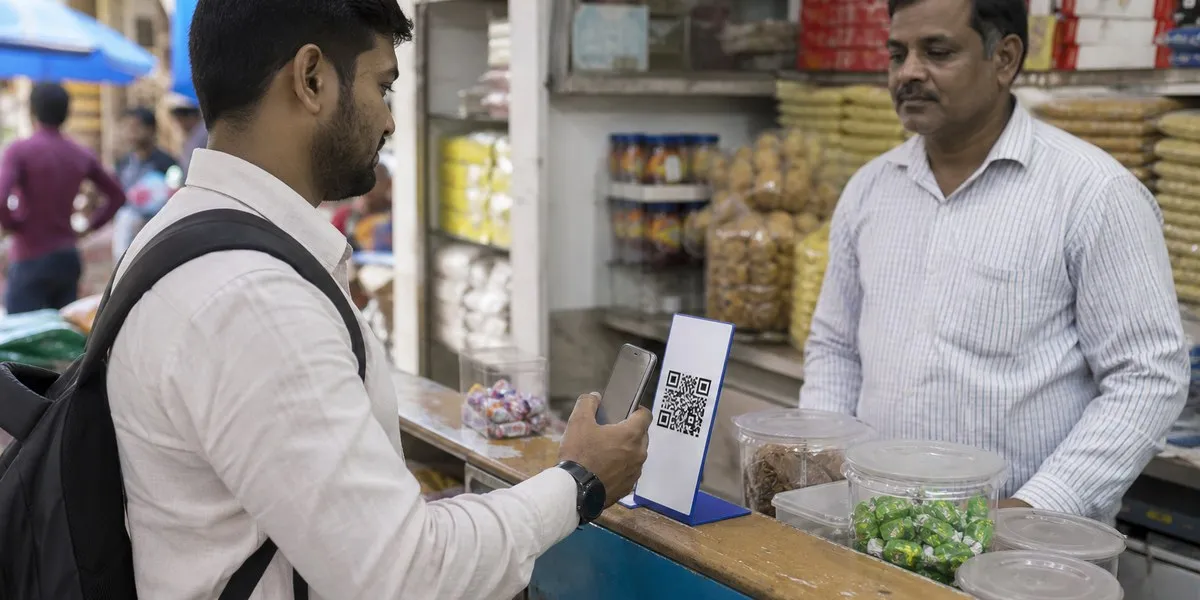
In a significant update to India’s digital payments landscape, the government and the National Payments Corporation of India (NPCI) have announced a new Merchant Discount Rate (MDR) framework. Starting October 15, UPI transactions exceeding Rs 2,000 for merchant payments will attract a fractional charge, marking a transition in how high-value digital commerce is processed in the country.
Understanding the New Fee Structure
Under the newly notified guidelines, any transaction made by a consumer to a merchant via UPI that exceeds the Rs 2,000 threshold will now be subject to a 0.4% charge. This levy is designed to sustain the infrastructure costs associated with high-value digital settlements.
To protect consumers and ensure the continued popularity of UPI, the government has implemented a safeguard: the Finance Ministry has explicitly directed banks to ensure that these charges are borne by the merchants and are not passed on to the customers at the point of sale. Furthermore, to keep large-scale commercial transactions balanced, the fee is capped at a maximum of Rs 300 per individual transaction.
Exemptions and Exceptions
The NPCI has been clear in its communication that the core utility of UPI for daily life remains untouched. “Consumers will continue to transact free of cost using UPI as they have been doing till now,” the agency stated.
The new MDR rules come with specific carve-outs:
- Person-to-Person (P2P) Transactions: All transfers between individuals—such as sending money to family or friends—remain entirely free of cost, regardless of the transaction amount. Even if a P2P transfer exceeds Rs 2,000, it stays completely outside the scope of the new MDR.
- Small Merchant Transactions: Any Person-to-Merchant (P2M) payment that is Rs 2,000 or below remains free for both the consumer and the merchant.
Specific Sectors Under Flat-Rate Rules
While the 0.4% variable rate applies to general retail, the NPCI has outlined a different approach for essential services. For specific merchant categories, including telecommunications, fuel stations, insurance providers, and railway ticketing, a flat fee of Rs 5 will be levied on all UPI payments that exceed the Rs 2,000 mark.
This tiered structure aims to standardize charges across diverse economic sectors while ensuring that the cost of digital payment processing is shared equitably without hindering the growth of the UPI ecosystem.
Closing a Grey Area
This notification provides much-needed clarity for millions of UPI users across the country. Prior to this announcement, there was considerable public debate regarding the feasibility of maintaining free UPI services for all transaction tiers. While the government had long maintained that UPI would remain free for amounts up to Rs 2,000, the status of larger transactions had remained a subject of speculation.
By clearly defining the fee for high-value merchant payments while ring-fencing peer-to-peer transfers, the government aims to ensure the financial sustainability of the UPI platform. As the October 15 deadline approaches, stakeholders in the digital payment space are adjusting their systems to comply with the new regulatory framework, ensuring that the transition remains seamless for the average user.
Disclaimer: This content is auto-generated for informational purposes only.
Source: Read Original News