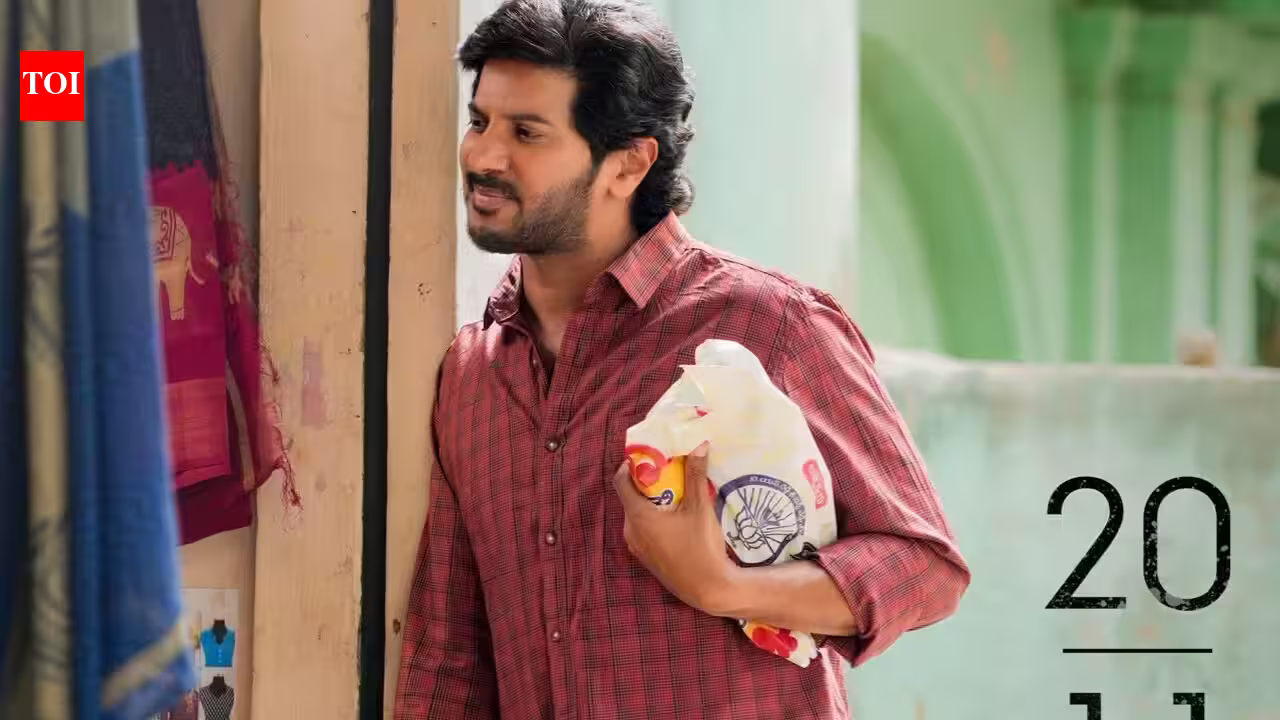









The marquee pairing of Akshay Kumar and Saif Ali Khan has long been considered one of Bollywood’s most potent “bromance” formulas. From the breezy charisma of Main Khiladi Tu Anari to the suave grit of Tashan, the duo historically guarantees a certain level of theatrical magnetism. However, their latest collaboration, Haiwaan, which hit screens on September 11, is proving that star power alone cannot insulate a film from the shifting tides of audience appetite.
As the film enters its second week, the trade circuit is buzzing with questions, but unfortunately for the production team, the conversation isn’t about box office records—it’s about a struggle for relevance.
The Stagnation of ‘Haiwaan’ at the Box Office
The numbers tell a sobering tale. On its fifth day of release, Haiwaan reported a flat collection of Rs 70 lakh net in India. To put that in perspective, the film mirrored its exact Day 4 earnings, failing to show the kind of mid-week growth that a project of this scale desperately requires to find its footing.
According to data provided by Sacnilk, the film managed these figures across 2,976 shows. When you factor in the sheer footprint of those screenings, the occupancy rates suggest that theatres are echoing with silence rather than the buzz of a hit. Bringing the total domestic net collection to a modest Rs 8.75 crore, the film’s trajectory is decidedly lukewarm. With an India gross of Rs 10.46 crore and a marginal overseas contribution of Rs 15 lakh on its fifth day, the worldwide gross currently sits at Rs 13.61 crore. In the hyper-competitive ecosystem of contemporary Hindi cinema, these numbers are a far cry from the opening benchmarks expected of two A-list leads.
A Mismatch Between Budget and Returns
Perhaps the most daunting hurdle for Haiwaan is the math. While the producers have maintained a veil of secrecy regarding the official budget, industry analysts peg the production cost in the neighborhood of Rs 100 to 115 crore. When a film with a nine-figure budget struggles to crack the double-digit mark in its first five days, alarm bells go off in the trade offices of Mumbai.
To put it bluntly, Haiwaan is currently trending toward a significant box office disappointment. Achieving profitability from this vantage point would require a miraculous turnaround—a consistent, sharp rise in daily footfall and sustained momentum that, given the film’s current critical reception, seems increasingly unlikely. The box office is a fickle beast; once a film loses the “must-watch” label in its opening weekend, clawing back the audience’s interest is a Herculean task.
The Shadow of the Original: Why Remakes Fail to Spark
Haiwaan arrives as an official Hindi remake of Priyadarshan’s 2016 Malayalam hit, Oppam. While remakes have been a staple of Indian cinema for decades, the current market climate has become notoriously hostile toward them. Modern audiences, equipped with easy access to regional cinema via streaming platforms, have already seen the original masterpieces. When a high-profile remake fails to add a unique “X-factor” or modernize its narrative in a compelling way, viewers often see no reason to pay the price of a multiplex ticket for a story they’ve already consumed.
The critical consensus has been largely mixed-to-negative, with many reviewers pointing toward a lack of urgency in the screenplay. Even with a powerhouse director like Priyadarshan at the helm—a man who arguably knows the material better than anyone—the film seems to have struggled to capture the same raw intensity that defined the original.
Star Power vs. Script Fatigue
There is an undeniable nostalgia attached to seeing Akshay Kumar and Saif Ali Khan share the screen. It is their seventh collaboration, marking their first reunion since 2007’s Tashan. However, audiences today are increasingly prioritizing content over cameos and star-studded posters.
The supporting cast, featuring heavyweights like Boman Irani alongside Shriya Pilgaonkar and Saiyami Kher, brings undeniable acting pedigree to the table. Yet, even this ensemble cannot mask the feeling that Haiwaan is a film out of time. In an era where audiences are flocking to high-concept spectacles or raw, grounded thrillers, the stylized action-crime genre that Haiwaan inhabits feels somewhat dated.
What Lies Ahead?
As Haiwaan moves into its second weekend, the producers are likely recalibrating their expectations. The goal is no longer to be a blockbuster, but to mitigate the fallout. For Akshay Kumar, who has had a tumultuous run at the box office over the last two years, this is another speed bump in a period that has seen him experiment with varied genres to mixed results. For Saif Ali Khan, whose recent choices have leaned toward more selective and character-driven projects, Haiwaan represents a return to big-budget commercial fare that hasn’t quite hit the mark.
For the film to survive, it needs more than just star charisma; it needs a word-of-mouth miracle. But in a landscape where streaming options and new releases are constant, the clock is ticking loudly. For now, the neon lights of the theatre might still be on for Haiwaan, but the audience is looking elsewhere. Whether this is a momentary lapse in the duo’s otherwise storied partnership or a sign that the audience has outgrown this specific brand of thriller, the numbers remain the final, impartial judge. As the second week begins, the industry will be watching closely to see if Haiwaan can find a pulse, or if it will slowly fade from the marquee.
Disclaimer: This content is auto-generated for informational purposes only.
Source: Read Original News