



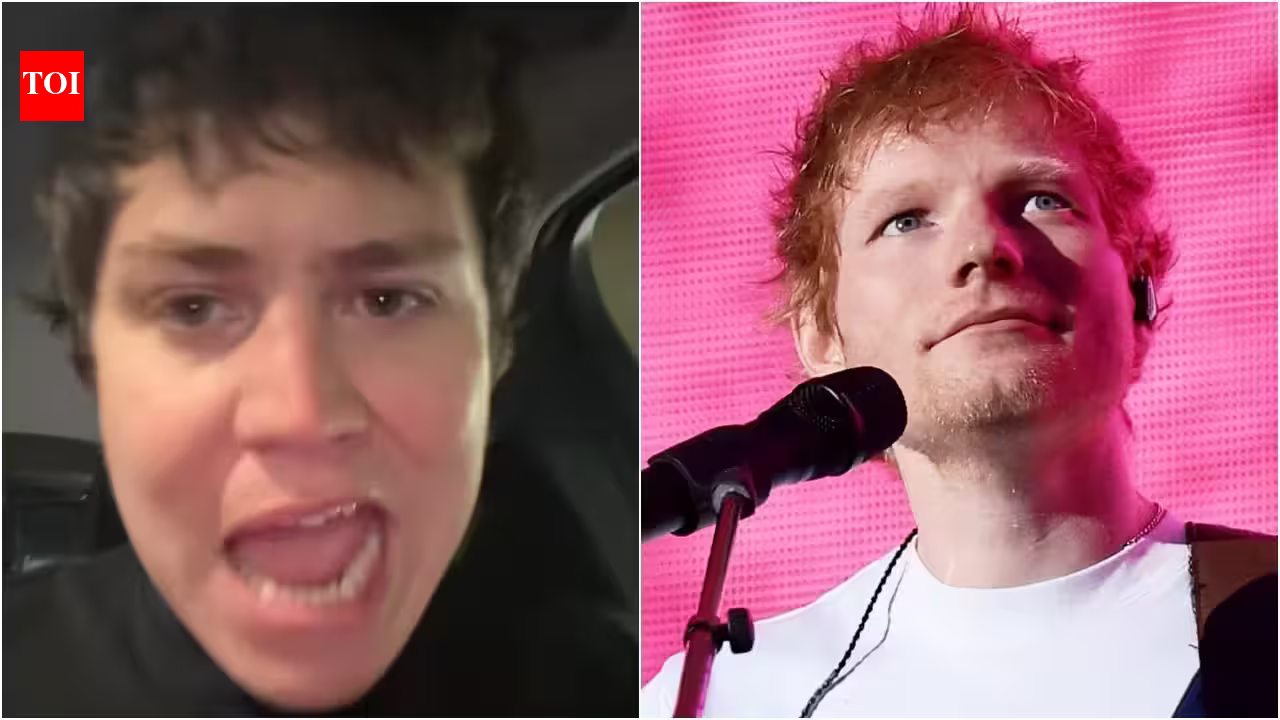



The music industry is currently reeling from a public relations disaster that has turned a high-profile concert run into a battlefield for ideological debate. What was meant to be a celebration of pop mastery has devolved into a series of fractured relationships, walkouts, and heavy accusations. At the center of the storm is the “Loop Tour,” where the removal of Macklemore—following his vocal support for Palestine—has triggered a domino effect, leading several supporting acts to abandon the stage in solidarity.
Among those voices speaking out is Irish singer-songwriter Aaron Rowe, who, despite his own decision to leave the tour, is attempting to redirect the public’s ire. In a candid, expletive-laden Instagram video that has sent shockwaves through social media, Rowe has pivoted the conversation away from the tour’s headliner, Ed Sheeran, and directly toward the power brokers behind the scenes.
## Aaron Rowe backs Ed Sheeran amid controversy
The optics of the situation are undeniably grim for Sheeran. Since the announcement of Macklemore’s removal, the “Shape of You” singer has been the primary target of fan frustration. However, Rowe’s recent video suggests that the narrative of Sheeran as the primary architect of this censorship may be a convenient, if inaccurate, simplification.
“I’m gonna be honest. I think you are all focusing on the wrong person here,” Rowe stated in his address, pointing a finger at the complex web of tour promoters and venue owners. While Rowe admitted that Sheeran’s handling of the situation “could have been a lot better,” he stopped short of labeling the British superstar a villain. Instead, he framed Sheeran as someone caught in the gears of a much larger, more powerful machine. “I haven’t had a chance to talk to Ed too much, but I fully believe he knows that was a mistake,” Rowe added, suggesting a level of empathy for the position the headliner found himself in when faced with objections from venue management and the Messina Touring Group.
## Aaron Rowe says Macklemore should not have been removed
For many fans, the primary question remains: why would an artist as globally influential as Ed Sheeran allow his tour lineup to be gutted? Rowe offers a counter-intuitive defense of the headliner’s character, citing the initial curation of the tour as proof of Sheeran’s lack of malice.
“If Ed Sheeran was a Zionist, why would he have all these people on the tour?” Rowe questioned, referring to the diverse group of artists—many of whom have been vocal about their political stances—that Sheeran initially brought on board. To Rowe, the removal of Macklemore feels less like a calculated political purge by Sheeran and more like a panicked, corporate-led reaction to external pressure. The atmosphere behind the curtain, according to those close to the situation, reached a breaking point as venues and promoters grew uncomfortable with the political discourse taking place on their stages. Rowe believes the decision to remove Macklemore was an act of reactionary fear rather than a reflection of the headliner’s own personal beliefs.
## Aaron Rowe calls for focus on Robert Kraft
The most incendiary part of Rowe’s message wasn’t his defense of Sheeran, but his direct challenge to Robert Kraft, the billionaire owner of the New England Patriots and Gillette Stadium. By naming Kraft, Rowe has successfully moved the goalposts of the controversy, shifting the focus from pop music logistics to the intersection of wealth, stadium ownership, and the right to political expression.
Kraft, who explicitly stated that Macklemore would not be permitted to perform at Gillette Stadium, has defended his stance by highlighting concerns over “offensive rhetoric.” Rowe, however, sees this as an overt attempt to use economic leverage to silence dissent. “You should be using this opportunity to plaster Robert Kraft’s face everywhere,” Rowe urged his followers. “Someone who tried to shut down free speech, someone who tried to silence the voices of people who are shouting out genocide.” For Rowe, the true power dynamic at play isn’t between two singers, but between an artist’s right to speak their conscience and the billionaire owners who control the platforms they stand on.
## The fallout and the future of the Loop Tour
The ripple effect of this controversy is visible on the road. With the departure of acts like Lukas Graham, FINNEAS, and Beoga, the “Loop Tour” is a shadow of its former self. While the tour resumed in Philadelphia on September 19, the mood has shifted from jubilant to clinical. The empty slots left by the defecting artists serve as a silent, physical reminder of the friction currently plaguing the industry.
Public reaction to Rowe’s video has been as polarized as the political issue itself. His fans are split between those who applaud his moral courage and others who worry that his aggressive tone might undercut his message. One commenter noted, “I love your anger and I love your passion. Keep up the hard work,” while another urged for more professional composure to maximize the impact of his influence.
Regardless of the rhetoric, the fact remains that a major touring structure has collapsed under the weight of political polarization. Ed Sheeran is currently in the unenviable position of navigating a post-walkout tour while the industry watches to see if he will address the criticism directly or continue to lean on the “venue promoter” defense. Meanwhile, Aaron Rowe has made his position clear: the war isn’t happening on the stage, but in the offices of the powerful, and that is where he believes the public’s energy should be directed. Whether this will lead to a broader conversation about corporate censorship in music or simply fade into another chapter of celebrity drama remains to be seen. One thing is certain: the music industry’s status quo has been permanently fractured.
Disclaimer: This content is auto-generated for informational purposes only.
Source: Read Original News