







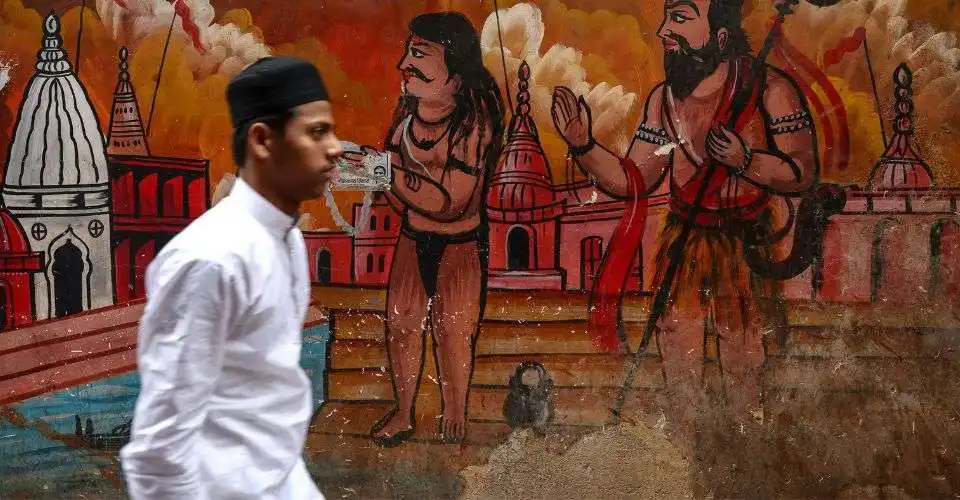
Two Decades of Suspicion: How 9/11 Reshaped the Lives of Indian Muslims
For Faisal Ali, a schoolteacher in Lucknow, the expectation to prove his patriotism has become a wearying part of daily life. For the 200 million Muslims living in India, the world changed irrevocably on September 11, 2001. While the attacks occurred in New York, the subsequent “War on Terror” cast a long shadow over the Indian subcontinent, permanently altering the social fabric and the sense of belonging for the country’s largest minority group.
The Normalization of Fear
The atmosphere for India’s Muslim community has been one of perpetual anxiety. Whenever a blast or civil disturbance occurs, there is an immediate, palpable dread of the consequences. Saleema Akhtar, a teacher and Ali’s wife, admits to the constant struggle of parenting in this environment. The couple frequently debates whether to advise their son to alter his appearance or suppress his identity to avoid unwanted attention during periods of communal friction.
This atmosphere of “permanent siege” is not merely a social phenomenon; it is rooted in a shift that began shortly after 9/11. The 2002 Gujarat riots, which occurred less than six months after the New York attacks, served as a catalyst for deeper polarization. Rights defenders like Father Cedric Prakash note that the post-9/11 era saw the global conflation of Islam with terrorism, which, in the Indian context, forced many Muslims into ghettos and fostered a climate where their loyalty is routinely questioned.
Institutionalized Suspicion
The changing political landscape introduced new legislative tools that critics argue have disproportionately targeted Muslims. Laws such as the Prevention of Terrorism Act (POTA) and the Unlawful Activities (Prevention) Act (UAPA) provided security agencies with sweeping powers to detain suspects for extended periods without charge.
Sociologist Dr. Rukhsana Jabeen observes that these policies facilitated a “background hum of suspicion” that permeated everyday interactions. Once-friendly neighborhoods became sites of wariness, and Muslims often found themselves viewed through the lens of potential criminality. Data from the National Crime Records Bureau underscores this disparity: Muslims currently make up 18.1 percent of India’s prison population, a figure that exceeds their 14.2 percent share of the national demographic. Most of these individuals are classified as undertrials, languishing in prison for years while waiting for their cases to be heard.
The Mainstreaming of Islamophobia
The erosion of dignity for Indian Muslims has been further exacerbated by the mainstreaming of xenophobic rhetoric. Media historians point to a post-9/11 surge in film and television narratives that equate the Muslim identity with treachery or violence. This cultural bias, combined with inflammatory political discourse, has led to a documented rise in hate speech. Research by the India Hate Lab indicates that hate speech targeting minorities spiked significantly in 2024, with Muslims remaining the primary target in nearly all recorded instances.
Seeking Justice and Resilience
Despite the systemic challenges, there remains a dedicated effort to fight for constitutional rights. Legal advocates like Urfi Bano emphasize that the primary struggle is against the “stigma of terror,” which persists even after court acquittals. Because the legal process is slow and often financially ruinous, the lives of those falsely accused are frequently destroyed long before their names are cleared. Government data highlights this failure: between 2019 and 2023, less than four percent of those arrested under anti-terror laws were convicted, suggesting that the system is being used far more for detention than for justice.
In the face of these obstacles, many in the community refuse to be defined solely by their victimhood. Activists like Dr. Imtiyaz Ahmed Khan are working to empower the youth through education, emphasizing that understanding the law and building cross-community alliances are vital for survival. As the community moves forward, the message from many grassroots leaders remains focused on reconciliation. By fostering connections with neighbors and emphasizing shared humanity, they hope to counter the politics of fear that has dominated the last quarter-century.
Disclaimer: This content is auto-generated for informational purposes only.
Source: Read Original News